
On Tuesday, February 17, 2026, something curious happened at Frisco City Hall. According to a tipster who attended the meeting, while waiting in the reception area they observed Brian Livingston and Ann Anderson step off the elevator after closed session together and walk into Council Chambers prior to the meeting. Which raises a very simple question:
Did Ann Anderson attend the Executive Session?
And if she did — was that appropriate under Texas law? Let’s walk through it calmly. Facts first. Opinions later.

The Legal Framework: Texas Open Meetings Act (TOMA)
In Texas, closed meetings are governed by the Texas Open Meetings Act otherwise known as TOMA.
Executive sessions are permitted only for specific reasons — legal advice, personnel matters, real estate negotiations, and similar narrow categories. Attorney consultations fall under § 551.071.

Who May Attend Executive Session?
- Sworn-in members of the governing body
- The city attorney
- Staff whose presence is necessary
- Individuals whose participation is necessary to the subject being discussed
Notice a key word there: necessary.
Was Ann Anderson a Member of the Council?
That is the critical question.
- The election was canvassed at a special meeting on 2/10/26.
- A recount request was filed and accepted.
- The City delayed the swearing-in pending the recount.
- Therefore, on February 17, she had not taken the oath of office.
Under Texas law, an elected official becomes a member of the governing body only after qualification for office — which includes taking the oath. Until that oath is administered, a person is generally considered a private citizen. The law does not automatically grant access to someone who is merely a “candidate” or “apparent winner.”
So, the question becomes: If she had not been sworn in, on what legal basis could she attend executive session?
The Frisco City Charter
The Frisco City Charteris the foundational legal document that creates the city’s government and spells out how it operates, what powers it has, how officials are elected, how meetings are run, and what limits exist on authority.
Section 5.05, “Taking of Office” states:
- Each newly elected person shall be inducted into office at the first regular meeting following the official canvass.
- At such meeting the oath shall be administered in accordance with the Charter.
Reference: Ordinance 19-05-38.
Was the election finalized? No, because an official recount was filed and accepted by the city. In fact, Angelia Pelham had to come in and certify the request. A recount does not automatically invalidate the canvass — it just re-examines the totals. But if the city intentionally delayed the swearing-in pending the recount (which the city did), then she technically remains a private citizen until the swearing-in.
That distinction matters.
The “Unauthorized Person” Question
The Candidate’s Status: Until a candidate is officially declared the winner and sworn in, they are legally a member of the public. The Texas Attorney General has repeatedly opined that a governmental body may not admit “selected members of the public” to an executive session (Op. No. GA-0511).
Attorney-client privilege during executive session depends on confidentiality. If a non-member — meaning someone not yet sworn in — is present during a § 551.071 consultation, does that risk waiving privilege?
As established in the 2026 Open Meetings Act Handbook, the presence of an unauthorized third party (Ann Anderson) during a § 551.071 consultation destroys the confidentiality required for the attorney-client privilege. The Texas Attorney General Opinion GA-0511 makes clear that a governmental body may not admit “selected members of the public” to executive session.
If that candidate is in the room while the City Attorney gives advice on a lawsuit or a contract, it is possible that the entire discussion becomes discoverable. Opposing counsel in that lawsuit can depose the candidate and the council members about exactly what was said.
Waiver of Attorney-Client Privilege
This is the biggest “red flag” for a City Attorney. Supposedly, for the attorney-client privilege to remain intact, the communication must stay between the client (the city, as represented by the Council) and the lawyer.
• The Potential Risk: If an outside third party (the candidate) is present, the privilege is waived.
• The Potential Consequence: Opposing counsel in a lawsuit or a citizen filing a Public Information Act (PIA) request could argue that the entire discussion is now “discoverable” because it was shared with a third party.
Potential Penalties (The “Rule Violations”)
Criminal Liability: Under § 551.144, a member of a governmental body commits a Class B misdemeanor if they knowingly call, aid, or participate in a closed meeting that is not permitted by law. READ THAT AGAIN
The “Aiding and Assisting” Rule: The leading guidance on this comes from Texas Attorney General Opinion JC-0307. It clarifies that a person who is not a member of the governmental body can indeed be charged with a criminal violation of TOMA under the Texas Penal Code’s “Law of Parties.” The logic behind that is if a non-member (an unseated candidate) “acting with intent, aids or assists” a member who is knowingly violating the Act, they are just as criminally liable as the official. Does that mean Anderson commit a crime?
Civil Voiding: Any action taken or decided upon based on that illegal executive session could be declared void by a court (§ 551.141).
Frisco Charter Compliance: The Frisco City Charter requires the Council to follow state law. A violation of TOMA is, by extension, a violation of the city’s own governing rules.
Are there any exceptions? The only way a candidate could legally attend is if the Council determines their presence is necessary to the matter under discussion and their interests are not adverse to the city’s (AG Op. No. JC-0375). For example, if the candidate was a witness to a specific incident being discussed, they might be brought in to provide facts, but they should generally be excused once the legal deliberation begins. Observation: “Watching” to get a head start on the job does not count as “necessary” under Texas law.
The City Attorney Professional Responsibility & Risk

The State Bar Factor: Supposedly, if a City Attorney allows an unseated candidate into an executive session, they are effectively failing to protect the “privilege” of their actual client (the City). This could be a violation of the Texas Disciplinary Rules of Professional Conduct (specifically Rule 1.01 regarding competent representation and Rule 1.05 regarding confidentiality).
Reporting Criminal Violations (The District Attorney): Since knowingly participating in an illegal closed meeting is a Class B misdemeanor in Texas, the primary enforcement authority is the local District Attorney (DA). That means Frisco Residents should demand that the Collin County District Attorney look into this issue! Most Frisco City Council meetings take place at City Hall in Collin County. Write your Collin County District Attorney and demand they investigate and file a complaint for them to look at this. The more residents they hear from the better.
Residents File A Complaint: Collin County District Attorney Greg Willis (972) 548-4323
Office of Attorney General
We were curious, what would the Texas Attorney General think about all this. Well, from what we could find, the OAG has been very consistent: Until a candidate is sworn in, they are legally a member of the public. The OAG has built a “three-pillar” framework that makes admitting an unsworn candidate to an executive session, especially in a contested race—a high-stakes legal gamble for the City Council.
1. The “No Selected Public” Rule (GA-0511): One of the most cited opinions on this is GA-0511 (2007). It poses the question: Can a governmental body let some members of the public in while keeping others out?
The Verdict: No. The OAG concluded that a governmental body may not admit “selected members of the public” to a meeting closed under the Texas Open Meetings Act (TOMA).
The Application: Since an unsworn candidate has no official status, admitting them is effectively admitting a “selected member of the public.” This violates the core intent of the Act.
2. The “Necessity and Adverse Interest” Test (JC-0375): Opinion JC-0375 (2001) sets the bar for when a non-member can be in the room. For a third party to attend, two conditions must be met:
1. Their presence must be necessary in relation to the matter under discussion (e.g., they have specific facts).
2. Their interests must not be adverse to the governmental body.
The Conflict: In a contested race, an unsworn candidate almost certainly fails the “adverse interest” test. If the legal advice involves election procedures, ballot disputes, or city liabilities, that candidate has a personal interest that is distinct from (and potentially adverse to) the City’s official interests.
3. The Criminal Liability Hook (JC-0307): Opinion JC-0307 (2000) should be the one that keeps City Attorneys up at night. It clarifies that non-members can be charged with a criminal violation of TOMA.
Lasty, if a candidate knows the session is illegal and participates anyway, or if the City Attorney “aids or assists” the council in holding this illegal session, they can be prosecuted under the Texas Penal Code’s “Law of Parties.
In A Nutshell – Potential Consequences (If Improper)
If an executive session includes someone not legally permitted confidentiality could be challenged. Discussions could become discoverable in litigation. Any action based on that discussion could be subject to challenge under § 551.141. § 551.144 provides criminal penalties for knowingly participating in an unlawful closed meeting.
Again — these are statutory realities, not blog hyperbole.
The Questions Are Simple
If Ann Anderson was not yet sworn in:
- Was she considered a “member” under TOMA?
- Was her presence formally deemed “necessary”?
- Was that determination documented?
- Did the City Attorney advise that her presence would not jeopardize privilege?
- If the election was still under recount, did that create a potential adverse-interest problem?
Residents deserve clarity.
JDHQ HOTELS LLC Lawsuit…
The city is currently involved in litigation with JDHQ Hotels LLC. If legal advice about active litigation was discussed during executive session, and if an unauthorized individual was present, could opposing counsel raise questions about privilege?
It is not unreasonable to ask.
Closing Thoughts
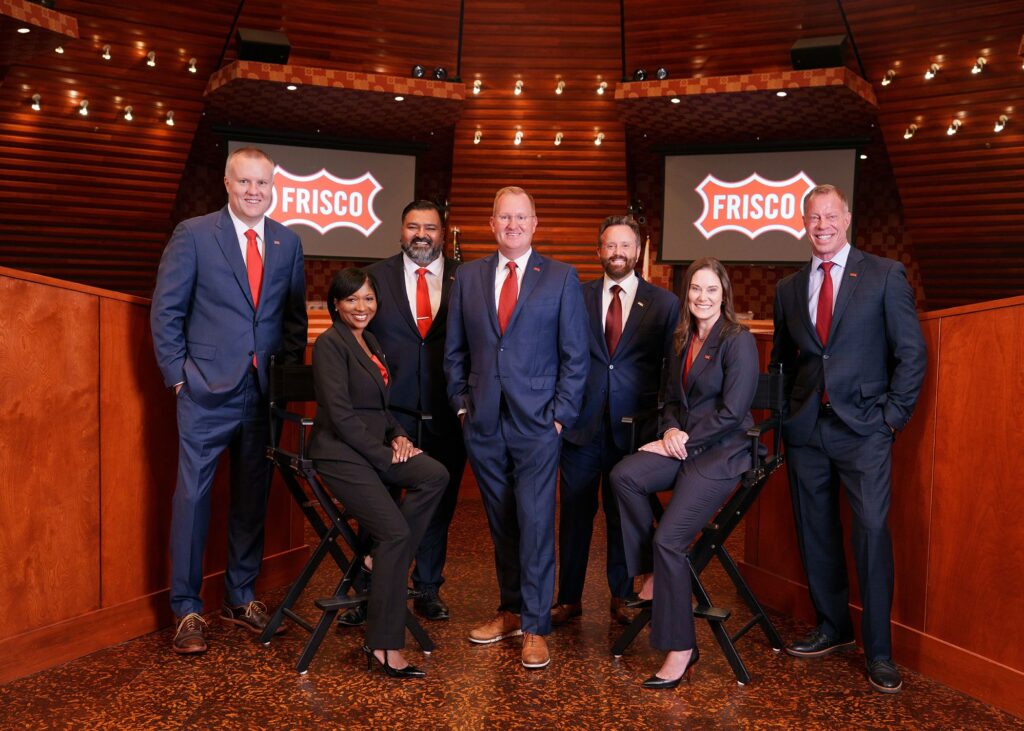
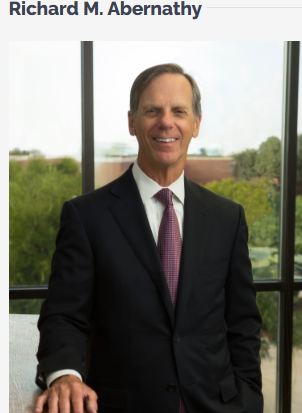
In conclusion, did they all know they could be breaking the law? Did any of them question if Ann Anderson should be engaged in closed session? We are filing PIR’s now for more information. In the meantime, Frisco Residents should be up in arms! The arrogance of the City Council, The Mayor, The City Attorney and City Manager it displayed at Tuesday’s council meeting was on a level never seen before. Should John Keating, who has spent 18+ years in local government, have known better? He is asking to be your next Mayor so shouldn’t he understand TOMA better than anyone as he is the longest sitting person on that dais? Angelia Pelham, Mayor Pro Tem and Laura Rummell, Deputy Mayor Pro Tem should have known better, or they should not have the label Mayor Pro Tem and Deputy Mayor Pro Tem. Should we re-elect Laura Rummell when her actions potentially put the city at risk. Should the city hire a new City Attorney? One might expect or think that Richard Abernathy, our current city attorney, should have stopped what happened at Tuesday’s closed session before the city council meeting.
The city leadership continues to break the rules, and they act as if they just don’t care! They throw it in the face of residents daily! In the three years I have done this blog, I thought I had seen everything. Truly nothing has angered me more than the blatant disrespect to the election process, oath of office process, and to the TOMA rules and Texas Law that each person in that meeting committed Tuesday night.
We would also like full disclosure to anything in that meeting and we plan to file a PIR for it and fight it all the way to the Texas Attorney General’s Office. Based on Texas Law and previous OAG opinions – I think we will win!
This is not about personalities. It is about process. It is about whether the oath of office matters. It is about whether executive session rules apply evenly — or flex depending on convenience. If the City delayed the swearing-in pending recount, then by its own action it recognized that the office had not yet been assumed. So which is it?
- Was she a private citizen?
- Or was she functioning as a council member?
Because under Texas law, you cannot be both! If everything was done properly, the City should have no issue explaining.
We are not alleging wrongdoing. We are asking for clarity. And in government, clarity should never require a Public Information Request to obtain.
Disclaimer: This blog includes satire, parody, and comic relief. It contains summarized accounts created solely for humor and commentary. Any resemblance to real events is either coincidental or intentionally satirical. Reader discretion — and a sense of humor — are advised.
0 Comments