
A complaint against a sitting council member, a public records request sent to the Attorney General, and a former councilman questioning who should vote on the ethics process. Now Frisco Chronicles is asking whether the same scrutiny should be applied to the people raising the allegations.
Frisco residents have heard plenty about ethics, accountability, and transparency over the years. A couple years ago, after ethics complaints against city council members prompted public concern about elected officials judging their own colleagues, the City of Frisco undertook a review of its Code of Ethics. The result was Ordinance No. 2022-07-26, which established the city’s current Code of Conduct and its complaint review process.
The stated goal was straightforward: restore public confidence in the integrity, independence, and impartiality of city government.
But here we are in October 2026, and Frisco Chronicles has questions about how that process works, who gets to participate, what the public is allowed to see, and whether the rules are being applied consistently. This story begins with Agenda Item 39 at the October 6, 2026, Frisco City Council meeting. It does not end there.
October 6, 2026: An Ethics Complaint Takes Center Stage
Agenda Item 39 read, “Consider and act upon approval of the independent private attorneys list as required under Section 2-342 of the City of Frisco Code of Conduct. (CSO/KM).” On paper, the item appeared routine. The city needed council approval of three independent private attorneys who could serve as reviewing attorneys for complaints alleging violations of the Code of Conduct.
But the public discussion suggested there was more behind the item than an ordinary administrative approval. After Mayor Mark Hill opened the floor for public comment, former Councilman William “Bill” Woodard approached the podium. According to the meeting discussion, Woodard said the item was on the agenda because someone sitting on the dais had a complaint filed against them.
Woodard then directed his attention toward Councilman Burt Thakur, asking whether Thakur intended to remove himself from the dais for the vote. The exchange raised an obvious question: Was a sitting council member the subject of a complaint, and would that council member participate in approving the attorneys who could review it?
City Attorney Abernathy subsequently presented the three attorneys proposed for the list. Before the vote, he specifically addressed whether Thakur needed to recuse himself and said he did not believe recusal was necessary, indicating that he had confirmed his position with another attorney.
The council then approved the item. The October 6 agenda packet identifies the three proposed reviewing attorneys as Brenda McDonald, Lance Vanzant, and Richard Hayes. Under Section 2-342, the City Manager selects the reviewing attorney from the council-approved list.
That is an important distinction. Approving the list is not the same as deciding the merits of a complaint, and the October 6 vote should not be characterized as a vote to find Thakur guilty or innocent of anything. Nevertheless, Woodard’s public comments brought the question of an alleged complaint into the spotlight. Frisco Chronicles decided to find out what the complaint actually alleged.
The Public Records Request: Why Send the Complaint to the Attorney General?
Frisco Chronicles submitted a Public Information Request to the City Secretary seeking a complete copy of the complaint William Woodard allegedly filed against Burt Thakur. The city’s response was that the records would be submitted to the Texas Attorney General, with the city asserting attorney-client privilege as a basis for withholding the requested information.
That response raises questions. Section 2-342 of Frisco’s Code of Conduct establishes the reviewing attorney process. Part E, Section 3 requires a complaint to identify the official accused, state the facts and evidence supporting the allegations, identify the rules allegedly violated to the extent possible, and be sworn under oath in the form of an affidavit based on personal knowledge.
The same section states that documents relating to a complaint will be maintained by the City Secretary in accordance with applicable records-retention laws and other applicable laws. The Code of Conduct does not, by itself, establish that every complaint must automatically be released in full. Nor does the fact that a complaint was submitted to the city automatically resolve every question about privilege or confidentiality.
But it does raise a legitimate question: What specific legal basis allows the city to withhold the original complaint, and does that basis apply to the entire document or only particular portions?
A complaint authored and submitted by a private individual is not automatically transformed into a privileged communication simply because it is delivered to a government office. If the City Manager discussed it with the City Attorney that maybe privileged but it does not make the complaint itself privileged. At the same time, a document may contain information protected by law, or portions of it may become subject to a legitimate privilege claim depending on the circumstances and a city can redact that information from the request. The city should be able to identify the applicable legal exception and explain why it covers the records being withheld.
While the original complaint was not public, when disgruntled Former Counciilman Bill Woodard took to the podium during CITIZENS INPUT to gloat and call out a current sitting council member on public record, he made it public. The public should not have to guess what happened behind the scenes.
Frisco Chronicles will continue to examine the city’s position and the Attorney General review. Until that process is resolved, we will not represent the complaint as having been proven or assume that the city’s privilege claim is either valid or invalid.
What Is the Allegation Against Thakur?
Frisco Chronicles contacted one of our sources inside City Hall who might be familiar with the matter. Based on that communication, we understand that Woodard allegedly filed a complaint concerning Councilman Burt Thakur. The reported allegation concerns Part B, Section 2(b)(4) of the Frisco Code of Conduct, titled “Unfair Advancement of Private Interests.”
The provision states that, in matters relating to real property before City Council, the Planning and Zoning Commission, or the Board of Adjustment, a member with a financial interest in property within 200 feet of the matter must disclose that interest by filing a statement with the City Secretary. The member may speak on the item and must then leave the dais or the area where the other voting members are seated. Applicable state conflict-of-interest laws must also be followed. The provision broadly includes land matters such as zoning, preliminary and final plats, site plans, permit requests, variances, and similar requests for city approval involving real property.
In plain English, the allegation reportedly concerns whether Thakur participated in a city decision involving a business or property matter while having a financial interest in nearby property that triggered the disclosure and recusal requirements. That is an allegation, not a finding.
Recently Ann Anderson has been quoted saying we are new and all learning together. Is it possible Thakur also in his first term did not understand fully the new code of conduct.
Frisco Chronicles has not independently reviewed the underlying complaint, established the property ownership involved, or confirmed the distance between the relevant properties. Those details matter and we could confirm them if we had a copy of the complaint, but the city is trying to hide that. Until the complaint and underlying records are available, readers should not assume that a violation occurred. Nothing has been proven at this point. The complaint must be evaluated on the evidence, not on personalities or political loyalties.
The Question Woodard May Not Have Expected: What About Northwest Community Park?
If the purpose of an ethics complaint is to enforce the city’s rules fairly, those rules must be examined consistently, regardless of who files the complaint or who is accused. That brings us to Northwest Community Park, a major public investment that Woodard discussed, advocated for, and voted on during his tenure on council. Frisco Chronicles reviewed a compilation of City Council meeting records covering the park’s planning and development from 2021 through 2025.

The records show that Woodard was involved in discussions about the park’s design, including the extensive bicycle trail system. They also document his participation in votes concerning professional services, project bids, construction contracts, and other park-related expenditures.
The question is not whether a council member is allowed to advocate for a public park. Of course, council members can represent residents, discuss recreational needs, and vote on public projects. The question is whether a council member’s own financial interests require disclosure or recusal under the applicable rules.
Frisco Chronicles understands that Woodard owns property approximately 1.1 miles or less from Northwest Community Park. That distance is based on information supplied for this investigation and has not been independently verified through property records and mapping. If accurate, the reported distance is significantly greater than 200 feet.
That matters because the 200-foot provision cannot simply be stretched to cover any property within walking distance of a park. The relevant legal test must be applied to the actual property, the particular matter before council, and the official’s financial interest.
Still, the broader question deserves scrutiny: Did the development of Northwest Community Park have a foreseeable, special economic effect on property Woodard owns? And were there any other facts that could have triggered disclosure or recusal requirements?
Those questions cannot be answered merely by pointing to a map.

A $40 Million Park and a Council Member Who Advocated for Its Trails
Northwest Community Park became the subject of extensive council discussion as Frisco worked through the design, cost, and construction of the project. The records show that Woodard expressed a strong interest in the park’s cycling facilities.
At a work session on March 2, 2021, work session, he told the design team that existing users of the area preferred a design with greater potential for natural-surface bike trails. The design term indicated it would meet with Woodard to better understand cyclists’ needs. What existing users was Woodard referring to? Himself?
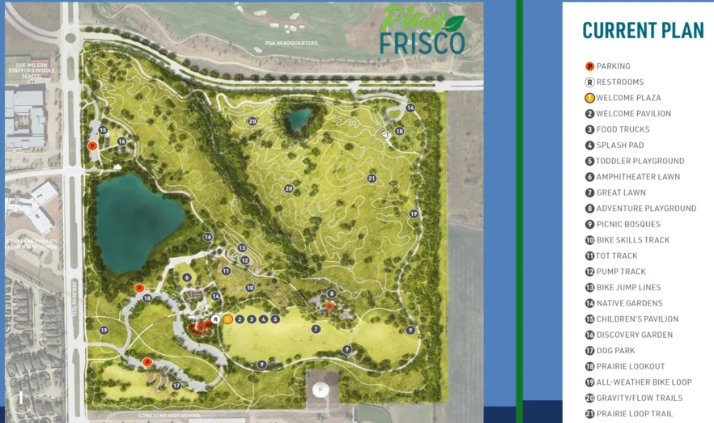
At an October 2021 discussion, city staff described the park’s goal of providing a trail system for beginners and advanced riders alike. On February 20, 2024, Woodard raised concerns about trails he considered disjointed and too narrow. He also asked the design team to reconsider certain features and reiterated his desire for consultation with experienced users of existing bike trails. Again, is that existing user, himself?
Those are documented examples of Woodard’s participation in the park’s design discussions. The records also show his involvement in project votes:
December 6, 2022: Woodard participated in approval of an amendment to the professional services agreement for Northwest Community Park and Frisco on the Green.
December 5, 2023: He seconded a motion approving a consent-agenda package that included rejection of the park’s construction bids after bids came in higher than expected.
November 5, 2024: As Mayor Pro Tem, Woodard moved to award the construction contract for Northwest Community Park. The motion passed 5-0 among the members voting, with Council Member John Keating recused.
November 19, 2024: Woodard participated in approval of a consent-agenda package that included the construction contract for the park’s bike facility.
February 4, 2025: He moved to approve a consent-agenda package that included additional professional services for the project.
March 18, 2025: He moved to approve a consent-agenda package that included a relocation payment associated with Northwest Community Park.
The December 5, 2023, work-session discussion included an option to increase the park’s construction budget to $40 million through additional Community Development Corporation funding. Council ultimately chose to modify the plans and use CDC funding to move the project forward. The records establish that Woodard participated in discussions and votes. They do not establish that his participation was improper, but again, it does raise the question if Woodard had self-interests in this specific park.
Would Woodard Benefit from the Park?
A large public park can make a surrounding area more attractive to potential homebuyers. Trails, recreational amenities, green space, and improved public access can influence how people perceive a neighborhood.
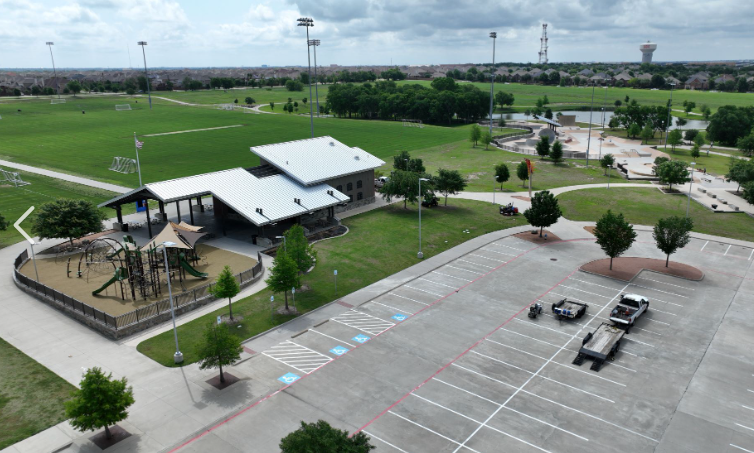
That does not mean every nearby property owner receives a measurable financial benefit, nor does it establish that an official has a disqualifying financial interest under the Code of Conduct. Frisco Chronicles is asking a narrower question: Did Woodard’s property have a particular financial interest that required disclosure or recusal when the park came before council?
The city’s 200-foot rule is not a blanket prohibition on voting for parks, roads, trails, or other public improvements near one’s residence. If the allegation against Thakur is based on the 200-foot provision, the same provision should be read accurately when examining Woodard’s record. Frisco Chronicles would like to know the difference.
Does Cycling Advocacy Create a Conflict of Interest?
Woodard’s advocacy for cycling facilities is well documented in the meeting records. The park’s plans included a variety of bicycle trails and other cycling-oriented amenities. The project also incorporated broader public features, including open space, playgrounds, a dog park, and educational and recreational facilities. Woodard’s interest in cycling and his participation in cycling groups, as described to Frisco Chronicles, may explain why he was vocal about the park’s trail design.
Woodard was very outspoken on this project unlike other projects and that maybe because of his own personal recreational interest or possible financial interest in real property.
Is This About Ethics, Politics, or a Personal Dispute?
Woodard’s decision to raise the complaint issue publicly at the October 6 meeting invites questions about his intentions. His comments placed Thakur’s participation in the attorney-list vote under a public spotlight before the complaint’s merits had been established. Frisco Chronicles also understands that Woodard has publicly criticized Thakur on several other occasions, using the Citizen Input as his bully pulpit.
That history may be relevant to understanding the political context. Where does Woodard’s public criticism arise from: policy disagreements, genuine ethical concerns, political rivalries, or some combination of factors?
The city’s own Code of Conduct recognizes that the timing and publicity surrounding a complaint, the relationship between complainant and respondent, and evidence of the complainant’s motives can be relevant when evaluating whether a complaint may be frivolous. There is a legitimate public-interest question about whether a complaint is being pursued in good faith. The answer should come from the evidence and the established process, not from assumptions about someone’s personality or political ambitions.
Is Woodard pursuing a legitimate concern about compliance with the Code of Conduct? Does he have evidence supporting the allegation? Has he applied the same standard to his own actions? Or has a political disagreement become part of the backdrop to the complaint?
Those questions deserve answers, but Frisco Chronicles will not claim to know Woodard’s motives without evidence.
What About Race? Frisco Chronicles hates to go here but could this be about race? Thakur is the only South Asian (Indian) member of the Frisco City Council. There has been a heightened sense of scrutiny regarding our South Asian community lately in online media and at city council meetings. Frisco Chronicles would like to point out that Frisco is open to all and that treatment has been and continues to be unfair to our good neighbors. That does not stop us from asking could Race be a factor or relevant to what drove Woodard to harass Thakur at Citizens Input several times now. Frisco Chronicles has not established evidence that race played a role in the complaint, and we will not suggest otherwise simply because two officials have a history of public disagreement. It just seems with the current state of tension in Frisco an obvious question to ask.
The Bigger Problem: Who Holds the Ethics Process Accountable?
The public concern that helped drive the 2022 Code of Conduct review has not disappeared: What happens when the people responsible for reviewing an ethics complaint are colleagues of the person accused?
Frisco’s current process attempts to address that concern by requiring a list of three independent private attorneys, with the reviewing attorney selected by the City Manager by lot. The reviewing attorney must meet specified qualifications and cannot be a city council member, city employee, elected public official, or candidate for elected office.
The process also provides for an initial assessment by the reviewing attorney. A complaint may be dismissed on specified grounds, including untimeliness, lack of coverage under the Code, failure to satisfy filing requirements, or facts that would not constitute a violation even if taken as true. A complaint not dismissed at that stage may be referred to council for further review.
The structure provides an independent legal review at an important stage. It does not eliminate every question about transparency, public confidence, or the council’s remaining role.
The public should be able to understand who reviews a complaint, how the reviewer is selected, what standards apply, and what findings are ultimately made. It should also be able to distinguish between a complaint being filed, a complaint being referred for further review, and a proven violation. Those are three different things.
If the city wants residents to trust the process, it must explain the process clearly and disclose the information the law allows it to disclose.
Questions Frisco Chronicles Wants Answered
The records and circumstances surrounding the October 6 meeting leave several questions that deserve documented answers:
1. Will the city release a copy of the complaint and supporting documentation.
2. Which specific council agenda item is at issue in this complaint, and what properties were allegedly within the relevant 200-foot distance?
3. What safeguards ensure that an ethics complaint is evaluated on its merits rather than on political alliances or personal disputes?
Final Thoughts: One Standard, Applied to Everyone
Frisco’s Code of Conduct was adopted to promote public confidence in the integrity, independence, and impartiality of city government. That purpose cannot be fulfilled if residents are left to speculate about complaints, if legal exceptions are invoked without a clear public explanation, or if ethical standards appear to be applied differently depending on who is involved.
Woodard has every right to file a complaint if he believes a city official violated the rules. Thakur has every right to a fair process in which allegations are tested against evidence rather than treated as established facts. And taxpayers have every right to ask whether the rules are being applied consistently.
Frisco does not need an ethics code that exists only to be quoted when someone wants to challenge a political opponent. It needs one that is applied consistently, reviewed fairly, and explained openly. If the rules apply to Burt Thakur, they must apply to Bill Woodard. If they apply to Bill Woodard, they must apply to every other official. And if the city expects residents to trust its ethics process, it must give them every piece of information the law allows them to see.
That is not a personal attack. It is the minimum standard of public accountability. Frisco Chronicles has submitted a response to the Texas AG on why this should be public record. Lastly, Mayor Mark Hill needs to take some accountability. It is our opinion, Hill allowed a former councilman to use Citizen Input for his own personal vendetta and if that is the case, it’s shameful.
Frisco Chronicles will continue to follow the complaint, the city’s response to the public records request, and any evidence that clarifies whether the same standards have been applied consistently. Because ethics should never depend on whose name appears on the complaint.
Disclaimer This article is written as opinion, commentary, and personal interpretation based on publicly available records, meeting observations, agenda materials, and information heard from community sources. Any statements involving motives, intent, conflicts of interest, contracts, relationships, or behind-the-scenes activity should be understood as alleged, suspected, or opinion unless directly supported by cited public records. Readers are encouraged to review any linked materials, attend public meetings, request records, and form their own conclusions. Nothing in this article should be interpreted as a final statement of fact about any person’s legal conduct, criminal behavior, or ethical violations.
0 Comments