
If you haven’t read Part 1 — “Mute The Mic?” — stop right here and go do that. Seriously. The backstory matters. The motives matter. The timing matters.
In this second installment, we’re breaking down the specific “procedural adjustments” being floated by the Frisco City Council — the technical tweaks that may sound harmless, even boring. They’re not.
This is where policy language meets practical impact. This is where the fine print decides who gets heard — and who gets managed. Let’s walk through it.
The Proposed Adjustments – aka Changes Discussed
When the Frisco City Council starts discussing “procedural adjustments” to public comment, Frisco Chronicles pays attention. Because history teaches us something simple: rights are rarely taken all at once. They’re trimmed. Tweaked. Managed.
What’s being proposed may sound administrative. It is not. Let’s walk through it.
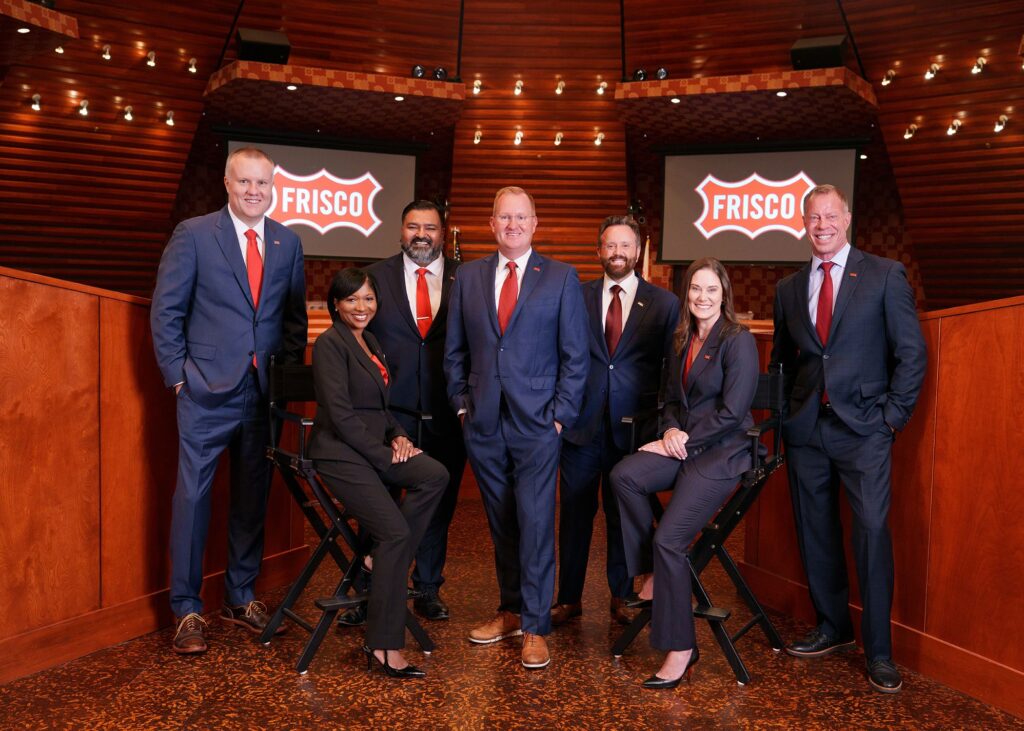
Eliminating Public Comment on Non-Agenda Items Entirely: When the idea of eliminating public comment on non-agenda items even enters the room at the Frisco City Council, that’s not a small tweak — that’s a philosophical shift.
And let’s address the example offered by Jeff Cheney about the resident who says, “I know it’s not on the agenda, but I don’t want you to build the dog park next to my neighborhood, and I’m going to come every meeting and tell you that.” Here’s the uncomfortable truth: that residents have every right to do exactly that. When you ran for council, you knew that, sorry it inconveniences you now!
Non-agenda public comment exists precisely because government action is continuous, not episodic. It allows citizens to raise red flags before decisions are finalized. Eliminating it because someone might show up repeatedly is not governance — it’s discomfort management.
And let’s be candid: repeated speech is often a sign that someone feels unheard. The First Amendment does not protect speech only when it is convenient, concise, or agreeable. It protects persistence. It protects dissent. It protects the person who refuses to quietly accept a decision that affects their home, their taxes, or their quality of life.
Eliminating the entire category of non-agenda comment is using a sledgehammer where a scalpel would do. The residents worried about a dog park isn’t a problem. The MAYOR & COUNCIL who PREFERS NOT TO LISTEN or wants fewer microphones is.
Separating Agenda and Non-Agenda Comments: On paper, this sounds orderly. In practice, it fragments citizen speech. This one does not concern us to much because most cities have citizen input for non-agenda items and if you want to speak on item on the agenda you have to do so when the item is up before the council.
Moving Non-Agenda Comments to the End: Translation: Speak when the room is empty and the cameras have gone dark. Pushing non-agenda speakers to the end of long meetings discourages participation, particularly for working families, seniors, and parents. Public comment should not be a stamina contest. If the only people who can speak are those who can wait four hours on a Tuesday night, that is not expanded access — it’s filtered access.
Limiting Time Per Speaker: Time limits can be lawful, but when time limits tighten while the city grows, that sends a message. The First Amendment allows reasonable time and place. If reductions disproportionately silence critical voices or complex issues, the policy may be lawful on paper yet corrosive in practice. Efficiency is not a constitutional value. Liberty is.
Limiting Non-Agenda Comments to Every Other Meeting: This is not “streamlining.” It is rationing speech. Residents don’t experience government every other week. Development decisions, taxation, zoning conflicts, policing issues — they happen continuously. Restricting when citizens may address their government reduces immediacy and weakens accountability. The public does not work on a municipal convenience schedule.
Requiring ID to Speak: This is where the concern becomes serious. The Supreme Court has repeatedly affirmed the importance of anonymous speech in American history. From the Federalist Papers to modern whistleblowers, anonymity protects dissent. Requiring identification to speak at a public meeting can create a chilling effect, particularly for city employees, contractors, or residents afraid of retaliation. Public meetings are not airport security checkpoints. Citizens should not need to present papers to address their own government.
Requiring Speaker Cards to Be Completed in Full: If “in full” includes personal data, that again raises chilling-effect concerns. The more personal information required, the fewer people will participate — especially in contentious matters. Participation should be easy, not intimidating.
Deadlines for Submitting Speaker Cards: Reasonable structure is one thing. But rigid deadlines can be used to cut off spontaneous response to late-breaking discussions. Government agendas sometimes change mid-meeting. Citizens should not be locked out because a clock expired before the conversation evolved. Democracy is dynamic. Policy should reflect that.
Electronic Speaker Card Systems: Technology can increase efficiency — or create barriers. What about seniors? What about residents who are unfamiliar with digital systems? What about technical failures? If an electronic system becomes a gatekeeper participation could shrink.
Moving The Lectern To Avoid Having Audience Members Visible: It may sound like this is a cosmetic change, but it isn’t. It changes the psychology of transparency. Public meetings are not just about what is said at the podium. They are about the visible presence of the public itself. When viewers at home can see residents sitting behind a speaker — nodding, reacting, filling the chamber — it communicates something powerful: this issue matters to the community.
Moving the lectern would diminish the perception of public engagement. It creates a sterile controlled optic. It also weakens accountability through optics. Typically, elected officials are influenced — consciously or not — by visible public presence. A room full of residents’ signals urgency and concern.
The Bigger Issue
Individually, each proposal might be defended as minor. Collectively, they form a pattern: narrowing access, adding procedural hurdles, and shifting citizen input toward the margins of the meeting.
The First Amendment does not guarantee unlimited speaking time at a council meeting. But it does guard against policies that chill speech, discriminate by viewpoint, or unnecessarily burden the public’s right to address its elected officials.
Public comments are not decorative. They are not ceremonial. When residents begin to feel that speaking is inconvenient, risky, overly bureaucratic, or futile, civic engagement declines. Trust erodes. Suspicion grows. And once trust erodes, no ordinance can fix it.
One Voice For Free Speech
According to Community Impact, Burt Thakur, who received several comments directed at him during the February 3rd meeting, expressed concerns about taking action to restrict public comment.
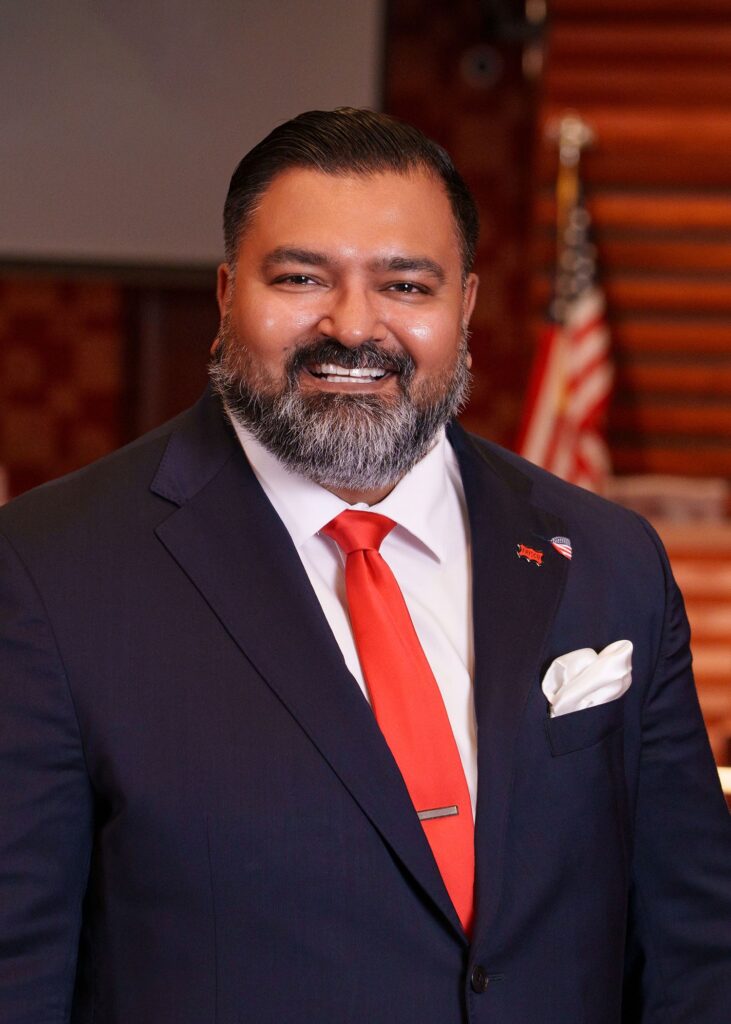
Thakur was quoted as saying, “I think that the First Amendment is sacrosanct—and while I am the recipient of some of the invectives that have been hurled—I do think that there’s a very slippery slope the moment a governmental body shuts down someone’s right to speak, even if it’s odious, even if it’s something I think is absolutely morally reprehensible.”
Thank you Mr. Thakur and we hope you vote against changes to citizen’s input to protect residents of Frisco.
In Closing
Frisco is one of the fastest-growing cities in Texas. Growth demands more transparency, not less. More access, not fewer opportunities. The microphone at City Hall is not a courtesy extended by elected officials. It is an extension of the people’s voice. Those who pay taxes and spend money in our city have the RIGHT to speak. Policies that make that voice harder to use do not strengthen governance. They weaken it.
What is this about? What is the real motive behind the proposed changes? Do you really think it is about Palestinians, Agitators, Muslims and/or Indians? Probably not. This is about Mayor Jeff Cheney being questioned out loud, on the record, about campaign donations, his business, and his ethics as Mayor. This is about the council members who ran for office knowing they would have to face criticism now trying to neutralize it.
Instead of the proposed changes maybe the council should let Frisco Residents Go First! Let those who are stakeholders in our community Go First! Allow Frisco’s diversity of voices to speak.
Proposing to move citizen input to the end of the meeting would be disrespectful. If you have not been to meetings lately, our current council is usually 30 minutes, to 1 ½ hours late to start. Now you are asking residents to wait till the end of the meeting after they have already sat through your disrespect of being late. The goal of this is to make them go home, give up and lose the will to speak. That is not what the Texas Open Meetings Act stands for.
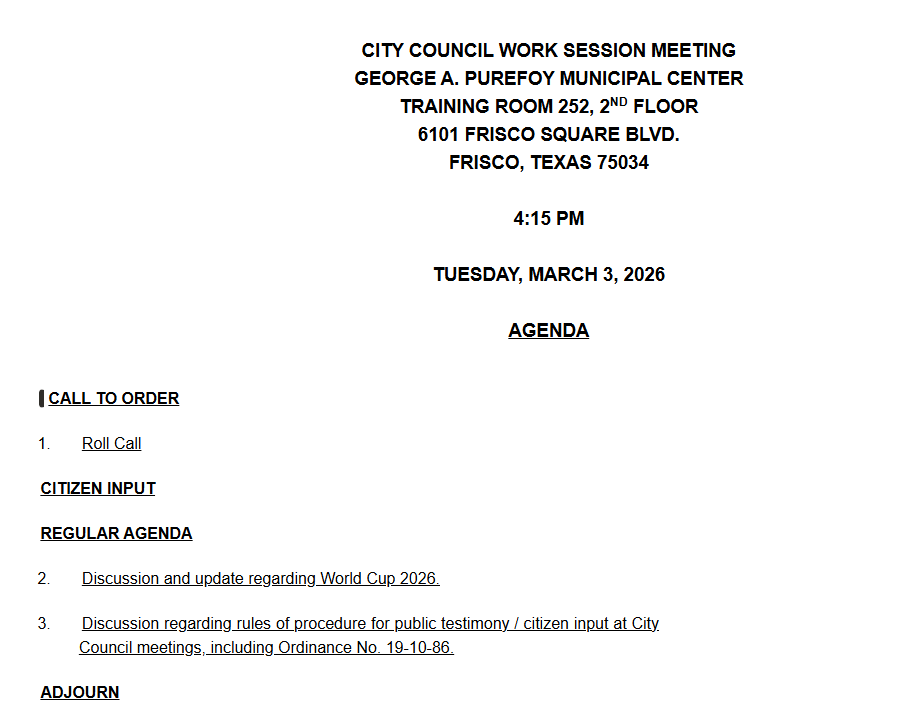
SHOW UP, STAND UP, SAY NO – MARCH 3RD: The city is holding another city work session and, on the agenda, PUBLIC TESTIMONY. The agenda reads it will be held in the Municipal Center (City Hall) second floor training room (Room 252). The meeting starts at 4:15 and if you want to be heard on this issue, then you had better show up and tell them no at the work session. This is the time you must voice your opinion.
WAKE UP FRISCO: The same people proposing to limit our speech are running for office again in a few weeks. DO NOT RE-ELECT THOSE WHO WANT TO TAKE AWAY OUR GOD GIVEN RIGHT BY LAW TO SPEAK.
Disclaimer: This blog includes satire, parody, and comic relief. It contains summarized accounts created solely for humor and commentary. Any resemblance to real events is either coincidental or intentionally satirical. Reader discretion — and a sense of humor — are advised.
0 Comments