
FRISCO ISD WANTS ANOTHER BOND: $412.6 MILLION MORE. Frisco Taxpayers should be asking, “WHERE DID THE LAST BILLION GO?”
Frisco ISD is back at the bond table again. Now that the bond committee has done its job, the district wants you to believe it is time to do your job and vote for another bond.
Apparently, when voters reject a billion-dollar shopping list, the answer isn’t necessarily to go back to the drawing board and ask harder questions about spending. Instead, you regroup, appoint a committee, take a few campus tours, sharpen your pencils, trim some projects, and come back with a slightly smaller number.
This time, the number is $412.6 million.
And before Frisco voters are asked to open their wallets again in May 2027, there are some questions that deserve answers. Not district talking points. Not glossy presentations. Not emotional appeals from the district and teachers about children, classrooms, and how voting against a bond somehow means you don’t care about education. We care about education.
We also care about accountability, financial management, priorities, and whether the people making spending decisions can explain where the money has gone before asking us for another half-billion dollars.
Because somewhere along the way, Frisco ISD seems to have developed a serious appetite for taxpayer money, while parents are now being asked to pay extra just to put their kids on a school bus.
Something about that deserves a closer look.
FIRST, LET’S REMEMBER THE BOND VOTERS ALREADY REJECTED
In November 2024, Frisco ISD put a bond package totaling more than $1 billion before voters.
The package included:
- Proposition B: $986 million for facility renovations, campus improvements, buses, security, maintenance, and other projects.
- Proposition C: $88.2 million for technology and equipment.
- Proposition D: $11.2 million for a proposed tennis center.
All three propositions failed.
Voters rejected the $986 million Proposition B by approximately 52%. Proposition C also failed, while Proposition D was rejected by an overwhelming 73.1% of voters.
The district also asked voters to approve a VATRE to help address its budget deficit. That failed, too. Frisco voters were not confused. They were sending a message.
More than a billion dollars was too much. The timing, the priorities, the financial concerns, or some combination of all three didn’t pass the smell test for enough voters.
Rather than treating that rejection as a mandate to rebuild public confidence, Frisco ISD is now working toward another bond election. And this time, the district is hoping a smaller number makes the medicine easier to swallow.
THE NEW ASK: $412.6 MILLION
The Frisco ISD Bond Planning Committee has recommended a three-year bond package totaling $412.6 million.
The committee’s recommendation was approved November 17, with 91% of voting members supporting the final package. Of the 98 committee members, 83 were present for the vote.
Proposed 2027 Bond Breakdown: Where the Money is Proposed To Go
| Category | Proposed Cost |
| Facility lifecycle replacements & school refreshes | $315.0 million |
| Technology | $57.0 million |
| School buses | $23.1 million |
| Fine arts & athletic equipment | $17.5 million |
| TOTAL | $412.6 million |
Approximately 76% of the proposed bond is devoted to facilities.
The district says these projects are necessary to maintain buildings, replace aging infrastructure, update technology, replace buses, and preserve existing programs. Several projects were reduced in scope during the committee process.
The committee’s recommendation is now headed toward the Board of Trustees for consideration. The board, not the committee, ultimately decides whether to call the election.
But here’s the problem. A committee vote is not a taxpayer audit. A committee recommendation is not proof that every project is necessary, every estimate is reasonable, every purchase is justified, or that the district has exhausted other options.
And 91% approval inside a committee room doesn’t mean Frisco taxpayers will agree.
A BILLION-DOLLAR BOND FAILS. SO NOW WE’RE TALKING $412.6 MILLION?
Let’s put this in perspective. The 2024 bond proposals included nearly $1.1 billion in spending. Voters rejected them. Now the district is back with $412.6 million. That is certainly less. But smaller does not automatically mean smarter. And it sure doesn’t mean taxpayers should automatically approve it.
The question isn’t simply whether the district can identify things that need replacing. Every school district can. The real question is: How did Frisco ISD get here, what has it already spent, what has it committed, what has it deferred, and why should taxpayers trust the next spending plan?
The district’s own bond planning information says declining enrollment, increasing costs, and financial pressures have changed the district’s financial landscape. The district also acknowledges that 2018 bond funds have been stretched to cover needs that could not be covered by its annual maintenance and operations budget.
Stop right there.
2018 BOND MONEY. WHERE IS IT? WHAT WAS IT SPENT ON? WHAT REMAINS?
Frisco voters approved more than $690 million in bonds in 2018 during a period of explosive growth. Those bonds were intended to fund schools, facilities, and infrastructure necessary to accommodate a rapidly expanding district.
Now, eight years later, we’re hearing about lifecycle replacements, aging equipment, facility needs, renovations, deferred maintenance, technology replacements, and infrastructure concerns. That may be entirely legitimate. But taxpayers should not have to rely on a slideshow and a list of projects to understand the financial history of their school district.
Where is the comprehensive accounting that shows:
- Every major project funded by the 2018 bond?
- Original budget versus final cost?
- Projects completed, delayed, canceled, or modified?
- Remaining bond balances?
- Savings, overruns, and change orders?
- Contractors awarded the work?
- Why were certain projects not completed using previous bond proceeds?
- What facilities have already received major renovations and what did those renovations cost?
- What maintenance was deferred, and why?
Before approving another bond, taxpayers deserve a clear financial reconciliation of the last one. Not because we’re against schools. Because we are paying for them.
THE DISTRICT IS CARRYING $1.93 BILLION IN EXISTING DEBT
During its bond committee financial presentation, Frisco ISD reported approximately $1.93 billion in outstanding debt. The district says that figure has declined by approximately $365 million over the past three years. It also presented its current debt tax rate of $0.27 as potentially supporting approximately $400 million in additional debt under current assumptions.
Read that again.
Approximately $1.93 billion in existing debt.
And now another $412.6 million is being proposed.
We are told the district may be able to accommodate additional debt without an immediate tax rate increase, depending on property value growth, interest rates, bond timing, and other factors. But “no immediate tax rate increase” is not the same as “no cost to taxpayers.”
Debt doesn’t magically disappear because the district found a way to spread the payments across future years. Taxpayers still carry the obligation. And future taxpayers who have not even moved into Frisco yet may be paying for decisions made today. The bond committee was reportedly presented with survey findings showing support varied by bond size, with the strongest support falling between $400 million and $600 million.
Which raises an obvious question: Was this bond package built around the district’s documented needs, or was the district working backward from what polling suggested voters might tolerate?
That distinction matters.
THE BOND COMMITTEE: WHO WAS IN THE ROOM, AND WHAT WERE THEY REALLY ASKED TO DECIDE?
Frisco ISD established a bond planning committee to evaluate possible projects and develop recommendations for a potential May 2027 bond. The district says committee membership included trustee-appointed parents and community members, representatives from civic organizations, staff members, and high school students.
The committee was tasked with reviewing facilities, technology, transportation, equipment, district demographics, financial projections, and the district’s long-term sustainability plan. The process included campus tours, presentations, project reviews, financial discussions, and the district’s Build a Bond planning tool.
Committee members were shown potential projects and could select full or reduced scopes while examining financial implications.
Sounds reasonable. But reasonable process does not eliminate the need for scrutiny.
Taxpayers need to know:
- Were committee members given independent financial analysis or primarily district-generated information?
- Were project costs independently verified?
- Were alternative funding options presented?
- Were projects ranked by urgency, safety, necessity, or simply preference?
- What projects were removed, and why?
- What projects were reduced, and how much money was actually saved?
- Were members shown the district’s complete debt obligations?
- Were members given a detailed breakdown of 2018 bond spending?
- Were enrollment projections and potential school closures fully incorporated into every recommendation?
- Were taxpayers who opposed the 2024 bond adequately represented, or simply invited into a process designed to eventually produce another bond?
These are not accusations. They are the questions taxpayers should be asking before the campaign signs go up and the mailers start arriving.
ENROLLMENT IS DECLINING. SO WHY DOES THE DISTRICT KEEP NEEDING MORE?
Frisco ISD has acknowledged enrollment has declined from its peak in 2022-23 and that the district expects enrollment pressures to continue. The district has responded through its sustainability planning process, including campus utilization, staffing adjustments, department budget reviews, operational changes, and consideration of school closures.
Its 2026-27 budget totals approximately $751.9 million in revenue and $751.9 million in spending. The district has also identified additional revenue measures, including facility rental increases, tuition-based pre-K, Chromebook fees, and fare-based bus service. That’s right.
So let’s connect the dots. Declining enrollment. Budget pressure. School closures being discussed. Staffing and operational adjustments. Existing debt approaching $2 billion. Parents being asked to pay for certain services. And a proposed $412.6 million bond.
At what point does Frisco ISD stop expanding its financial commitments and start explaining how it intends to operate within the financial reality it has? If enrollment is declining, the district needs to explain how it determines which facilities require hundreds of millions of dollars in investment.
Are all campuses going to remain open? Are some campuses underutilized? Are major renovations being proposed for facilities that could eventually be consolidated or closed? Are projected student populations being considered over the entire useful life of the projects? What happens if enrollment continues declining?
Those answers should come before taxpayers are asked to approve long-term debt.
NOW PARENTS GET TO PAY TO PUT THEIR KIDS ON THE BUS
And while the district is discussing hundreds of millions of dollars in potential capital spending, Frisco ISD has also introduced fare-based bus service for students who do not qualify for district-provided transportation.
The district’s published 2026-27 budget identifies a charge of $70 to $90 per month, depending on the number of students in a household, for students who qualify for the paid service. Discounts are available for students on free or reduced-price lunch, and the district says it will only offer open seats on existing routes.
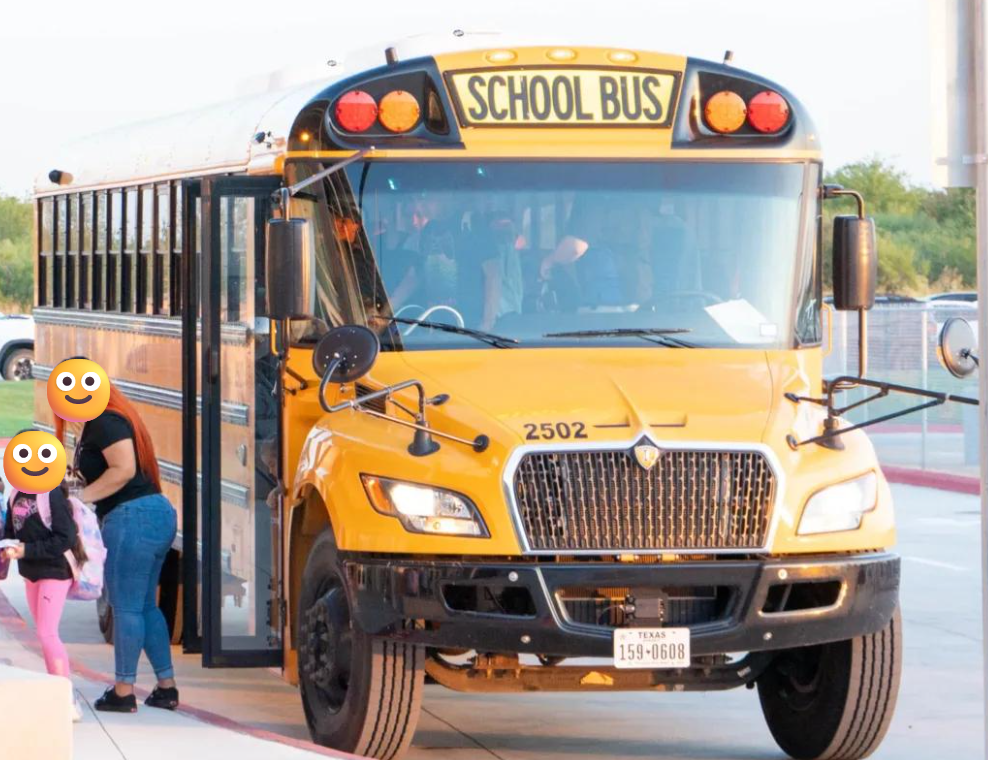
If someone is circulating a figure of $500 for a bus seat, that needs to be clarified against the district’s actual fee schedule. The currently published monthly charge is $70-$90, which could still amount to hundreds of dollars over a school year.
But the bigger question isn’t whether the district can legally charge. It’s why families are being asked to pay more for transportation while the district is asking voters to approve hundreds of millions of dollars in additional debt. Parents are already paying property taxes that support public education. They pay for school supplies, extracurricular activities, lunches, technology, fees, uniforms, and everything else that somehow finds its way onto the family budget.
Now transportation becomes another bill.
Where is the money?
If the district is facing financial pressure, taxpayers deserve to know what caused it, what spending has been reduced, what spending remains untouched, and why families are being asked to absorb another expense.
A district doesn’t get to say “we’re financially squeezed” every time parents ask a question while simultaneously asking voters to approve another massive borrowing package without showing its homework.
WHO IS ACTUALLY AT THE FINANCIAL HELM OF FRISCO ISD?
This may be one of the most important questions in the entire bond discussion. Who is responsible for the district’s financial decisions? Who is determining the priorities? Who is projecting enrollment? Who is developing the debt strategy? Who is deciding which campuses get renovated, which projects get deferred, and which expenses become taxpayer-funded bond projects? Who is overseeing the district’s financial sustainability plan? Who is accountable when projects exceed budget? Who is accountable when projections turn out to be wrong?
Frisco ISD has publicly identified Kimberly Smith, Deputy Superintendent for Business and Operations, as a key participant in its financial and bond planning presentations, including the district’s discussion of debt, tax rates, and financial assumptions. But taxpayers should not have to piece together financial responsibility from meeting videos, budget documents, and presentations.
The district should provide a clear picture of its financial leadership, responsibilities, decision-making structure, and accountability mechanisms. Because when a district is managing nearly $2 billion in debt and proposing another $412.6 million, financial oversight is not some administrative footnote.
It is the entire ballgame.
THE $412.6 MILLION BOND: WHAT SHOULD TAXPAYERS BE WATCHING?
The proposed package includes $315 million for facilities. That is the largest piece of the pie. Before voting yes, residents need more than pictures of cracked tiles, stained ceilings, worn equipment, or aging HVAC systems. Those things may be real. But taxpayers need documentation. Ask for the receipts.
For every major project:
- What is the exact facility?
- What is the exact scope of work?
- What is the current condition?
- Is there an independent engineering assessment?
- What is the estimated cost?
- What is the projected useful life after replacement?
- What happens if the project is delayed?
- Was the project previously funded through a bond?
- Has the district already spent money repairing the same issue?
- Is the facility expected to remain in service for the next 20 to 30 years?
- What alternatives were considered?
- Is the project an urgent necessity or an improvement the district would simply like to have?
Taxpayers should not be expected to approve a blank check disguised as a maintenance plan.
Sources and documents taxpayers should be reading
- Frisco ISD 2027 Bond Planning – Committee process, proposal, meetings, project breakdowns and planning materials.
- Frisco ISD 2026–27 Budget and Fare-Based Bus Program – District budget, declining enrollment, new revenue measures, and transportation charges.
- Frisco ISD Begins Planning for a Possible 2027 Bond – District background, sustainability plan and bond history.
- Frisco ISD 2026 Property Tax Rate – Tax rate, debt service, and district explanation of bond financing.
- Frisco ISD Official Website – Board meetings, budget documents, agendas, bond materials, and financial disclosures.
Disclaimer This article is written as opinion, commentary, and personal interpretation based on publicly available records, meeting observations, agenda materials, and information heard from community sources. Any statements involving motives, intent, conflicts of interest, contracts, relationships, or behind-the-scenes activity should be understood as alleged, suspected, or opinion unless directly supported by cited public records. Readers are encouraged to review any linked materials, attend public meetings, request records, and form their own conclusions. Nothing in this article should be interpreted as a final statement of fact about any person’s legal conduct, criminal behavior, or ethical violations.
0 Comments