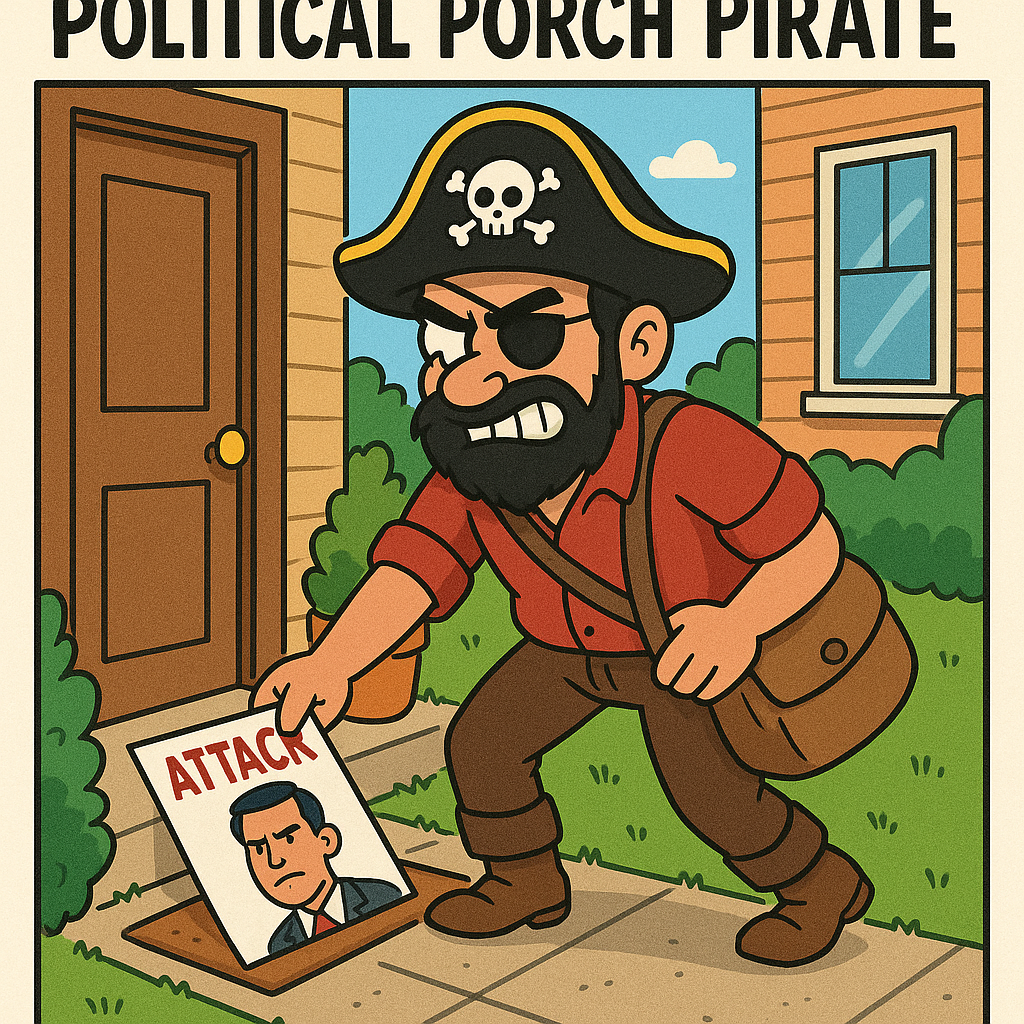
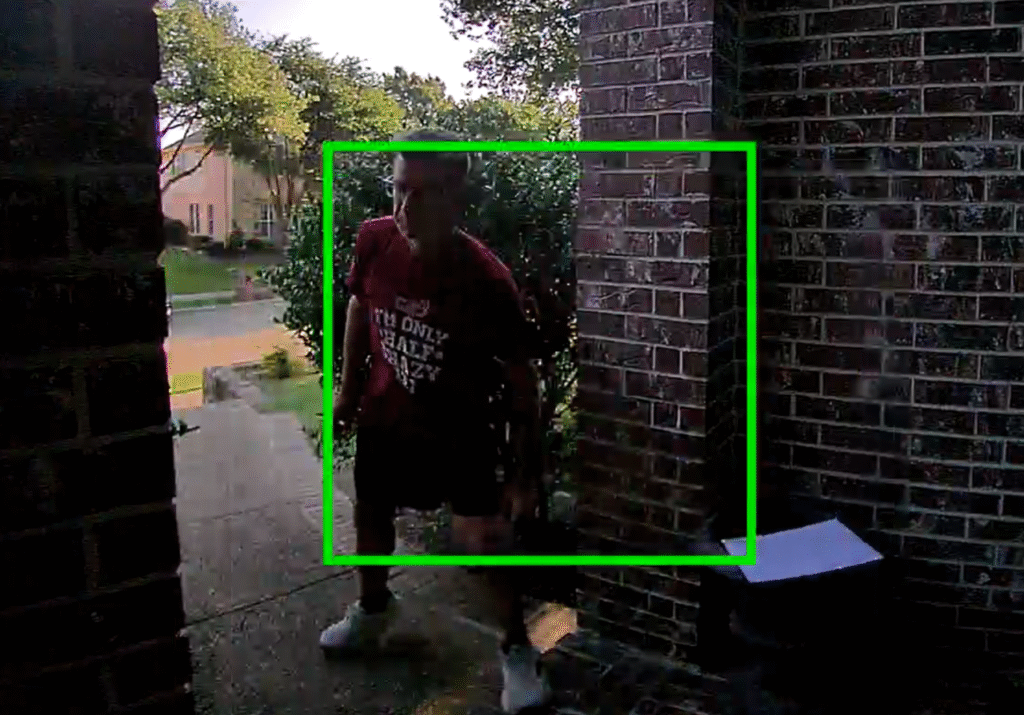
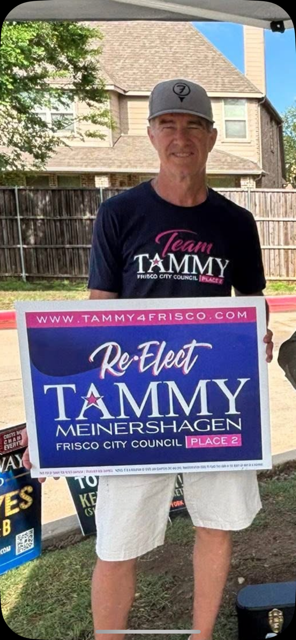
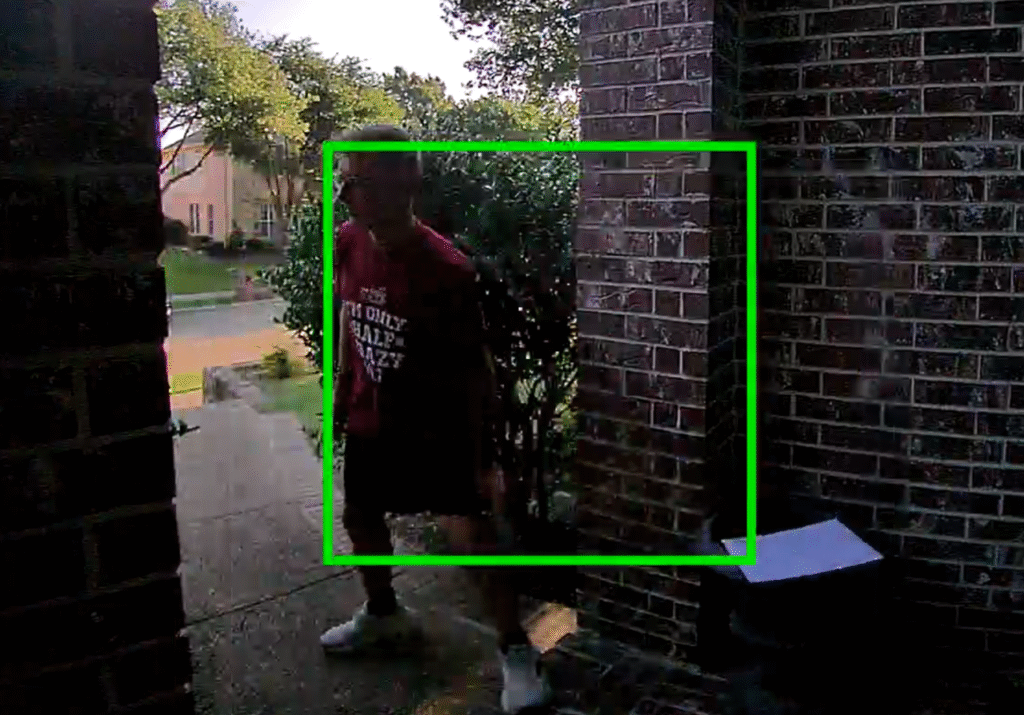
While the world tackles climate change, AI ethics, and the moral collapse of TikTok, Frisco is dealing with… loss of our children’s innocence, assaults and stolen/vandalized political signs. That’s right, political signs! Welcome to the great political crime spree of 2025 in what our Mayor and Council claim is one of the safest cities in America, or is something else going on?
If you’ve driven down Preston, Legacy, Main Street, or Eldorado lately, you may have noticed something peculiar: political signs popping up like spring weeds, then suddenly poof—gone. Others are bent, knocked over, or tossed into ditches like yesterday’s Whataburger cup. Some have been found face-down in drainage ditches, others mysteriously sliced like a scene from a low-budget political thriller.
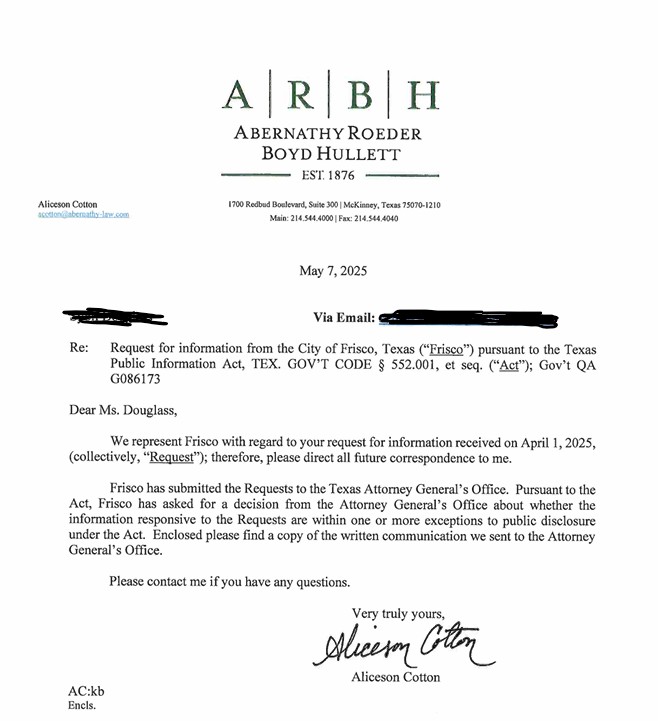
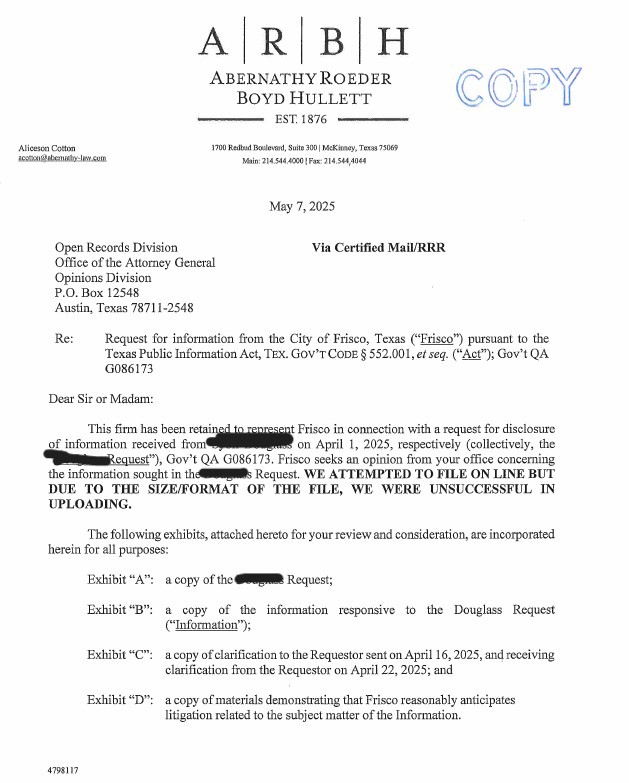
On March 30th, we had a candidate reach out to us letting us know that 15 of her political signs were stolen and several more intentionally damaged. She also stated that zip ties were cut, poles were pushed over, and some poles were completely missing. She documented the damage with pictures to us and said she would be filing a police report. We decided to pull a PIR and research the issue because last year we got the same complaints from candidates.
Now, don’t get us wrong, sign fatigue is real. By week three, those smiling headshots and bold promises start to blur together. But here’s the twist: it’s not just Mother Nature or rogue sprinklers. Nope. It seems there’s something more coordinated—and sneakier—going on.
Reporting Political Signs
First step, we indexed the reports in order. What we found or should we say who we found reporting them – was quite interesting!
1/26/25: Email to City Secretary from Mel M (kookykate) asking how she would make a report for political signage being out more than 90 days before the election.
1/26/25: Email to City Secretary from Councilman John Keating, yes, he used his official city email to report a Elad sign at Legacy & Eldorado. He wanted to know when signs can go up and reported that it does not have Place 4 on the sign. Kristi Morrow replied to him they can go up 90 days prior to an election and nothing in the state code says it has to have a place number on it.
Side Note: Keating has endorsed Elad’s opponent, he is one of the longest councilman in the history of Frisco, he has run several times – so shouldn’t he know the rules by now? Nope. He has to email the City Secretary to ask which shows off his complete incompetent nature.
2/25/25 Case 25023400: Reporting Party said a political sign struck a water line for the HOA water which has now been turned off and they wanted to file a vandalism complaint and complained to be with the HOA. The reporter was unsure if it was a city pipe or commercial pipe and he was told to contact the city water department.
2/25/25 Service Request 4914712: Ann Anderson reported a political sign at the corner of Preston / Warren and wanted to know if it was allowed to be there because she has never seen signage in Stonebriar area of the city.
2/27/25: Email to City Secretary from John Lettelleir, Director of Development Services for the City of Frisco. He was concerned about a sign located on the west side of Independence Pkwy, just north of SH 121 (in front of Race Trac) and was concerned if that was city property. Kristi Morrow, City Secretary responded she also noticed there are signs in the right-of-way along Dallas Parkway / Cotton Gin, and Dallas Parkway / Main. She went on to say some seem to be running down Dallas Parkway by the hospital but not necessarily at an intersection but placed close to the road.
2/27/25: Email to City Secretary from Cindy Hons asking for the city to check the placement of the following signs below.
Muni Sign: NE corner of 121/Preston
Sangita Sign: SE corner of Gaylord/Preston
Sangita Sign: SW corner of Warren/Preston
Sangita Sign: SE corner of Eldorado and Dallas Parkway (alongside Eldorado)
Side Note: We can only assume Cindy Hons makes her away around the city often to see all these signs in one day.
2/27/25 Case# CE25-00618: Randy Archambualt called code enforcement to make a complaint related to “incorrect sign placement” regarding a Burt Thakur political sign on teal parkway. It is interesting that Randy was once married to Rene (Frisco ISD BOT) and is a known supporter for the opposite side of the isle.
2/28/25 Email to City Secretary: Ginni Scott emailed the city secretary regarding the political sign she felt was a “safety concern” at the intersection of Teel Pkwy / The Trails Pkwy.
2/28/25 Email to City Secretary from Ben Brezina Assistant City Manager regarding a “big giant political sign” for Burt Thakur at Teel / The Trails Parkway and he is concerned that is hard to see oncoming south bound traffic when trying to turn south on to Teel.
Amy Moore, Code Enforcement Supervisor immediately sends it to Amy Smith telling her to have it checked TODAY and if this is VISION CLIP to remove it. She specifically notes “THIS IS FROM 5TH FLOOR AND BEN LIVES OVER THERE”
Side Note: Why does it matter that it came in from the 5th FLOOR? The fact that Amy Moore wrote that in her email, clearly shows a bias. Ben Brezina works for the City Manager’s Office, who clearly supports the encumbant and the FCFA. If it is not a targeted attack by all of these folks – it sure looks like it.
3/4/25 Case# CE25-00681: Reporter listed as ADMIN sent an email (which the city did not provide us) lodging a complaint for “Incorrect Sign Placement” at the NE Corner State Hwy 121 and Preston for a MUNI sign. It was determined by code enforcement that the sign as NOT in violation. Who is the ADMIN that reported it?
3/4/25 Case# CE25-00695: Email complaint received by Caleb Davis for a Burt Thakur sign located at the NE Corner of Preston / Lebanon and it was later determined it was NOT in violation.
3/4/25 Case# CE25-00697: Email complaint received by Caleb Davis for a Burt Thakur sign at the SW Corner of Preston / Lebanon and it was later determined it was NOT in violation.
Side Note: We researched the number on the report for Caleb Davis and funny thing – the number did not come back to a Caleb Davis nor anyone that lives in Frisco.
Is This the Pettiest Political Season Yet? Yes! City officials and supporters of specific candidates are now going around documenting and reporting their opponents’ signs to the City—for being too close to the curb, for not having the right permit, or just for existing in the wrong median. It’s like Mean Girls but with clipboards and zoning codes.
Sign Stealer in our Midst? Multiple candidates have emailed us that their signs have been damaged or stollen. Removing your opponent’s signs doesn’t make your message stronger, it makes you look desperate. It’s political sabotage with the maturity level of a middle schooler sneaking gum into detention.
For those thinking of tampering with a campaign political sign – don’t! In Texas, tampering with campaign signs is a crime and is a Class C misdemeanor. That’s the same category as public intoxication and fireworks violations—basically, it’s for people who lack impulse control and creativity.
Why the Drama Over Corrugated Plastic? Is it just ego? Control issues? The thrill of a late-night mission to liberate signs from a busy intersection? Maybe. But more likely, it’s a symptom of something deeper, a political culture that’s forgotten how to win people over with ideas and instead relies on eliminating competition by any means necessary. Including sign sabotage.
What does this say about us as voters, as neighbors, as a city? Maybe it says we need to start demanding more maturity from the people asking for our votes. Or maybe it just says that campaign season turns otherwise reasonable adults into territorial raccoons with a hammer and a clipboard. Either way, the message is clear: Frisco deserves better. We can disagree on policy without disappearing each other’s signs in the dead of night. Let’s raise the bar, not just the yard signs.
We want to hear from you: Do you think Burt Thakur, Muni, Jared Elad and Sangita Datta are being targeted?
Seen any suspicious sign activity? Know someone with a trunk full of political signage that doesn’t belong to them? Report it to the police or drop us a line—anonymity guaranteed.
Currently, our great city of Frisco is facing a lot of pressure from “outside forces” relating to the Anthony / Metcalf case. Everywhere you turn, from social media posts to the news stations (nationwide), they are talking about this case. We have a Civil Rights Group meeting with our Police Department, demanding fair justice and asking our Board of Trustees not to expel Anthony when he has one month left in his senior year.
Recently, we saw a post by Councilman, John Keating where he said he recently endorsed a Frisco ISD Trustee candidate, believing we shared a vision for academic excellence, transparency and parental empowerment. He went on to say he was made aware of several social media posts the candidate made in the past which contradict those values.” Then he closes with in light of these revelations, I am withdrawing my endorsement for this candidate.
At first, we were confused because Mr. Keating, who has Whistleblower blocked from his Official Councilman page (breaking the law), never saw a post of his “original endorsement.” We started digging around and realized he had endorsed Stuart Shulman for Frisco ISD BOT Place 3. We looked through Shulman’s page and didn’t see much that concerned us, which left us more confused. Then we saw in several different Facebook groups, screenshots of posts from his page that had been shared, and now we understood.
The first photo is of Shulman with a Beto For Texas sign. No big deal vote for who you want as that is your constitutional right! However, Keating claims to be a Republican and he donates to several Republicans and for him to OPENLY ENDORSE a democrat is a BIG Problem because he will lose his claim to be a Republican (to his Republican friends). He can quietly endorse a democrat and then play stupid but not someone openly posting their political view. As we said to each his own, we are a house divided and it is Shulman’s constitutional right to vote for whoever he wants, and we respect our differences.
Then we saw the BLM – Black Lives Matter Post! Here is a man who wants to run for our Board of Trustee’s openly supporting a racially divisive group. Everyone has a feeling or opinion on BLM and to act as if it is not controversial would-be understatement. We just had a horrible thing happen here in our district and if Shulman was on the Board of Trustee’s would he be shouting Black Lives Matter? He should be shouting ALL OUR KIDS LIVES MATTERS! Would that make an impact on his decisions? Honestly, I don’t want to find out!
This is not Frisco! Frisco is a blended community and that is honestly what makes us great. We may not all agree politically – that’s okay! We may not all operate the same – that’s okay! However, divisive rhetoric based on race or the color of one’s skin tone is simply unacceptable from a Leader in this city. Our children need real leaders right now! Our school district has real LIFE AND DEATH issues happening. Our children deserve to be safe and know that all their lives matter (red, yellow, brown, black, white and blue). The last thing we need is someone on our Board of Trustees who supports any type of race-driven organization or racially divisive groups. Just NOT ACCEPTABLE!
The question we have after this tragic event and after all the folks saying we are not a racially divided community – why didn’t the rest of them pull their endorsements? That’s right, Shulman is endorsed by a lot of our folks in our community and no one else pulled their endorsements. It begs the question do the following folks support a man who openly supports a racially divisive group to be on our schoolboard? Do they think this is the kind of leader we need today facing the adversity we are facing? If yes, then you should question THEIR JUDGEMENT!
Are we surprised Mayor Jeff Cheney endorsed him? No, he already took a knee in solidarity!
What about the rest? At a time when we should be unified for ALL THE CHILDREN IN OUR DISTRICT – do these so-called leaders support this? The two other candidates (Suresh and Renee) that have been campaigning with him – silent! Angelia Pelham – silent! Rene Archambault – Silent! The list goes on! If these leaders sit in silence at this time, after what has happened then in our opinion, they do support him and what he stands for. They are advocating for him to be on the Board of Trustee’s. Is that what you want for your child? Is that what we want for all the children in the district? I hope not!
So here we are, perched on the edge of civic glory or total chaos, depending on which Facebook group you follow. Early voting begins tomorrow, and I encourage you to participate. Not just because it matters (which it does), but because if you don’t vote, someone with worse judgment than you will.
– The Frisco Chronicles Your Friendly Neighborhood Overthinker
Occupation and Background: Financial Advisor – I own my own Wealth Management Firm
Why are you running for Frisco City Council?
I’m running for Frisco City Council because I think we need to start serving the residents of Frisco more effectively, instead of serving the developers and Frisco elite. We need to slow down the density and address the traffic issues, as well as focus on public safety. I also want to focus more on fiscal responsibility and transparency and less on vanity projects such as the PAC and Universal.
Community and Development
What are your top three priorities for Frisco’s growth and development?
Slow down density/halt building apartment complexes; Focus on responsible, community friendly development on the east side; Address traffic in a meaningful way
How do you plan to balance economic growth with maintaining community character?
I’d like to focus more on smaller projects for the community and not so many mega projects. And, I’d like to focus on attracting more small businesses to Frisco.
What is your stance on residential and commercial zoning changes?
Not sure I understand the context of the question
How will you ensure that infrastructure keeps pace with growth?
I think we need to slow down the growth and let the infrastructure catch up. Future projects should have a plan for infrastructure built in at the beginning. And, it must be adhered to.
Density continues to be a hot discussion for Frisco Residents. Cheney even did a video on Density seven years ago when running for Mayor. He said in that video that the resident’s ultimate concerns was the concept of density and what the ultimate build out population number should be.
At build out the city’s comprehensive plan allows a maximum capacity of up to 350 thousand residents (building with maximum density). He then said in his campaign video that is not what people move to Frisco for, and he believed to maintain quality of life the population target goal should be around 280,000. He continued, we need to build out with world-class level developments with more open space, less multi-family all over the city and an overall less dense environment. In the last two years Cheney has changed his tune and said, “Density is a political dog whistle used at election time for political mailers.”
What is stance on Density?
Density is a real issue for Frisco citizens. Many have cited this as a reason for leaving. And, it’s creating quality of life issues for everyone. The only way to address it is to slow down the growth and determine what the right population number is for Frisco. 350k residents seems too high.
Fiscal Responsibility and Budgeting
What would be your approach to managing the city’s budget while ensuring essential services are maintained?
First, make sure that essential services are covered. We need to take care of our fire and police departments as well as other city services. Beyond that, all expenditures need to be thoroughly and reasonably evaluated to determine if they are necessary.
Do you believe Frisco’s current property tax rates are sustainable? Would you support any changes including cuts, increases or adjustments to the current property tax rates? Why or why not?
No. Residents can’t afford their property taxes based on the appreciation of their valuations. Even when the city and Frisco ISD lowers the tax rate, residents still don’t see it as their tax bill gets higher every year. I would be for reducing the rate but that isn’t enough.
What are your funding priorities for public safety, education, and infrastructure?
Public safety should be fully funded including additional police officers to handle the increased issues that will come with Universal (traffic, crime). See my previous comments about infrastructure.
How would you plan to handle Frisco’s increasing debt and financial obligations?
The debt can be handled by not taking on any more of it. The addiction to debt/bonds needs to stop to ensure the financial health of the city for years to come. TIRZ money can be used to pay debt obligations.
In December of 2021, the Mayor, Jeff Cheeney had to vote in a rare tie breaker vote in regard to an employee Health Clinic operated by Premise Health. At the time city staff shared the results of a survey which collected responses from 684 of 1,239 city employees. Out of those 684, a total of 89.75% said they were likely or somewhat likely” to use the clinic for urgent care needs. Only 64.7% said they were likely to “somewhat use” the clinic as their primary care provider.
Estimated expenses in the clinic’s first year total over $1.44 million, according to the proposed five-year budget. Those expenses include salaries, insurance, management/implementation fees and equipment purchases. The clinic’s fifth-year budget is listed at more than $1.31 million. It was projected that the clinic will operate at a loss in its first three years. The estimated cost for the first five years was $6.28 million. At the time there was a concern about how many years it could take to break even on the investment and how many employees would use the option.
At the five-year mark if the clinic is still not breaking even would you support closing the Employee Wellness Clinic or continue to operate at a loss?
Yes, I would support closing the clinic if it’s not at break even.
Should the city be in the business or running an Athletic Center, Performing Arts Center, or any other type of business model that mirrors a commercial business which has annual operational costs paid for by tax dollars?
No
Transparency and Accountability
How will you ensure transparency in your decision-making process and open communication between the city council and residents?
I will explain my decisions on key votes so that the community understands my reasoning. I will also make myself available to meet with residents by hosting regular town halls and I will also listen when community members speak at city council meetings and read their emails.
Currently only the city council meeting is aired live, however many residents believe they should have access to live meetings for the different boards and commissions as well as well as the published minutes of the meetings should be more detailed as to what was discussed.
Do you support more increased public access to city council meetings, boards and commission meetings?
Yes
What steps would you take to improve access to meetings, meeting minutes and public records?
I would see what other cities do and replicate the good ideas in Frisco by submitting a proposal for change.
What is your definition of conflict of interest?
A conflict of interest is when someone could potentially benefit from actions or decisions made in an official capacity.
Do you support implementing a stricter ethics policy that puts a check on the influence of money in local politics which would require council members to recuse themselves from votes that could benefit donors who contributed more than $1000 or $2500.00 to a political campaign?
Yes
Do you believe active members of the city council should be on the front lines advocating as “private citizens” for Propositions on the ballot during local elections?
No
Community Services and Quality of Life
What are your plans for enhancing public parks and recreation on Frisco’s East Side of the DNT?
If Brinkmann Ranch is to be entirely sold, I would work to ensure that some of the land be allocated for public use. The city could require the developers who purchase the land to fund the project/s. That is probably the best location. I would like to see some of the land kept for the cows to graze as that is part of Frisco’s history.
How do you plan to address traffic congestion across Frisco?
Work to ensure the traffic signals work more effectively. Remove concrete medians where the left turn lane traffic spills into the center lane regularly (at DNT and Eldorado for example).
Do you think Frisco has a public transportation need? No
How will you engage with and listen to diverse voices of the community?
See question 1 in the previous section
Public Safety
What measures will you take to ensure Frisco’s Police and Fire Department remain well-funded?
I will ask the departments what they need, validate that by looking at other city models and then advocating for funding.
For years the Frisco Firefighters Association has taken to the citizens input pulpit asking for more staffing (specifically going from a 3 Man Truck to a 4 Man Truck). Turnover has been high recently with Firefighters taking retirement and then going to work for other cities who are more supportive of their First Responders.
Do you support increased staffing and moving to a 4 Person Truck? Yes
What will you do to start repairing the relationship with our first responders to stop the turnover, so they stay here in Frisco, and we don’t lose that much needed experience and wisdom.
I will meet with the fire fighters regularly and listen to their concerns. I will also ensure that retention is improved by implementing a target and holding the city manager and fire chief responsible for achieving it. I would start with a 2% decrease in turnover and go from there.
As Frisco continues to grow, do you believe Frisco’s current policies on crime prevention and emergency response are sufficient? Why or why not?
I don’t think we are staffed appropriately for Universal and need to evaluate what is needed before situations escalate. The recent stabbing of a Frisco ISD student shows that this is not the same city it was a few years ago. We need to staff for the situations we encounter today.
Would you support removing Animal Services “out” from under Public Safety and turning it into its own department?
Yes
Residents have been advocating for an animal shelter (instead of the partnership with Collin County) and the city keeps stalling, saying they are open to one with a public-private partnership. Do you believe Frisco should have its own Animal Shelter and Education Center? Do you believe it is a city service, or should it be a public-private partnership?
Yes, and yes it Is a city service?
Closing Statements
Is there anything you would like us to know about you that we have not asked?
We would like to thank Sangita Datta for responding to our Citizen Questionairre. It is important to note after sending this out to each candidate running in Place 2 and 4, Ms. Datta was the first candidate to respond and clearly she provided thoughtful insight to each question asked. Meet Sangita Datta – Running for Place 4
Candidate Information
1. Full Name: Sangita Datta 2. Campaign Website and Social Media Links:
3. Occupation and Background: I am a financial specialist and the founder of Datta Insurance Services. I hold a Bachelor of Science in Architecture and multiple licenses in life and health insurance. My professional journey has given me deep insight into financial responsibility, risk assessment, and strategic planning—skills I aim to bring to the City Council.
4. Why are you running for Frisco City Council? I believe Frisco’s greatest strength isn’t just in its rapid growth—it’s in its people. While we’ve built a global name through world-class sports and entertainment, we now need to ensure that our residents—families, small business owners, seniors, and young professionals—aren’t left behind.
I’m running to:
Invest in public safety, ensuring our first responders have the resources they need
Preserve and reinvest in our older neighborhoods and infrastructure
Bring high-quality job opportunities to Frisco by partnering with companies and local colleges
Maintain fiscal responsibility and reject vanity projects that don’t serve core needs
Create open, transparent communication between the city and the residents
I’ve spoken to countless residents who feel the burden of rising costs, congestion, and a loss of connection with local government. I want to be their voice and serve with empathy, common sense, and accountability.
This isn’t just a political campaign—it’s personal. I want to help build a Frisco where families plant roots, build lives, and thrive with pride.
Community & Development Involvement
I’ve been actively involved in Frisco for over a decade. My community service includes:
Graduate of Frisco City 101 and Citizens Police Academy
Member of Leadership Frisco Class 25
Ambassador for both the Frisco Inclusion Committee and Frisco Chamber of Commerce
Secretary of the Frisco Parks and Recreation Board
Small business mentor, helping local startups grow
Host and organizer of community Diwali celebrations and supporter of cultural diversity events
Honored with the Frisco Emerging Leader Award, Frisco Women of Influence Award, and listed in Marquis Who’s Who in America, 2024
1. What are your top three priorities for Frisco’s growth and development?
Public Safety First Frisco must continue to be one of the safest cities in America. That means prioritizing funding, staffing, and resources for our police and fire departments—and listening to the needs of those who serve us every day.
Reduce the Tax Burden on Residents Many families are struggling to keep up with rising costs. We can reduce this burden by attracting large employers, building a local workforce pipeline through partnerships with nearby colleges, and creating jobs right here in Frisco—allowing residents to live and work locally.
Transparent, Two-Way Communication I propose a Neighborhood Ambassadorship Program to bridge the gap between city leadership and residents. Transparency and education are critical to building trust and making informed, community-driven decisions.
2. How do you plan to balance economic growth with maintaining community character?
Frisco’s growth is undeniable—but growth without intention can erode the very character that made this city so desirable in the first place.
To balance economic development with community values, I will:
Support responsible development that aligns with Frisco’s long-term vision and comprehensive plan—not just short-term financial gain.
Ensure we preserve green spaces, parks, and our city’s charm, especially in older neighborhoods that represent our roots.
Prioritize mixed-use developments that support walkability and community interaction, rather than isolated high-density clusters that strain infrastructure.
Push for community input on major zoning or development projects, so residents feel heard and involved in shaping their neighborhoods.
Frisco can grow without losing its identity. The key is thoughtful planning, active listening, and a commitment to preserving the “small-town feel with big-city amenities” that so many of our families value.
3. What is your stance on residential and commercial zoning changes?
Zoning is a powerful tool that shapes how our city functions—and I believe zoning changes must be made with extreme care, full transparency, and strong community input.
My stance:
I support zoning flexibility when it brings real value to the community, such as local job creation, diversified housing options, or enhanced infrastructure.
I oppose rezoning that prioritizes high-density or multi-family development in areas not designed to support it—especially if it creates stress on traffic, schools, or emergency services.
I advocate for data-driven impact studies and resident forums before any significant zoning change is approved.
Zoning decisions should always prioritize quality of life, long-term sustainability, and smart growth—not just short-term returns.
4. How will you ensure that infrastructure keeps pace with growth?
Ensuring our infrastructure keeps up with growth is one of my top priorities. Frisco is growing rapidly—with a population nearing 250,000, and large-scale attractions like Universal Kids Resort and FIFA 2026 on the way. This growth brings opportunity, but without the right infrastructure, it also brings stress.
Prioritize infrastructure before permitting major developments. Roads, water, drainage, and public services must be in place before large residential or commercial projects break ground.
Invest in East and mature areas of Frisco, not just the new. Older neighborhoods deserve reinvestment to keep up with demand and preserve quality of life.
Ensure developers pay their fair share through impact fees that go directly toward infrastructure improvements.
Leverage technology for traffic management, public safety, and utilities. Smart infrastructure solutions can reduce congestion and improve service delivery in real-time.
Establish long-term infrastructure forecasting and reserve planning, including dedicated funding for upkeep and upgrades—especially in fast-growing and high-traffic zones.
Our city must plan not just for today—but for the Frisco of 5, 10, and 20 years from now. Growth is exciting, but if our infrastructure lags behind, everyone feels the strain. My commitment is to build a Frisco that works just as well as it shines for ALL.
5. What is your stance on density and population build-out?
I believe Frisco is meant for everyone—not just the wealthy. This city should be a place where families can grow, seniors can age in dignity, and young professionals can build their future—all without being priced out or pushed out. But growth must be balanced with planning. Getting overcrowded is not the solution.
The current comprehensive plan allows for a maximum build-out population of 350,000, but that number is simply not sustainable with our existing infrastructure and services. I support a more responsible target of around 280,000 residents, which protects both our quality of life and city services.
We’re already seeing the signs of strain:
Our newly built world-class library is already too small to meet growing demand.
The Frisco Senior Center is running out of space to accommodate new entrants and serve our aging population with the dignity they deserve.
Increased traffic congestion and emergency response times show that our infrastructure and public safety resources are being stretched thin.
So , High-density housing should be limited and strategically placed in areas that are supported by strong infrastructure—not pushed into neighborhoods that can’t handle the impact.
We must ensure that our first responders—police, fire, EMS—have the staffing and equipment they need to serve a growing and diverse population.
Resident feedback must be central to all zoning and density decisions. We need transparent communication and planning, not top-down decisions that leave communities frustrated.
And finally, we must invest in city services—like libraries, senior centers, parks, and roads—to grow with our population.
Frisco is one of the most desirable places to live, and I want to keep it that way—for everyone. That means growing smart, planning ahead, and putting people first.
Fiscal Responsibility & Budgeting
1. What would be your approach to managing the city’s budget while ensuring essential services are maintained?
My approach to managing Frisco’s budget is centered on accountability, resource optimization, and creative problem-solving—while always protecting the essential services our residents rely on.
Every department has a budget, but we must go beyond just approving numbers. I believe in evaluating the “why” behind each request, understanding the logic, and working collaboratively with departments to ensure their needs are met without excess or inefficiency. We must strike a balance—not overburdening teams, but also not allowing unnecessary comfort at the expense of taxpayers.
One of my professional strengths is in optimizing resources. I’ve helped businesses find lean, sustainable solutions—and I would bring the same mindset to city governance.
Here’s how:
Lean budgeting practices across departments to ensure funds are used efficiently and with clear outcomes tied to service delivery.
Public-private partnerships and sponsorships: Many companies are willing to offer products, services, or financial support in exchange for name recognition. Tapping into this model—especially with local nonprofits or regional sponsors—can significantly reduce city costs without compromising service quality.
Encouraging cross-departmental resource sharing and eliminating duplication to streamline operations.
Prioritizing outcome-based budgeting, where spending is tied to measurable results that directly benefit the community.
With Frisco’s continued growth, we must be smart with every dollar, ensure transparency, and keep the focus on delivering real value to our residents—without increasing financial strain.
2. Do you believe Frisco’s current property tax rates are sustainable? Would you support any changes including cuts, increases or adjustments to the current property tax rates? Why or why not?
Frisco’s current property tax rate may seem competitive on paper, but when paired with rapidly rising property values, the real burden on residents continues to grow—and that is simply not sustainable for many families, seniors, and first-time homebuyers.
I do not support increasing property tax rates. In fact, I believe we should work toward gradual rate reductions over time, especially as our commercial base expands.
Here’s how I would approach it:
Focus on economic diversification: By attracting more corporate headquarters, technology firms, and high-wage employers, we can shift more of the tax burden away from homeowners and toward commercial entities.
Grow our local job market: Giving Frisco residents the ability to live and work in the city helps stabilize income, reduce commuter costs, and stimulate local spending—all of which feeds back into a stronger economy and tax base.
Expand strategic partnerships and cost-saving initiatives: As mentioned earlier, collaborating with nonprofits and private sponsors to reduce city expenses helps prevent the need for tax hikes.
We need to remember—most residents aren’t asking for luxury; they’re asking for affordability, safety, and sustainability. They want to be able to stay in the city they helped build, without being taxed out of it.
I will always advocate for smart, people-first budgeting that reflects the real-world pressures our residents face.
3. What are your funding priorities for public safety, education, and infrastructure?
My top funding priorities reflect what truly matters to the people of Frisco—safety, opportunity, and livability.
1. Public Safety: Public safety is non-negotiable. As Frisco grows and welcomes major venues like Universal Studios and FIFA, we must ensure our police, fire, and EMS departments are fully staffed, well-equipped, and proactively supported. That means:
Transitioning to a 4-person fire truck staffing model, as requested by our firefighters
Prioritizing competitive pay and benefits to retain experienced first responders
Investing in modern technology and equipment to improve response times and public confidence
2. Education (Collaboration & Support): While public education is not directly funded by the city, we play a key role in partnering with local school districts and institutions to support student success. I would advocate for:
Internship and workforce development programs in partnership with Frisco ISD and local colleges
Safe routes to schools, better lighting, and traffic enforcement near campuses
City-led initiatives that support mental health, student safety, and career readiness
3. Infrastructure: Growth without infrastructure planning leads to frustration and failures. I support:
Proactive investment in roads, drainage, and water systems
Smart traffic management solutions to reduce congestion
Maintenance and modernization of aging infrastructure—especially in mature neighborhoods, not just new developments
These aren’t just line items in a budget—they’re the foundations of a strong, inclusive, and future-ready Frisco. My job as a council member will be to ensure every dollar spent advances these priorities in a fiscally responsible and community-first way.
4. How would you plan to handle Frisco’s increasing debt and financial obligations?
Debt, when used wisely, is not always a bad thing—especially when we’re talking about AAA-rated municipal bonds, which give Frisco access to favorable rates and funding options for long-term infrastructure and capital improvements. It’s about understanding opportunity cost and using debt as a strategic tool—not a fallback.
Frisco is in a solid financial position today, but maintaining that strength requires forward-thinking, discipline, and clear priorities. Here’s how I would approach it:
Prioritize needs over wants—always. We must focus on funding what truly matters: public safety, infrastructure, and reinvestment across all of Frisco—not just select areas or headline-making projects.
Maintain strong reserves. A “rainy day fund” is crucial. It’s what allows us to respond to emergencies, economic downturns, or unforeseen challenges without risking basic services or spiking taxes.
Use public-private partnerships strategically. Many companies are willing to co-invest in amenities or services in exchange for name recognition or community impact. This model can significantly offset costs without burdening taxpayers.
Ensure geographic equity. Debt-backed investments should not favor just one side of the city. We must reinvest in mature neighborhoods, aging infrastructure, and underserved areas to preserve the livability and character of all of Frisco.
Practice transparent financial communication. Residents deserve to understand how debt is used, why it’s incurred, and how it’s being repaid. I support easy-to-access budget dashboards, annual debt reports, and educational town halls on major funding decisions.
Tie borrowing to measurable return on investment. If a project is funded through debt, there must be clear value to residents—whether it’s economic development, traffic relief, job creation, or public safety improvements.
Debt can be a smart investment if it’s tied to community benefit, managed transparently, and accompanied by fiscal discipline. My goal is to make sure Frisco’s financial future remains as strong—and as community-focused—as its present.
5. In December 2021, the Mayor cast the tie-breaking vote to approve the Employee Wellness Clinic, which is projected to operate at a loss for the first few years. At the five-year mark, if the clinic is still not breaking even, would you support closing it or continuing to operate at a loss?
I strongly believe in supporting our employees and ensuring they have access to quality, affordable care—but we also have a duty to manage taxpayer dollars wisely.
If, after five years, the Employee Wellness Clinic is still operating at a loss, I would not automatically support continuing the same model. At that point, it’s clear we need to reassess and adapt. Sometimes, outsourcing or forming a new public-private partnership is a more viable and sustainable option than owning and operating something at a deficit.
We can and should explore:
Partnering with regional healthcare providers to deliver wellness services at negotiated group rates
Integrating care through existing insurance networks to avoid duplication of services
Reallocating resources to prioritize employee wellness in smarter, more efficient ways
The goal is not to take services away—but to provide them in a way that makes fiscal sense. Our employees shouldn’t have to compromise on well-being, and our residents shouldn’t be asked to shoulder ongoing financial losses.
At the end of the day, we are obligated to do the right thing—for our employees and for the taxpayers. That means being compassionate, but also clear-eyed about performance, sustainability, and accountability.
6. Should the city be in the business of running an Athletic Center, Performing Arts Center, or any other type of business model that mirrors a commercial business which has annual operational costs paid for by tax dollars?
No—the city is not a commercial business, and it should not operate as one, especially when the city itself acknowledges that these ventures are not expected to be profitable.
When taxpayer dollars are involved, the priority should always be essential services and core infrastructure—not entertainment or amenities that carry long-term operating losses.
I absolutely support arts, recreation, and culture, but owning and operating large-scale commercial-style facilities should be carefully reconsidered. If these amenities are important to the community, we should explore:
Public-private partnerships, where private entities help fund, operate, or manage the facility
Naming rights and sponsorships to reduce public cost
Or allowing the private market to meet these needs, while the city provides support through zoning, promotion, or limited incentives
We must focus on fiscal responsibility, not vanity projects. The city’s role is to protect, serve, and sustain quality of life, not run businesses that add to our debt and increase pressure on future budgets.
Transparency and Accountability
1. How will you ensure transparency in your decision-making process and open communication between the city council and residents?
Transparency is not just a principle—it’s a responsibility. As a city council member, I will work to create an environment where residents feel heard, informed, and involved every step of the way.
Here’s how I plan to ensure that:
Open-door communication: I will be accessible to residents through regular office hours, public forums, and neighborhood listening sessions.
Clear, timely updates on major decisions: Whether it’s a zoning change, bond project, or new development, residents should know what’s being decided, why it matters, and how they can give input.
Support for a Neighborhood Ambassador Program: This initiative would allow each area of Frisco to have a direct liaison who helps bridge the gap between city hall and the people—especially in fast-growing or underserved areas – meeting every quarterly to understand the ongoing concerns from residents and city limitations can be understood better.
Plain-language summaries of complex issues: Government shouldn’t be confusing. I’ll advocate for summaries and visual aids that explain city decisions in a way that’s easy to understand. Education is key !
Digital engagement tools: More live streams, online Q&As, and interactive platforms that give people a say—especially those who can’t attend meetings in person.
Transparency builds trust, and trust builds community. I’m committed to leading with integrity, openness, and accountability.
2A. Do you support more increased public access to city council meetings, boards, and commission meetings?
Absolutely. Residents should always be welcomed, encouraged, and empowered to attend public meetings and provide feedback. Transparency and accountability start with access.
City Council members are elected to represent the people, not operate behind closed doors. That means:
Public meetings should be live-streamed and archived
Agendas and materials should be shared in advance
Clear instructions should be given on how residents can submit input or speak on agenda items
Meeting schedules should be clearly communicated across multiple platforms—including email, social media, and city apps
City government should be inclusive and accessible to everyone, not just those who can make it in person or understand policy jargon. We serve the people—and that starts with inviting them to the table.
2B. What steps would you take to improve access to meetings, meeting minutes, and public records?
To improve access and transparency, I would support:
Live-streaming all board and commission meetings, not just City Council
Ensuring all meeting minutes are detailed and posted in a timely manner, with summaries that highlight key decisions, votes, and discussions
Developing a centralized, user-friendly online portal where residents can easily search agendas, minutes, and public records
Promoting civic literacy, through educational content that helps residents understand how to get involved and what the city’s processes mean for them
Transparency is not just about availability—it’s about clarity, accessibility, and engagement. As a council member, I’ll advocate for modernizing how we communicate and ensuring every resident has the tools to stay informed.
3. What is your definition of conflict of interest?
A conflict of interest occurs when a public official’s personal, financial, or professional interests interfere with—or appear to interfere with—their ability to make objective, unbiased decisions in the best interest of the public.
This includes:
Voting on matters that would financially benefit themselves, close family members, or business associates
Participating in decisions where they have undisclosed affiliations or loyalties
Using their position to influence outcomes that benefit political donors or private entities they’re connected to
Even the perception of a conflict can undermine public trust. That’s why it’s important not only to avoid conflicts, but to disclose any potential conflicts transparently and recuse oneself when appropriate.
Elected officials must always remember: we are here to serve the public—not ourselves, our friends, or our donors. Integrity and transparency must guide every decision.
4. Do you support implementing a stricter ethics policy that puts a check on the influence of money in local politics, including recusal from votes that could benefit major donors?
Yes—100%. Public service must be rooted in integrity.
I fully support stricter ethics policies, including requiring recusal from votes where a council member’s donor stands to benefit. Even the perception of bias undermines public trust, and that trust is everything.
I also believe that current City Council members should not publicly endorse or advocate for candidates during elections. They are elected to serve the people—not to influence outcomes or use their position to sway voters. They should remain neutral and let the democratic process work without interference.
Frisco residents deserve decisions made for the right reasons—not for political favors or financial gain. I will always put people first and lead with transparency, fairness, and accountability.
5. Do you believe active members of the City Council should advocate as “private citizens” for propositions on the ballot during local elections?
No. Once elected, council members represent the entire city—not just their personal views.
Even if acting as a “private citizen,” their title carries weight and influence. Advocating for or against ballot propositions while in office can blur the lines between public duty and personal agenda.
Elected officials should focus on educating the public with facts, not persuading them how to vote. Voters deserve unbiased information so they can make informed decisions for themselves.
City leadership must remain neutral, respectful of public trust, and committed to fair democratic processes.
Community Services & Quality of Life
1. What are your plans for enhancing public parks and recreation on Frisco’s East Side of the DNT?
When I moved to Frisco several years ago, Lone Star Ranch felt a little “oldish,” while the East Side looked brand new. I couldn’t buy in the East at the time—but now, I see the tables have turned. The West Side is booming, and many parts of the East Side are in need of attention.
That’s why I firmly believe: “Old is gold.” These established neighborhoods helped build Frisco’s foundation, and they deserve reinvestment, renovations, and updates to match the city’s new growth. Frisco shouldn’t feel like two different cities—it should look and feel like One Frisco.
Here’s my plan to enhance parks and recreation citywide, with a focus on equity:
Reinvest in older parks with modern amenities—shade, lighting, restrooms, and updated playgrounds.
Bring new recreational programming to underserved areas—youth sports, wellness events, senior fitness, etc.
Ensure citywide capital improvements are planned with a balance between new growth and legacy communities.
Empower residents through a Neighborhood Ambassador Program, so every corner of Frisco has a voice in how resources are allocated.
Parks bring people together. They reflect how much we value community, wellness, and connection. I will work to ensure that every resident—regardless of ZIP code—feels seen, served, and included in Frisco’s future.
2. How do you plan to address traffic congestion across Frisco?
Traffic congestion is one of the top concerns I hear from residents—and it’s only going to increase with major attractions like Universal Studios and FIFA 2026 on the way.
To stay ahead, we must:
Invest in smarter traffic signal systems and road expansions in high-traffic zones
Prioritize east-west and north-south connectivity to reduce bottlenecks
Work with regional partners on inter-city traffic flow solutions
Encourage local job growth so fewer residents need to commute long distances daily
We can’t solve tomorrow’s traffic with yesterday’s planning. It’s time for proactive, tech-driven solutions that keep Frisco moving.
3. Do you think Frisco has a public transportation need?
Yes—Frisco is reaching a size and scale where exploring smart, flexible public transportation options is necessary.
While we may not need a full-scale rail system yet, we do need to:
Evaluate on-demand, micro-transit services for seniors, students, and workers
Expand regional transit partnerships to connect Frisco with nearby cities and employment hubs
Plan ahead for future needs as traffic and population grow
Public transit isn’t just about mobility—it’s about access, equity, and sustainability. We need to start the conversation now to be ready for tomorrow.
4. How will you engage with and listen to diverse voices of the community?
Frisco is a beautifully diverse city, and our leadership must reflect that inclusivity—not just in words, but in action.
As someone who has served as a Frisco Inclusion Committee Ambassador and actively participated in cultural events across the city, I’ve seen firsthand the power of listening to every voice at the table.
Here’s how I’ll continue that work:
Create a Neighborhood Ambassador Program so every part of Frisco has direct, local representation and feedback loops to City Council
Host listening sessions and town halls in different neighborhoods—not just at City Hall
Actively seek input from underrepresented communities, faith groups, seniors, small business owners, and youth
Ensure city communications are accessible and available in multiple formats and languages
Representation isn’t just about who’s on the dais—it’s about how we make people feel seen, heard, and valued.
Public Safety
1. What measures will you take to ensure Frisco’s Police and Fire Department remain well-funded?
Public safety is a top priority and the foundation of a thriving city. As Frisco grows, we must ensure our first responders have the resources, staffing, and equipment they need to keep our community safe.
Here’s what I will advocate for:
Proactive budgeting for police and fire based on population growth and projected demand—not after service gaps appear
Investment in technology, training, and mental health support for first responders
Ensuring competitive salaries and benefits to attract and retain top talent
Collaborating with department leadership to understand real-time needs—not just relying on static annual reports
Frisco is one of the safest cities in the nation. We must protect that reputation by staying ahead of the curve, not playing catch-up.
2. For years the Frisco Firefighters Association has taken to the citizens input pulpit asking for more staffing (specifically going from a 3 Man Truck to a 4 Man Truck). Turnover has been high recently with Firefighters taking retirement and then going to work for other cities who are more supportive of their First Responders.
Q: Do you support increased staffing and moving to a 4 Person Truck?
Yes—if it’s a demonstrated need, we must support it.
Our firefighters are on the front lines every day, and if moving to a 4-person truck improves safety, response times, and efficiency, then it’s our responsibility to prioritize that in the budget.
We can’t expect excellence from our first responders without giving them the tools, staffing, and support they need to succeed. Public safety should never be under-resourced.
4. Would you support removing Animal Services “out” from under Public Safety and turning it into its own department?
Yes, I’m open to exploring this idea—if it improves efficiency, responsiveness, and animal welfare.
Animal Services is an important function, but it operates very differently from police and fire. Giving it its own department could allow for:
More focused staffing and resources
Improved community education and outreach
Stronger partnerships with local rescue organizations and shelters
That said, any decision should be based on data, operational needs, and budget impact. If separated it leads to better service without burdening taxpayers, I would support it.
5. Do you believe Frisco should have its own Animal Shelter and Education Center—or rely on a public-private partnership?
Yes, I believe Frisco should work toward having its own Animal Shelter and Education Center.
As our population grows, so does the need for local, responsive animal services. While public-private partnerships can be helpful in the short term, relying solely on external agencies like Collin County limits accessibility and control.
A city like Frisco should be able to:
Provide quicker response times for lost or stray pets
Offer community education and adoption services
Build stronger partnerships with local volunteers and rescue groups
That said, I would still explore a phased approach or a hybrid public-private model to manage costs responsibly. But long-term, Frisco needs its own dedicated facility—because animal welfare is a city responsibility, not just a community afterthought.
Closing Statements
Service is second nature to me. This campaign is not a performance—it’s simply an extension of who I am, every single day. I’ve always lived by the principle of service before self—from my early days volunteering at Mother Teresa’s Missionaries of Charity, to mentoring small businesses, organizing cultural events, and serving on multiple boards right here in Frisco.
I’m not running for a title. I’m running to expand the impact I’ve already been making quietly for years.
Frisco doesn’t just need another politician—it needs a sensible, compassionate, practical leader who knows how to listen, learn, and take action. I’ve been doing that as a resident, a business owner, and a community ambassador. Now, I’m stepping up to do it on a larger scale.
My desire to serve comes from the heart—not from politics or ambition—but from a deep love for this community. Frisco needs people-first leadership rooted in common sense, fiscal responsibility, and empathy. That’s the kind of leadership I offer—and that’s why I’m running for City Council.
If transparency were a magic act, Frisco City Hall would be pulling rabbits out of hats while the real answers disappear up their sleeves. Welcome back to our ongoing tale of smoke, mirrors, and municipal mystery, The Phantom of Frisco saga. Now, in Part 2, we go deeper into the back corridors, where the stage props and “public meetings” feel more like rehearsed performances for an audience of none. Enjoy our final blog that expresses the last of concerns we have and we hope it lifts the curtains so you can see who’s really pulling the strings.
Community Arts vs Broadway:
For years, the Frisco Arts community was pushing the need for a community theater where residents could perform musicals, art shows and more. How did that turn into bringing Broadway to Frisco? Do we NEED Broadway – No! Do we NEED a COMMUNITY THEATRE EVENT SPACE – Yes! We have a lot of local groups who could benefit from it. A community theater event space would have a much smaller price tag than what the city is pitching today. The city and Tammy Meinershagen, the leader of Frisco Arts, are no longer thinking about the needs of Frisco residents or the Frisco Arts Community.
Backstage Pass to PAC Mentality
Smart Frisco is a local political action committee that supports Proposition A & B. We were open to learning more but then they did a post with the caption It’s Free! Immediately we wondered who is behind Smart Frisco? Who is running Smart Frisco? Who is funding Smart Frisco? NOTHING IS FREE!
The first report filed for the PAC is the Treasure Report which lists the name Heather Eastburn. We simply googled her name at that point to find out she was arrested in April 2023 for “Assault Causes Bodily Injury of a Family Member” and thought is this someone we should trust to tell us it’s free! Then we found out Eastburn used the excuse of being INDIGENT to bond out. That means the party of the original action is unable to afford the costs of paying or giving security costs (bond). Eastburn’s credibility was in question simply because she claims indigency to get free bond/lawyer all while telling Frisco Residents that the $340 million performing arts center IS FREE and WON’T COST US A CENT! Eastburn has a layer of problems we won’t expose here but, in the future, maybe fix your home before trying to take money from our pockets through sales tax.
Who is funding Smart Frisco?
The answer, Smart Frisco has been flushed with $20,000 in cash by Frisco North Development LLC, which is owned by the Wilks Brothers, who are building Firefly Park in Frisco. Firefly is slated to be a $2.5 to $4 BILLION dollar project located next to what could be the home of the future FCFA. Clearly having a Frisco Arts Center next to their billion-dollar development would benefit them greatly.
Then you have Councilman Bicycle Bill Woodard who donated to the PAC. He has done this before when he ran the PAC against the Frisco Firefighters in 2024. Why does his involvement make us cautious? Our city is constantly in the news, and every picture taken has our council front and center at events. When you want to use the excuse “I am doing this as a private citizen not a council member” we don’t buy it! We have proven that the PAC last year used city resources which Bill could have only had access to as a councilman and to us you can’t play both sides. Residents give more credibility to what he says because he is in a position of leadership versus another PAC run by regular ole joes! When a PAC is funded 99% by a developer, and the voice for the PAC is a city council member – that concerns us!
Letter of Intent (LOI) – Language Semantics at play!
How does semantics play into an LOI? Semantics is the meaning or interpretation of a word or sentence. A letter of intent (LOI) is a formal written document expressing a party’s intention to enter into a contract or agreement. It outlines the main terms of the future agreementand shows a serious commitment to a deal. LOIs are preliminary to any formal dealsor terms and are designed to be general and non-legally binding.
Pay attention to the key words in the definition which are intention, agreement, commitment, preliminary, and non-legally binding. The City Council wants us to vote on changing the use of funds in our EDC based on a commitment, preliminary, non-legally binding agreement. Some would say it is filled with semantical words, depending on how you interpret them.
On April 1st, the city council authorized a LOI with Frisco Live for them to be the operator-at-risk for the new FCFA. We reviewed the 8-page Venue Operator Letter of Intent and the first thing to catch our eye was the following which states, “Frisco Live is a Texas non-profit corporation formed by Broadway Dallas and Broadway Across America.” Then it goes on to say they will make the best effort to obtain tax-exempt status, however if they don’t the parties will still move forward.
Why does this matter? The non-profit with a tax-exempt status is to help them with FUNDING! Remember, the last $100 million must come from donors or heavy hitter sponsors. This is the biggest piece of “the unknown” pie that residents should be concerned with. According to the IRS website, “Until a nonprofit receives that status—even if it operates as a nonprofit in good faith—donations to it are not deductible. Just calling yourself a nonprofit or even being registered as a nonprofit corporation with your state is not enough for federal tax purposes.” Why would you donate when it is not tax right off? If they did not achieve tax-exempt status and the city moves forward anyways, then how will they cover the $100 million they are supposed to be raising from donors?
They also stated at the meeting they had done two funding studies and had a target list so why not share the studies. As of now we can only assume there are no donors who have signed a commitment to fill this gap. Project Theatres has stated numerous times that most donations don’t come in an upfront lump sum – they are given over years. The city needs to state before we vote to change the use of EDC funds what will happen if they don’t get that status and where will the money come from? Why would you vote so they can continue to move forward, spend more money on a very expensive project with so many unanswered risks. How much do we spend without knowing the facts? Again, residents need to ask themselves, are they willing to take a $100 million dollar risk?
Next the LOI talks about how Frisco Live will contribute $4 Million to the FCFA Capital Campaign Fund as part of the 2025 “silent capital campaign” effort. It goes on to say the delivery of that money is contingent upon the following and is fully refundable if not meet.
1. In the event the project is canceled before completion or fails to be completed.
2. If The City of Frisco and PISD fail to get the bond issuances necessary to design and construct the project.
3. The City’s authorization and funding of the one-time maximum $8 million reserve balance split between three City administered funds. First $6 Million for the startup “Operational Support Fund,” plus $1 Million for the “Facility Maintenance Fund” and $1Million for the “Major Capital Expense Restricted Fund.”
What caused us to be concerned? The number $8 million because every time this slide comes up in their presentations, they say $6 Million. They have failed to highlight the two $1 Million contributions, aka they just put that in the small print.
When we watched the April 7th meeting a resident named Dan Elmer took to the microphone (2:20:00) and explained his background in private equity and how he is in charge of approval authority for loans for a local bank. He said he could not vote yes for the propositions based on what was written in this LOI. He said he was incredibly disappointed to watch the council approve this LOI especially after Councilman Brian Livingston asked the question “who are the parties to the definitive operation agreement” being discussed and no one could answer that.
Elmer went on to say, while the consultants and council expressed Broadway Dallas and Broadway Across America, based on the current LOI that is not true. Elmer then held up the agreement and said Page 1 – “Parties Involved” – City of Frisco and Frisco Live Inc.” Elmer then asked, “Why does that matter?” The structure proposed is a remote bankruptcy structure and there is no recourse to Broadway Dallas or Broadway Across America. That would require a separate agreement.
Elmer then asked, “What’s the role of Broadway Dallas and Broadway Across America as written in the current LOI?” They are CONSULTANTS to Frisco Live! That means they are providing services to Frisco Live, a Non-Profit Bankruptcy Remote Entity. Why is that important?” Let’s say they run out of funding, Elmer said that means they have no assets, andno one is required to step up and fund this entity as the LOI is written today.
Elmer continued, “in order for that to happen you need a keep well agreement which is an agreement that those entities will continue to provide funding in the event of an operational loss which is not in this LOI today.” You don’t have a guarantee of an operating agreement from Broadway Dallas /Broadway Across America. What you do have is “THE PROMISE TO NEGOTIATE THE CONSULTING AGREEMENT AT A LATER DAY UNDER UNSPECIFIED TERMS.” He also stated at the April 1st meeting it was said we are not paying management fees to Broadway Dallas / Broadway Across America. He pointed out that it is not true, we will be paying consulting fees which are stated in the LOI. He said whatever fee arrangements are to be paid should be back end loaded to limit the fees they are paid early before the concept is proven. Again, he stated, none of that is discussed in the LOI. Holding up the agreement he said these are not things to be figured out in the next steps, these are material deal terms that are not in the framework of the deal.
Elmer went on to say that he reached out to the email on the presentation and the phone number to ask what the fees are to be paid in year 1 & 2 and he got no response. He closed by stating he is not against the project, but he is against a bad deal, and this is a bad deal. Sir, you took the words right out of our mouth!
Facility Use
We heard over and over the “Community Hall” will be shared by Prosper ISD and several local community groups. Based on the presentation on 4/7/2025 (slide 7) it stats that Prosper ISD, community non-profit arts organizations, small community events, visual arts exhibits and regional events will occupy the facility 84% of the time. The remaining 16% of the time it will be dark days, meaning no use. A note at the bottom of the slide says, “community use projections INCLUDE PISD NEEDS.”
Former City Manager, George Purefoy, posted on Facebook that he was told at the open house that the local arts groups will have approximately 50% of the use of the small theater. According to the city’s FAQ , “Prosper ISD is anticipated to be the predominant user of the Community Hall.” Funny they don’t have consistent answers to the questions! It must have been a typo when they left off the percentage on the answer in the FAQ. We decided to go directly to the source… Prosper ISD that is!
We emailed the Superintendent for Prosper ISD and one of the questions we asked was what % of the time would the community theater be used by Prosper ISD. The Chief Communication Officer responded to us, Rachel Trotter and said, “AS OF TODAY, THE SMALLER THEATER WILL BE USED 84% OF THE TIME BY PROSPER ISD.”
Question, if Prosper is using it 84% of the time and it’s dark 16% of the time, then when are the community non-profit arts organizations, small community events, visual arts exhibits, or regional events supposed to use the facility? The question of Prospers quantitative use of the community hall was asked this week and Gena with Project Theatres paused and never directly answered, instead she gave generic percentages as we expected. Based on how the Universal Kids vote went down, it is our opinion that the night of the vote many will be shocked to learn some “changes” may take place leaving no availability to other groups. We call it the Bait & Switch!
Well, they can use the large hall right? Yes, but can they afford to rent the large hall? Probably not!
Next, based on the usage chart, Broadway will only be using the Large Hall 15% of the time. A $340 million dollar investment for 15% of the time to be used for Broadway. Does that sound reasonable to you?
Conflict of Interest
Lastly, we point out the conflict of interest starting with Tammy Meinershagen. She claims to be voting yes for this because she believes it is good for the community; the truth is there is no way in hell she would vote against it. Tammy was introduced to music as a young child and plays the Violin and at age 5 she played her first concert at the Rockford Symphony Orchestra in front of 5000 people. Her family moved to Frisco in 2004, and in Voyage Dallas Magazine article in 2018 she said, “As a professional musician and teacher, I felt a bit like a fish out of water in Frisco, and I wanted to help our city become more well-rounded.”
Meinershagen went on to say in the article, “I began serving in many capacities regarding arts and culture, as PR/Marketing Chair of the Texas Music Teachers Association, Diversity Chair for the Frisco Council of PTA, a Board member of Frisco Public Art, and Frisco Association for the Arts. After meeting Councilman Jeff Cheney (now Frisco Mayor) in 2009, I was eventually appointed to the 2015 Citizen Bond Committee to represent the arts. It was there, that I spearheaded a successful bond initiative of $10 million in bonds for a performing arts center in Frisco.”
At the time of the article, she was serving as the Executive Director of Frisco Arts, the city official arts advocacy agency. Our point, even if Tammy Meinershagen thought this was a bad deal – there is NO WAY SHE IS VOTING AGAINST IT. She is blinded by her love and conflict of interest. She knows if this does not pass it could be another 5 to 10 years down the road before another opportunity comes up. Her conflict of interest is glaring when it comes to voting and being involved on this project.
Next up, Cheney! He has been transparent that he wants this to be a destination city. Based on the proposed location it will help Mayor Jeff Cheney, and the Cheney Group sell more houses at the PGA (where he claims to have no exclusive contracts). It will help his friends, the Wilks brothers, and their billion-dollar development. It will help the new PGA Entertainment District being built by Cheney’s friends (remember his former Broker). The potential millions to be made off tourism directly are the real driving force here for Cheney and his developer friends.
Lastly Bicycle Bill – if he wants to donate from his campaign fund to the Smart Frisco PAC and be a voice for the PAC then claim he is doing it as a private citizen – we say NO WAY! You did not donate from your personal funds, he used his campaign money, that was donated to him to help him win his run for the council. In our humble opinion, we would say that is a conflict of interest.
TIME TO VOTE
Where does it end? April 22nd starts early voting, election day is May 3rd, and you are the deciding vote! What we do know is that details are important, and the truth is we don’t have many details at all. City leaders have said this is the most transparent project they have ever worked on, and you’re seeing the whole picture. But as any good illusionist knows: if you’re watching the right hand, you’re missing what the left one’s hiding.
We warned you to buckle up! We told you the sales pitch would be coming from all angles, and it would be Oscar-worthy. We also told you don’t be surprised when the fine print on this production budget reads: No refunds, taxpayers!
Listen to what others are telling you and look at the resume! Former City Manager George Purefoy says this deal is no good. Ron Patterson, who resigned after 21 years with the City of Frisco, where served as an Assistant City Manager, President of the Frisco Economic Development Corporation (EDC), and then became the Deputy City Manager and was one of the top 3 candidates to replace George upon his retirement has also said this is a bad deal. Former City Council member Shona Sowell and current Councilman Brian Livingston are saying – no! Cheney wants you to believe they are all idiots and they just don’t understand this deal.
The mayor and council are banking on residents to fall for the Broadway glam, so they don’t look at the details behind the curtains. Hell, we have not even talked about the parking garage that will be needed for this project yet. Trust me, they say! In the end, if this passes, they hope that by the time the shiny new Performing Arts Center opens, everyone will have forgotten how the money got there in the first place. Maybe they’re right. Or maybe, just maybe, Frisco isn’t as easily distracted or stupid as they think. Know Before You Vote!
As for me? I’m just an old man who’s seen this kind of story before. When you cut corners in winemaking, you don’t get a masterpiece, you get something undrinkable. And when you cut corners in city finances, you don’t get a thriving, well-managed town. You get a mess.
Standing ovation or a total flop? Stay tuned for May 3rd.
Cue the organ. Dim the gaslights. Somewhere beneath City Hall, in the catacombs of taxpayer-funded dreams and concrete promises, a shadowy figure stirs. No, it’s not Andrew Lloyd Webber’s misunderstood genius — it’s Mayor Jeff Cheney, cloaked not in a mask but in economic development jargon, quietly orchestrating Frisco’s most expensive performance yet: the Frisco Center for the Arts.
You won’t find him on stage — no, he’s under it. Pitching, plotting, and maybe even humming a show tune with Tammy Meinershagen. They are not haunting an opera house, but haunting public trust, serenading voters with visions of velvet seats and chandelier-worthy productions — all while the deal’s finer details stay buried beneath layers of “partnerships,” and “nonprofits,” and a conveniently ambiguous price tag.
This isn’t just art. This is politics set to music — a taxpayer-funded overture with mystery, misdirection, and a plot twist or two we’re not supposed to see until the curtain drops. Grab your mask (and maybe your calculator), dear reader. We’re headed backstage, into the Phantom’s lair, where the lights are low and the truth is off-book.
#1 Concern: Mo Money, Mo Problems!
The total maximum project budget for the FCFA is $340 million. Prosper has pledged to contribute $100 million from a bond approved in 2023. Then the City of Frisco is proposing $45 million from the CDC, $75 million from the EDC and $40 million from the Tax Reinvestment Zone No. 1. The Frisco CDC and EDC come from sales tax, which means if you shop in Frisco and you pay sales tax on an item then you are paying towards this project.
City leadership keeps reinforcing that this project will cost $160 Million funded through sales tax efforts and we keep asking for proof that residents won’t be left holding the purse strings. The question residents should be asking is “Does this project along with all the other current projects, put a significant tax burden in the future for Frisco?”
Do you know what Frisco’s outstanding bond debt is today? Currently Frisco taxpayers are on the hook for $1.47 BILLION in OUTSTANDING bond debt (principle & interest).
If we read the latest 2024 Rating Summary for all the CDC debt which includes Toyota, the CDC is currently carrying $464 million in outstanding principal and interest which is being serviced by the $34.9 million in CDC sales tax revenue as reported September 2024. Using Toyota as an example, normally the CDC finances on a shorter term, however with Toyota Stadium they did $72 Million for 30 years at a rate of 5.30 probably to keep the payment low.
When you look at the historical revenues for the CDC, the year ending 9/30/20 they had $22,562,428 in gross tax receipts and at the end of 2024 it was $34,929 and it was about the same in 2022/2023). That means with all the Halo Projects Cheney brags about it having only generated an additional $12 million in sales tax for CDC. Huh? That is because no one saw Covid coming and the world shut down. What if that happens again or the economy tanks, then what?
Are we over invested?
Toyota Stadium: $182 million in improvements: $77 million – TIRZ: City of Frisco, FISD, $40 million – FCDC, $65 million – The Hunt family
Downtown Rail District Revitalization: $76 Million
Grand Park: In 2006, voters approved the allocation of $22.5 million towards the acquisition and initial development of GP. In 2015, voters approved an additional $10 Million for GP. From research we know the city approved $4.84 Million already spent on design costs. We went through numerous articles, city power points, meeting notes and the one thing we can’t find – what will Grand Park cost? Ask yourself, a park bigger than Central Park in New York with all the bells and whistles – how much will that cost? Where will the money come from?
Plus, we have plenty of projects open like The Mix, Firefly, and Universal where we are offering performance-based incentives. For The mix it is up to $113 Million.
From Box Office to Backroom
Take the CDC and EDC out of the picture for a moment – what type of projects are currently on the plate for the city. These projects are “Needs” not “Wants” which is very different. According to GIS Data the Parks Capital Improvement Projects has 50 total projects in the pipeline for $170 Millon and the Engineering Capital Improvement has 66 projects in the pipeline for $457.9 Million.
Taxpayer Tango
Let’s talk about Bond, money bond! In the 2006 bond, voters approved of $5 Million and in the 2015 bond voters approved of $10 Million for a total of $15 Million. How much of that is left? According to the pretty PowerPoints thrown at us for the FCPA they have $11.5 Million left. We are curious about how that is possible and are doing more research into their claim. How much of it have they spent and what did they spend it on? Why has the city done so many feasibility and spatial studies over the years for a theater? The answer, because each study came back and said a larger facility was not sustainable. In fact, the recommendations have been a 300 to 500 seat option and 1200 to 1800-seat option. If you ask our opinion, they spent millions of that bond money on shopping studies, meaning research, consultants, and surveys. Why, they needed “THE ONE” that supported the narrative, we need a 2800 to 3000 square feet facility to justify the boondoggle Broadway Ballot.
Remember how they have said no property tax dollars will be used on this project? A Tax Reinvestment Zone captures growth in both sales and property tax value. It can only be used to fund improvements for the properties inside its boundaries. If they are using money from the TIRZ that is captures of property tax then they are using our dollars for this project.
Smoke, Mirrors, and Marquee Dreams: A vote “YES” just takes us to the next step! If you have been following the meetings for this opportunity, then you have heard each of them say “This is a vote to go forward to the next step.” This is the definition of a misleading statement filled with false impressions and the intent to deceive or mislead the voters. Context matters!
This is a NOT a vote to “go to the next step” it is a major vote to change the use of Economic Development Funds.THIS VOTE SETS A PRECEDENT ON USING EDC FUNDS FOR NON-TRADITIONAL USES. The city is COMMITING FUNDS, which enables them to get a contract done (meaning we have no contract now) to SECURE AN OPERATOR. No money = No Operator.
A vote “YES” will put a burden on the CDC and EDC and burn a lot of potential future opportunities that could significantly contribute to the tax base and sales tax base in Frisco. The ever-growing debt burden will impact future projects. So this is not a vote to just go forward to the next step. If it was they would not be trying to sell it so hard like used car salesman.
Let’s close this one out! Money matters and we are already carrying a $1.47 Billion Dollar Burden! We have not even touched on the other issues and concerns yet, of which there are several. Numbers don’t lie! No matter which way the city tries to sell this to residents it is FISCALLY IRRESPONSIBLE to bring a project like this to voters and mislead them with a vote yes in may is just a vote to allow us to move to the next step. Once they change the use of the EDC funds nothing will stop Cheney or Tammy Meinershagen (who apparently wants to be our next Mayor) for going all the way. Is that a burden you are willing to carry?
I went to her to ask for help with an issue my child that was getting nowhere with the school,…
So whatever became of the $17 million dollars that the city council gave the Mayor to beautify a drainage ditch?
At last count, there are 3 different "spa/massage" businesses in the small office park at the northeast corner of John…
I literally just saw this. Yeah, she used to forward everybody’s emails behind their backs.
You're dropping truth bombs! These mom and pop shops are what should be the least of Karen's worries. If they…