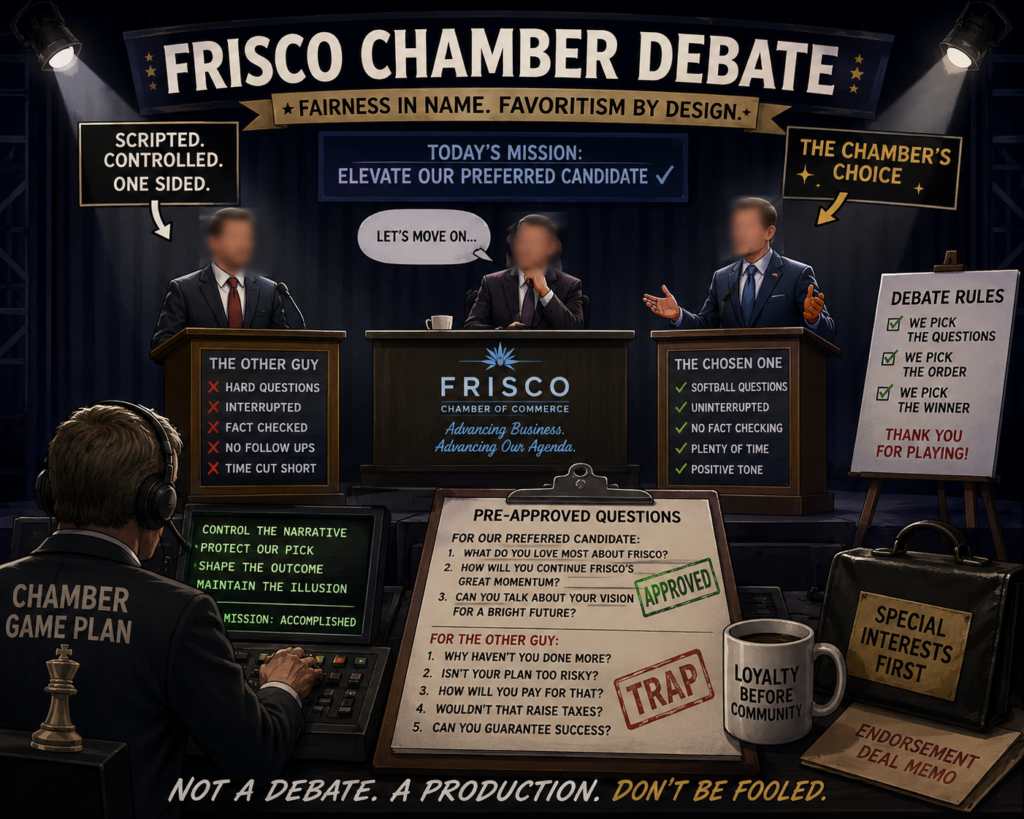
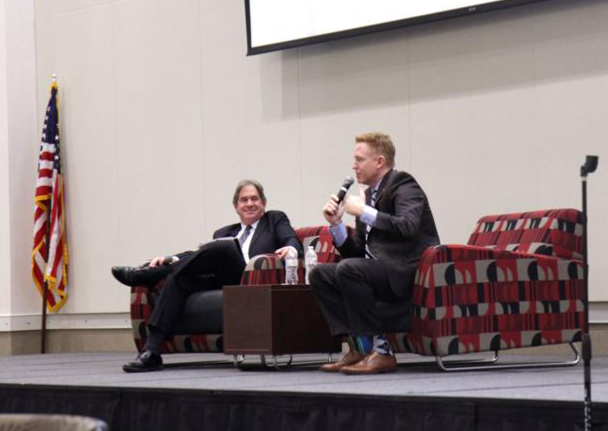
Tonight is the Frisco Chamber Mayoral Runoff Election Candidate Forum at Grace Church located at 5901 Page St near city hall. The Chamber stage lights will glow, the handshakes will flow, and the carefully polished talking points will land right on cue. But longtime Frisco residents have seen this movie before — and unlike Hollywood, the ending is usually written before the curtain rises. Year after year, the Chamber wraps itself in the banner of “community leadership” while quietly signaling which candidate belongs in the club and which one gets left standing outside the velvet rope.
Every year we listen to these debates and every year we have the same feedback sent to us by email.
The Cage Match Smackdown
Instead of a debate most of the time the Chamber Forums feel like a coordinated WWE RAW match. If you come expecting civic engagement and balanced moderation, you are about to get body slammed by reality.
Question Controversy
After the last forum we got several emails from residents, and they had strong feelings about the forum’s questions. The complaints included:
Questions are too long.
Not enough time for a candidate to answer the question.
Questions are biased to help the “preferred candidate”
Not clear how to use the challenge
Chamber of Complicity
Most residents want to believe the Chamber is an independent organization and the questions will be fair and balanced, but that is far from reality. In 2024, we wrote about the Election Fix related to the Fire Fighters Association propositions on the ballot. The Chamber allowed Councilman Bill Woodard and representative for the Safety First Frisco PAC ten minutes to speak to residents on why they should VOTE NO to the propositions on the ballot. However, they did not allow the Frisco Firefighters Association to speak, refute, or reply to the statements made by Woodard. This is a forum that goes out residents online via YouTube and the Chambers social media platforms, yet they did not let us hear both sides of an issue. The Frisco Chamber also sent out two email blasts, one in March, and one April of that year before the election to local business and members advocating, they Vote No!
The action they took effectively removed the Chamber as an independent voice on local issues. The bias was clear and showed the Chamber “FIX” was in!
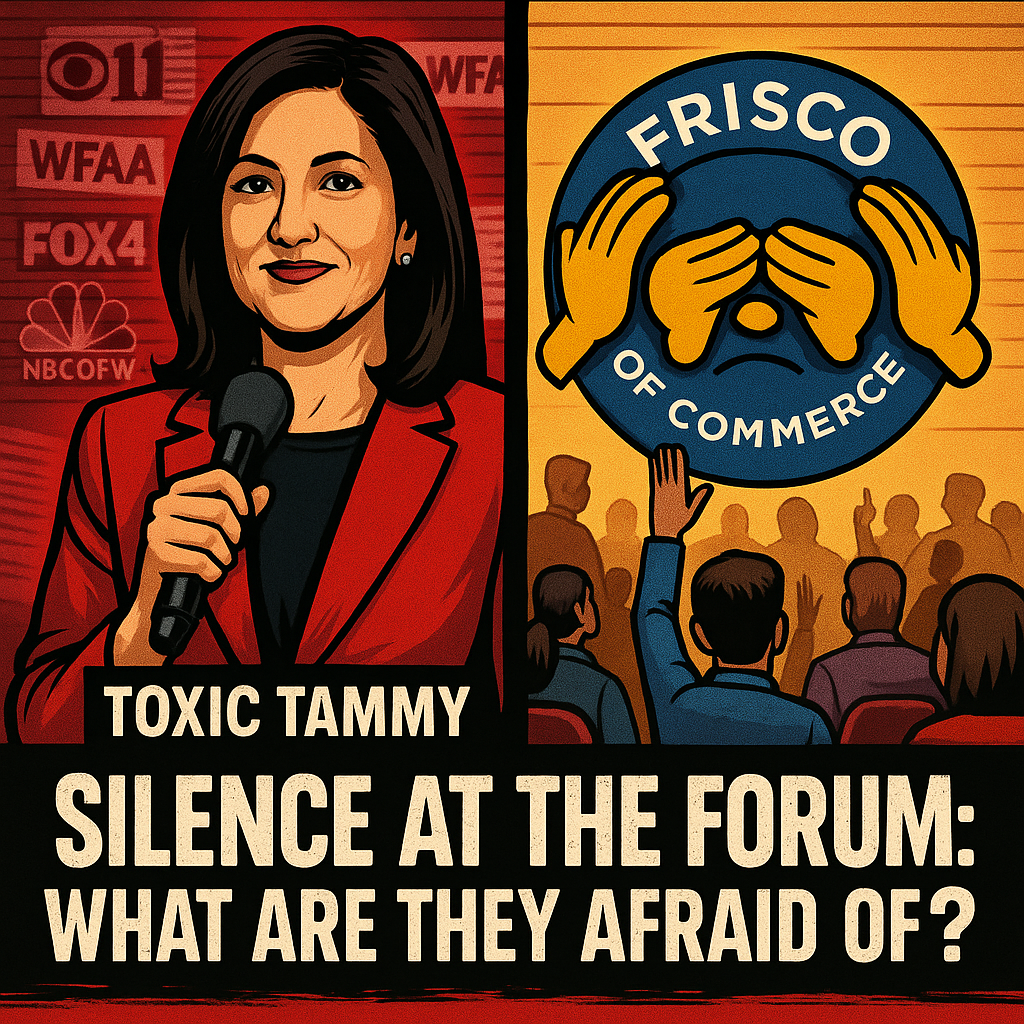
Then in 2025, after the Tammy Tapes were released and made headline news across the DMN, CBS11, WFAA, Fox4 and NBCDFW, one would expect the Chamber to ask Tammy Meinershagen a question about the tapes, but no. While everyone waited on pins and needles for the Chamber Team to ask the big question, they never did. Silence like it never happened.
At the Chamber Forum in 2023, where Mark Piland ran against Mayor Jeff Cheney, the Chamber team specifically asked Mark Piland about a false story that was planted in the DMN by the city to destroy his character just before early voting again. They went as far as asking Piland about a direct quote in the article. The point of this question was to push votes towards Mayor, Jeff Cheney! In fact, the audience booed that night at the question, letting the Chamber know they felt it was unfair and biased.
Again, this is proof the Chamber “FIX” is in, and they are lean towards a preferred candidate. It has happened year after year so if residents are expecting anything different this year, it won’t.
Closing Thoughts
The Chamber stage lights will glow, the handshakes will flow, and the carefully polished talking points will land right on cue. But longtime Frisco residents have seen this movie before — and unlike Hollywood, the ending is usually written before the curtain rises. Year after year, the Chamber wraps itself in the banner of “community leadership” while quietly signaling which candidate belongs in the club and which one gets left standing outside the velvet rope.
By the time the night is over, voters won’t just hear answers from candidates — they’ll see where loyalty truly lies. Watch it closely. Pay attention to who gets protected, who gets interrupted, who gets the softball questions, and who suddenly finds themselves walking into an ambush disguised as “civic engagement.” In Frisco politics, the fix is rarely announced out loud. It’s orchestrated through subtle nods, selective outrage, and a well-connected machine that has perfected the art of appearing neutral while picking favorites behind the curtain.
And if history tells us anything, we should expect at least one underhanded surprise before the final applause. In Frisco, political theaters don’t happen by accident, they are calculated and planned – you’ll see!
Disclaimer: This blog includes satire, parody, and comic relief. It contains summarized accounts created solely for humor and commentary. Any resemblance to real events is either coincidental or intentionally satirical. Reader discretion — and a sense of humor — are advised.
There is a difference between political disagreement and online obsession. In the age of Facebook gladiators, neighborhood watchdog pages, and keyboard constitutional scholars armed with Canva graphics, the line can get blurry fast. But lately, several Frisco residents have been asking a serious question about local physician Dr. Matt Rostami and his increasingly aggressive online commentary aimed at Frisco mayoral candidate Rod Vilhauer.
The concern is not simply that a doctor has political opinions. Doctors are citizens. They vote. They argue. They post memes just like everyone else. Some even discover Facebook Live and suddenly believe they are one podcast microphone away from becoming the next Joe Rogan.
Rostami’s online political presence is not new. Here are just a few posts sent to us by readers.
Video of Dr. Matt Rostami mocking the need to stop Sharia Law and making Christian woman to wear a Hijab. He specifically points out a woman named “Mary” who is holding a baby a reference to the bible. He goes on to say in our country Freedom is showing your butthole and cleavage because sharing is caring.
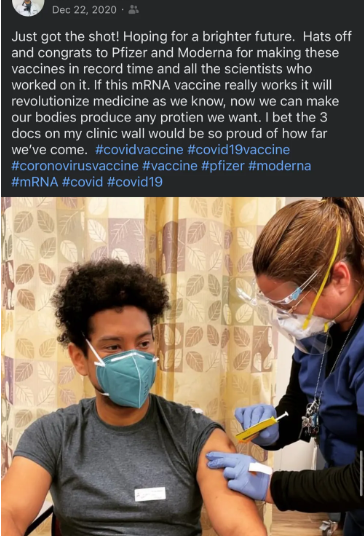
Current Revolt called out Dr. Matt Rostami for being a Democrat in disguise. He claims to be a Republican, but his voting Record says otherwise from what we can tell and Current Revolt called him out about it. We also noticed that he supported the vaccines during Covid which is odd for a Republican.
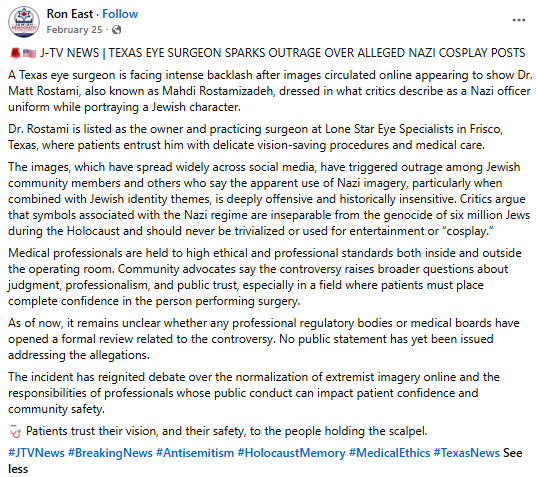
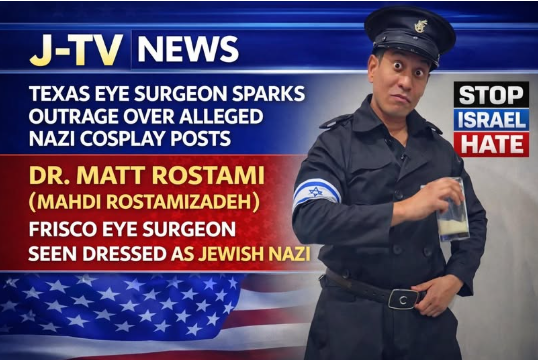
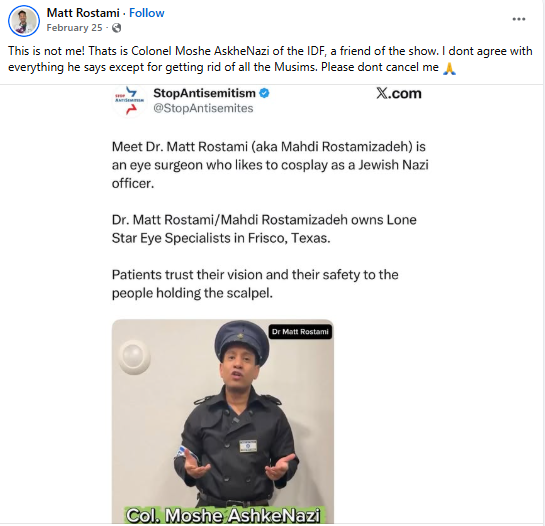
Then there is a post showing Dr. Matt Rostami dressed up in cosplay as a Jewish Nazi Officer. After it was posted he later mocked it, and in the words of Shaggy allegedly said, “it wasn’t me.”
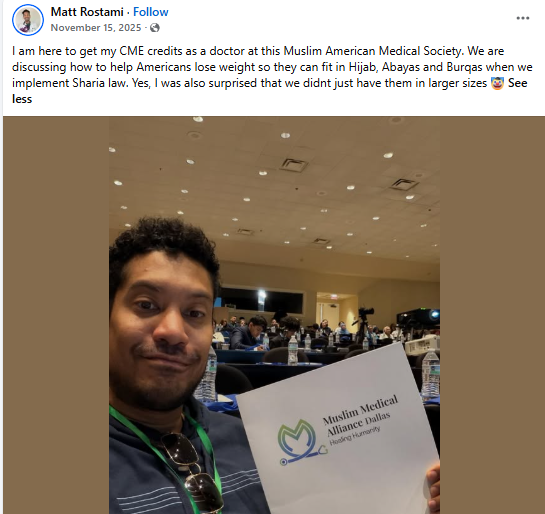
In another post, Rostami holds up a Muslim Medical Alliance folder and mocks obese woman saying “I am here to get my CME credits as a doctor at this Muslim American Medical Society. We are discussing how to help Americans lose weight so they can fit in Hijab, Abayas and Burqas when we implement Sharia law. Yes, I was also surprised that we didn’t just have them in larger sizes (clown face emoji).
The Concern
The concern being raised by residents is whether Dr. Rostami’s online behavior has crossed from political speech into something more concerning: harassment, intimidation, or conduct unbecoming of a licensed physician.
And perhaps the biggest mystery of all: why did it take nearly an entire day to even locate his Texas medical license?
The Name Game
Here is where the story starts feeling less like a medical directory and more like a witness protection subplot from a late-night cable drama.
Most Texans searching the Texas Medical Board database would naturally type in “Matt Rostami.” That search does not easily lead to his medical credentials because “Matt Rostami” is not his legal name.
According to Texas Medical Board records, Dr. Matt Rostami’s legal name is Dr. Mahdi Rostamizaden, and his Texas medical license is listed as #R2723.
To be clear, physicians are not generally required to publicly advertise their license numbers on websites or social media. Texas law typically allows doctors to practice and advertise under a professional name, practice name, DBA, or commonly used name. Nothing illegal there.
Still, some residents found it odd that locating the license information required what felt like a forensic accounting team, three cups of coffee, and the determination of a true-crime podcast listener.
What Does the Texas Medical Board Actually Regulate?
This is where things become important — and nuanced.
The Texas Medical Board does not regulate political beliefs. A physician can support a candidate, oppose a candidate, criticize policy, or post unpopular opinions online. The First Amendment protects a tremendous amount of speech, including speech many people dislike.
Texas law does not create one single “social media behavior statute” for physicians. Instead, physician conduct is regulated through broader standards found in the Texas Occupations Code and Texas Administrative Code involving:
Professional ethics
Dishonorable conduct
Conduct likely to deceive, defraud, or injure the public
Impairment issues
Harassment or threatening behavior
Professional character requirements
The board has previously disciplined physicians over online conduct, including inappropriate Facebook activity and harassment-related behavior. The key legal question is not whether someone is rude, loud, politically charged, or unpopular, but the threshold is evidence.
Not gossip. Not rumors. Not “he seems weird online.” Evidence.
When Does Free Speech Become Harassment?
That is the million-dollar constitutional question.
A physician posting criticism about a political candidate is protected speech. Even harsh criticism usually remains protected. At Frisco Chronicles we know where that line is and we do stand to protect it. The question is should those rules be different for licensed professionals in some categories.
If conduct escalates into targeted harassment, threats, stalking behavior, intimidation, discriminatory conduct, or actions suggesting impaired judgment that could affect patient safety, the equation changes dramatically.
Several Frisco residents who contacted Frisco Chronicles expressed concern that Dr. Rostami’s posts have become increasingly inflammatory and intensely focused on Vilhauer.
One resident wrote:
“The public rhetoric has become increasingly inflammatory.”
Another questioned whether the fixation had crossed into “stalking territory.”
To be very clear, those are serious accusations. We want to make sure folks understand these are opinions — not legal findings.
A skeptical observer might reasonably ask whether the behavior reflects the professional judgment expected from someone entrusted with patient care. But legally speaking, “poor judgment” and “disciplinable impairment” are not the same thing.
That distinction matters.
Because the law does not punish someone simply for acting eccentric online. If it did, half of Facebook would be under federal supervision and Nextdoor would require adult probation officers.
The “Good Professional Character” Standard
Under Texas Occupations Code Chapter 155, physicians are expected to maintain “good professional character.”
Chapter 164 goes further, allowing disciplinary action when a physician is unable to practice medicine safely because of:
illness
drunkenness
excessive use of drugs or chemicals
mental or physical conditions affecting safe practice
Recently, several residents emailed Frisco Chronicles asking whether Dr. Rostami’s online conduct raises concerns about impairment or mental fitness.
To be absolutely clear: there is currently no public evidence proving impairment, substance abuse, or mental incapacity.
However, Texas law does provide mechanisms for investigation if legitimate complaints and probable cause exist.
Under Section 164.053 of the Texas Occupations Code, the Texas Medical Board may request a physician submit to mental or physical examinations if there is probable cause involving professional behavior concerns, substance abuse issues, or mental health conditions affecting safe practice.
If a physician refuses, hearings may follow, during which the physician can present evidence and legal defense.
Again, the standard is not “people on Facebook think he’s acting strange.”
The standard is probable cause backed by evidence.
That is a very high bar — and intentionally so.
Targeting Rod Vilhauer
Perhaps the most comical part of this entire saga is that Dr. Rostami appears to be attacking Rod Vilhauer for a comment made during a podcast that he has later clarified, while Rostami engages in the very same style of online political commentary daily in his regular posts. One day it is “dangerous rhetoric” when Vilhauer speaks bluntly about controversial issues; the next day Rostami is unloading multi-post tirades, inflammatory accusations, taking out political hit pieces in magazines, putting up defamatory road signs, and posting political attacks with the enthusiasm of a late-night cable news host who just discovered espresso. Residents watching this unfold believe Rostami has gone over the line of two people arguing over who is being too loud… through bullhorns. If harsh political speech suddenly qualifies someone as unstable, offensive, or unfit for public discourse, then critics might reasonably ask whether Dr. Rostami’s own Facebook timeline should be entered into evidence as Exhibit A.
Politics, Medicine, and Public Trust
This entire situation raises broader questions that extend beyond one physician or one mayoral race. How much online behavior is too much for professionals entrusted with public safety and public health? Should physicians be held to higher standards in public discourse? At what point does political activism begin damaging public confidence in the medical profession? And perhaps most importantly: in an era where outrage drives clicks, likes, and engagement, are some people simply losing the ability to log off?
The internet has transformed ordinary citizens into full-time broadcasters. Every grievance becomes a livestream. Every disagreement becomes a crusade. Every Facebook thread becomes Gettysburg with emojis. But physicians occupy a unique place in society. Patients trust them with life-altering decisions. That trust depends not only on medical competence, but also on public confidence in their judgment.
The Texas Medical Board understands that balance. That is why it generally avoids policing mere political opinions while still maintaining authority to investigate conduct that may genuinely endanger the public or reflect professional impairment.
For now, Dr. Rostami’s conduct remains largely a matter of public debate — not public discipline.
But one thing is certain: when residents begin asking whether a Doctor’s Facebook feed belongs in a campaign office, a courtroom, or a psychiatric evaluation request, the conversation has already moved far beyond ordinary politics.
For legal purposes we must post this Disclaimer: This blog includes satire, parody, and comic relief. It contains summarized accounts created solely for humor and commentary. Any resemblance to real events is either coincidental or intentionally satirical. Reader discretion — and a sense of humor — are advised.
Frisco Chronicles has no issue questioning city leadership and department leadership because I believe someone must speak for the front-line employees. Why? It is the front-line employees in each department that do the day-to-day work which keeps our city great. Every time I hear from an “insider” it is the same story, different department.
We have heard about nepotism running rampant, leadership involved in sexual affairs, toxic work environments, and much more. The truth is our city needs a good “SPRING CLENAING” in top management and department leaders. Why? To protect our front-line workers who feel the brunt of their failed leadership.
The last two weeks we have received several emails related to City Manager, Wes Pierson. The emails talk about how Pierson leads with hostile and condescending behavior. One email noted he consistently speaks down to staff, direct reports, and his executive team. It went on to say his condescending behavior and communication style undermines the morale across all city departments. Residents have seen this behavior up front and center at city council meetings.
The emails also talk about how employees feared professional retaliation if they file a complaint with HR against department or city leadership. The minute a complaint is filed the city begins actions to end that employee’s employment through any means necessary. That includes making up issues or actions to use against the employee.
We know in a recent meeting with public safety officials he questioned if the Fire Department really needed “ladder trucks” which shows his operational ignorance. Clearly his questioning shows a lack of operational infrastructure needed for basic emergency response. His dismissive attitude towards critical public safety equipment poses a direct threat to our communities welfare.
One email talked about staff development and how Pierson actively blocks the implementation of employee progression and career development. The city constantly changes care development plans to hold employees back.
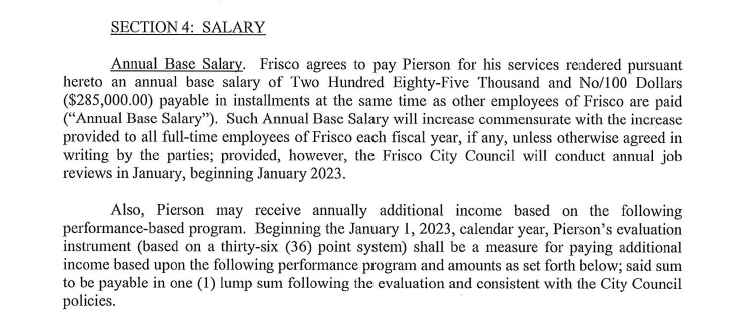
This kind of behavior from one of the highest paid city managers in the nation is unacceptable. There is a severe contrast between his massive compensation package and his refusal to invest in staff progression which behind closed doors is crippling city operations. One email said a third-party investigation into management practices is needed to protect city employees and residents. It is the only way to ensure responsible governance.
When I receive one email I take it as employee frustration, but when I receive 3 in one week from different employees, different departments then it tells me there is an issue at city hall. That issue starts at the top with Wes Pierson as he sets the tone that flows downhill.
Disclaimer: This blog includes satire, parody, and comic relief. It contains summarized accounts created solely for humor and commentary. Any resemblance to real events is either coincidental or intentionally satirical. Reader discretion — and a sense of humor — are advised.
The City of Frisco loves to talk about transparency. Council members regularly tell residents they are committed to openness, accountability, and public engagement. But the city’s actions tell a very different story.
Today, there are at least nine active Public Information Requests (PIRs) tied to major public issues that have either been sent to the Texas Attorney General for a ruling or met with significant resistance, delays, clarifications, or excessive cost estimates.
That should concern every taxpayer in Frisco. Anyone has the right to request to see these documents. Below is a list of PIR’s we are currently waiting on because they have been sent to the Texas Attorney General.
04/10/26 PIR Request: I am requesting access to and copies of the following public information:
Communications Between Brian Livingston and David Ovard All communications, including but not limited to text messages, emails, and messages sent via any messaging applications (including but not limited to WhatsApp, Signal, iMessage, or similar platforms), conducted on both city-issued devices and personal devices, related to: • City business • Frisco Whistleblower • Frisco Chronicles • Frisco Elections
Communications Between Brian Livingston and Matt Sapp All communications, including text messages, emails, and messages sent via any messaging applications, conducted on both city-issued devices and personal devices, related to: • City business • The fire association Timeframe: Last four (4) months from the date of this request
Communications Between Brian Livingston and Sean Merrell All communications, including text messages, emails, and messages sent via any messaging applications, conducted on both city-issued devices and personal devices, related to: • City business • Frisco Whistleblower • Frisco Chronicles
Communications Between Brian Livingston and Jake Petras All communications, including text messages, emails, and messages sent via any messaging applications, conducted on both city-issued devices and personal devices, related to: • City business • Frisco Whistleblower • Frisco Chronicles
Communications Between Brian Livingston and Laura Rummell All communications, including text messages, emails, and messages sent via any messaging applications, conducted on both city-issued devices and personal devices, related to: • City business • Frisco Whistleblower • Frisco Chronicles • Frisco Elections Timeframe: Last three (3) months from the date of this request
04/25/26 PIR Request: Records related to the Utility Billing Department and Revenue Collections Division: Customer Account Policies & Enforcement Policies and procedures governing utility disconnections, payment plans, and account adjustments. Any internal audits, reviews, or reports evaluating how these policies are applied. Aggregate data (no personal identifiers needed) showing approval/denial rates for payment plans or disconnection decisions over the past 3 years.
04/05/26 PIR Request: Records related to the Utility Billing Department and Revenue Collections Division: Internal Investigations Any and all records, reports, findings, summaries, or communications related to investigations conducted within the Utility Billing / Revenue Collections Division within the past 3 years. This includes complaints, interview notes, conclusions, and any disciplinary recommendations or actions taken. Personnel Actions Records reflecting terminations, resignations, retirements, or reassignments of employees within the Utility Billing / Revenue Collections Division during the past 3 years, including but not limited to supervisors and management-level staff. Documents explaining the reasons for such personnel actions, where available.
02/25/26 Request: I respectfully request access to and copies of the following records: Feb 17th City Council Work session Agenda Item A complete copy of Ordinance No. 19-10-86, including all attachments, exhibits, amendments, and related backup materials.
All documents, memoranda, draft ordinances, redlines, agenda packets, briefing materials, notes, and internal communications relating to the adoption, interpretation, amendment, or enforcement of Ordinance No. 19-10-86.
All emails, text messages, correspondence, and communications between members of the City Council and City staff—including but not limited to the City Manager, Mayor, and administrative staff—regarding: Any changes, proposed changes, or discussions about procedures for public testimony, citizen input, or public comment at City Council meetings.
Any discussion of modifying time limits, speaker rules, sign-up procedures, decorum rules, or restrictions on topics during citizen input. Any policies, internal guidelines, or training materials concerning procedures for public testimony or citizen participation at City Council meetings. The time frame for this request is January 1, 2025, through the present.
02/25/26 PIR Request: Specifically, this request concerns the executive session held on February 17, 2026, as reflected on the published agenda.
Attendance & Authority Documentation Please provide: Any sign-in sheets, attendance logs, notes, security logs, or internal records reflecting who attended the executive session. Any documentation reflecting the authority for attendance by any individual who was not formally sworn in as a member of the City Council at the time of the meeting. Any legal opinions, memoranda, emails, or communications discussing whether attendance by Ann Anderson—who had not yet been formally sworn in due to a pending election contest and recount—was permissible under the Texas Open Meetings Act. Any communication between City staff, the City Attorney, Council members, or outside counsel regarding her participation or presence in the closed session.
Executive Session Materials Because a private citizen (i.e., an individual not yet sworn into office) was reportedly permitted to attend the executive session, we request: The certified agenda or recording of the executive session as required by Texas Government Code §551.103. All briefing materials, packets, memoranda, presentations, or documents provided to any attendee for use during executive session. Any communications summarizing, describing, or recapping what was discussed in executive session. Any communications following the meeting that reference what occurred during the closed session.
Waiver / Public Disclosure Issue This request includes all communications discussing whether the presence of a non-sworn individual in executive session: Constituted a waiver of confidentiality; Converted discussions into public information; Triggered potential Texas Open Meetings Act implications; Required disclosure obligations under Chapter 552 or 551 of the Texas Government Code. Please provide any internal analysis or discussion regarding these issues.
02/25/26 PIR Request: During discussions surrounding the new animal shelter and the Collin County Animal Services ILA, council member Laura Rummel publicly promised residents there would be full transparency throughout the process. Residents were told the public would be informed and included. So two months ago, I filed a PIR for the following which the city submitted to the Texas Attorney General claiming “Attorney-Client Privilege” that is confidential.
Communications Between Identified Individuals Please produce any and all communications related City of Frisco Animal Holding Facility, CCAS ILA, CCAS Expansion — including but not limited to emails (including attachments), text messages (SMS, iMessage), encrypted or third-party messaging platforms (Signal, WhatsApp, Teams, Slack, etc.), memoranda, handwritten notes, meeting notes, calendar invitations, call logs, draft documents, correspondence, and internal communications — sent or received: Between any single individual listed below and any other listed individual; Between any combination of the listed individuals; Or between any listed individual and any staff member acting on their behalf. This request applies to communications conducted on official government devices/accounts and personal devices/accounts if used for public business. Collin County Officials & Staff: Chris Hill – County Judge, Susan Fletcher – Commissioner, Precinct 1, Cheryl Williams – Commissioner, Precinct 2, Darrell Hale – Commissioner, Precinct 3, Duncan Webb – Commissioner, Precinct 4 Lacy DeHorney – Animal Services Manager Misty Brown – Animal Services Division Manager Russell Schaffner, Yoon Kim, Bill Bilyeu City of Frisco Officials & Staff: Wes Pierson – City Manager, E.A. Hoppe – Deputy City Manager, Ben Brezina – Assistant City Manager, Henry Hill, Rob Millar – Assistant City Manager, Ken Schmidt – Director of Special Projects, Wes Hicks – Facilities Project Manager, Micki Johnson, Karla Munoz-Horton Elected Officials: Jeff Cheney – Mayor, Angelia Pelham, Laura Rummel, John Keating, Burt Thakur, Jared Elad, Brian Livingston, Ann Anderson
Subject Matter Scope This request specifically includes communications referencing or relating to: Collin County Animal Services (CCAS) The Interlocal Agreement (ILA) between Collin County and the City of Frisco Negotiation, drafting, execution, amendment, or renewal of the CCAS ILA The CCAS expansion project (one-story, ~10,000 square foot addition) The November 2023 voter-approved bond funding for CCAS Any delay in the CCAS expansion project Reasons for the delay, Responsibility for the delay, Any documents or communications related to the cost escalation, change orders, financial impact analyses, or construction cost increases resulting from delay of the ILA or Expansion. Discussions of liability, intergovernmental coordination issues, staffing issues, permitting, procurement, or compliance concerns tied to the project
Project Documentation Please also provide: All versions (final and draft) of the CCAS ILA and related amendments Redlines, negotiation notes, briefing materials, and executive summaries Contracts, RFPs/RFQs, architectural/engineering plans Project schedules and revised schedules Budget projections, cost comparisons, and bond allocation tracking Internal memoranda explaining timeline changes Any document identifying who is responsible for delay and why Date Range Requested: January 1, 2023 – Present (for ILA and communications) November 1, 2023 – Present (for expansion/bond-related records)
02/04/26 PIR Request: Copy of any emails with all attachments or text messages between Collin County and Frisco Management (Ben Brezina, Wes Peirson, City Manager’s Office, Henry Hill) or city council members including Mayor Cheney related to the Collin County ILA for Animal Services. Date: 8/1/2025 to Present 2/5/2026
Inspection Only Results
On top of these PIR’s several others requested were sent to the Texas Attorney General. One was for the copies of the RFP, RFQ, Contracts, Awards and Agreements related to the downtown main street construction. Along with records relating to the Employee Health Clinic. The outcome was “Inspection Only” meaning I have to go to city hall to view the information.
Acceptance of Charges
On 4/5/26 I filed for access to and/or copies of the following records related to the Utility Billing Department and Revenue Collections Division: Employee Complaints / Workplace Environment Records of formal employee complaints, grievances, or HR reports related to workplace conduct, management practices, or department leadership within the Utility Billing / Revenue Collections Division. Any employee climate surveys or internal assessments conducted in the past 3 years. Lastly, the communication emails or internal communications among department leadership, HR, and executive staff referencing: Department performance Employee concerns Investigations or complaints (Limit to the past 2 years to reduce scope if needed.)
How much is the city charging for this? $154.62
On 4/5/25 we filed for records related to the Utility Billing Department and Revenue Collections Division: Organizational Structure & Hiring Current and past organizational charts for the Utility Billing / Revenue Collections Division. Job descriptions, qualifications, and hiring criteria for management positions within the division. Records related to recent hiring decisions for supervisory or management roles (last 3 years).
How much is the city charging for this? $122.58
The Fight For Transparency
When it comes to the animal PIR’s you can bet the city sent it to the AG so they did not have to release the information before the election. Why did the city send it to the Attorney General when Laura Rummel sat on the dais and promised transparency through the whole process (which is on record). I also would like to know why she requested conversations regarding an animal facility be moved to “closed session”, so they remain off the record. That is what Rummel considers transparency.
If the process was truly transparent, why are citizens having to fight for basic records? Residents are repeatedly told public records are available under the Texas Public Information Act. Yet Frisco citizens are now facing charges exceeding $120 to $150 simply to obtain information from their own government.
Citizens should ask themselves: Is the pricing intended to recover reasonable costs — or discourage scrutiny?
Transparency is not a campaign slogan. It is a governing principle. That is a principle our city leadership, city council and mayor fail to uphold. That is why we need change because we “the residents of Frisco” should have the right to review and question decisions being made by with taxpayer dollars.
When elected officials promise openness but residents encounter delays, legal reviews, redactions, and triple-digit invoices for public documents, trust in local government erodes. Then they wonder why every resident calls for change and does not trust them.
Frisco residents deserve answers. More importantly, they deserve a city government willing to practice the transparency it so often preaches.
In an age where information travels faster than verification, the line between opinion and journalism has never been more important—or more fragile. When a blog presents itself as a source of truth but operates without real journalism, the consequences can ripple far beyond a single headline. Readers trust what they believe is reporting. When readers know the blogger is a FORMER COUNCILMAN, they assume they can trust him – because our politicians would not lie, right?
Readers make decisions, form opinions, and sometimes even take action based on it. When that trust is misplaced, the damage isn’t just misinformation—it’s a breakdown of credibility across the entire information ecosystem.
At Frisco Chronicles, we believe that words carry weight. Calling something “journalism” is not just a stylistic choice; it’s a responsibility to the public. When that claim is misused—when speculation is dressed up as reporting or bias is masked as truth—it misleads readers and undermines the very foundation of informed communities. And in a city where residents are demanding transparency and trust, that’s not just careless—it’s dangerous.
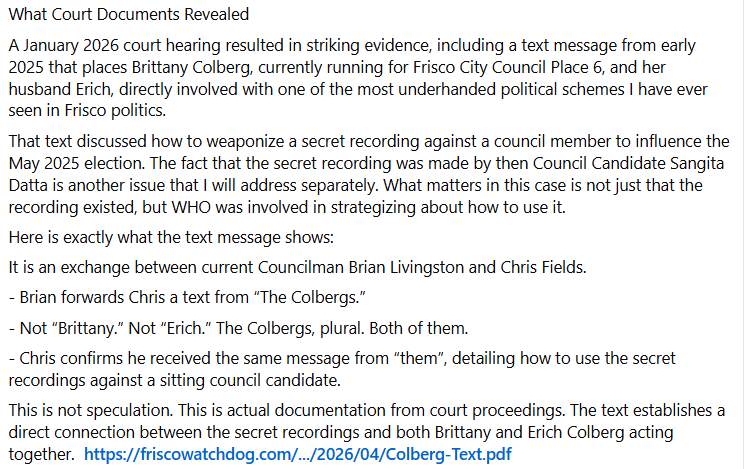
On April 16, 2026, Former Councilman Bill Woodard published a blog speculating that little lies reveal big truths. He hinted to an important legal proceeding between Frisco Chronicles (me) and the Petitioner and explained he would get into that later.
Then Woodard makes a reference “What Court Documents Revealed” which immediately makes the implication that what is about to be written is based on facts revealed on the record. But is it factual, or staged to look factual?
Note: Anything in RED is directly cut and pasted from Woodards Blog. The rest is our commentary.
Woodard starts by giving context using words such as weaponize, strategizing, underhanded, political scheme, and secret recording. Then he drops the names of the Colberg’s and Sangita Datta. He then said what matters in this case is not just that the recording exists, but WHO was involved in how it was used. Woodard is wrong when he says what matters in this case is how the recordings were used. The Tammy Tapes have nothing to do with the petitioner’s claim of defamation or libel. However, his words probably put readers on the edge of their seat.
Woodard writes: Here is exactly what the text message shows:
It is an exchange between current Councilman Brian Livingston and Chris Fields.
– Brian forwards Chris a text from “The Colbergs.”
– Not “Brittany.” Not “Erich.” The Colbergs, plural. Both of them.
– Chris confirms he received the same message from “them”, detailing how to use the secret recordings against a sitting council candidate.
This is not speculation. This is actual documentation from court proceedings. The text establishes a direct connection between the secret recordings and both Brittany and Erich Colberg acting together.
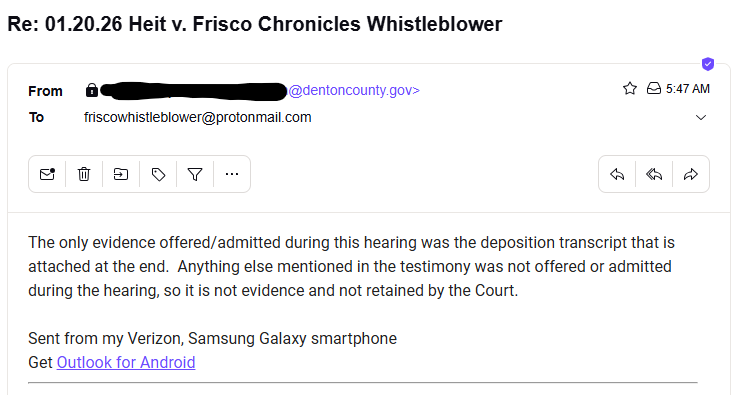
Here is the PROBLEM with Bill Woodard’s article, he claims this is actual documentation from court proceedings and then posts a link to an image of a text message. I filed a PIR with Denton County Courts and the Court Reporter for all documents related to this case including submitted evidence and the transcript of the proceedings. When I received it, I reviewed everything in full detail. However, there was no copy of the text Bill Woodard posted. I went back to the court and specifically showed them what Bill had posted and asked for that evidence as well. You can read the response for yourself:
If the text messages were never entered into court evidence and they are not a part of the court record, HOW DID BILL WOODARD GET A COPY OF THE TEXT MESSAGE?
Why is this important, because he led readers to believe This is actual documentation from court proceedings which it was NOT! Speculation is he received the text from the Petitioner, her attorney Mr. Harbin, or maybe David Ovard (the PGA KING) who also wormed himself into this case and who works at Clark Hill with Mr. Harbin. However – none of it was from actual documentation from court proceedings.Bill Woodard LIED to his readers.
Dissecting Bills Words: Text between Councilman Livingston and Chris Fields
Woodard writes, “Brian forwards Chris a text from “The Colbergs.”
Woodard continues, “Not Brittany. Not Erich. The Colberg’s, plural. Both of them.”
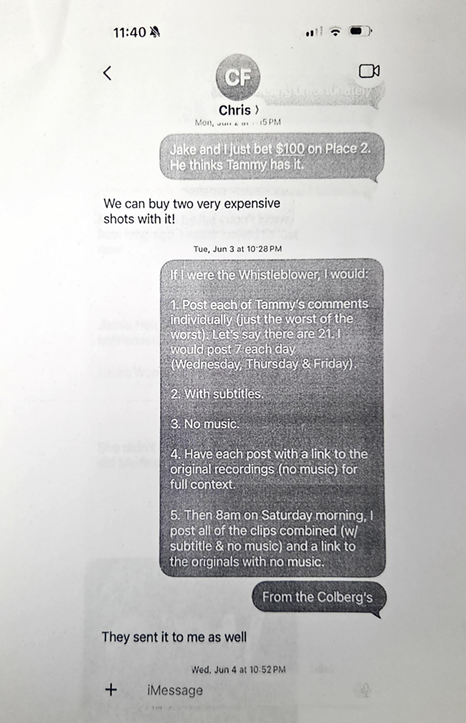
The FACTS show, Brian forwarded a screen shot of just a text with no name, no phone number on it. There is no circle at the top showing who it was from or if both of the Colberg’s were on the text to Livingston, or what phone number it came from. Then in a second text, Livingston says “From the Colbergs” which means he implied it was from them “plural.”
The FACTS show Fields said, “they sent it to me as well” and he was probably replying in plural with that because Livingston made that implication in his text. As for Woodard’s claim, Chris confirms he received the same message he did not confirm that in court records. Chris said “I don’t remember that text, but that’s what he (referring to Erich) said yesterday” referring to their phone call. Mr. Martin then asked what he did with the text and Fields responds, “I didn’t do anything with it.” Mr. Harbin then shows him the text and asks Fields, does this look like an exchange between you and Livingston? Fields responds, “It definitely could be, I just don’t remember it.” A few questions later Mr. Harbin ask Fields again, “so does that refresh your memory that they sent you the text message?” Fields replies again, “Not really, I get a lot of texts.” At no time did Chris Fields confirm he received the text as Woodard claims according to actual court document proceedings.
Another Fact, the “Tammy Tapes” came out the first week of May and this text that Bill Woodard claims “implicates the Colberg’s” was sent June 3rd at 10:28 pm a month later after the tapes were already out. Why is the date of the text message important? It aligns with Chris Fields testimony on page 38 of the transcript. Mr. Martin (the petitioner’s attorney) asked Fields at any point after the tapes were released, did you receive a text from “The Colberg’s” regarding those tapes and a whistleblower?” Fields responds, “I don’t remember, but I had a conversation with Erich about it yesterday.”
Again, it was Mr. Martin who implied “The Colberg’s” plural – which is not proof the actual text was from them both. Fields continues Erich Colberg reached out to him the day before to talk about something (not the tapes or the text) and it just came up in conversation. Mr. Martin continued and asked who brought it up and Fields replied, Erich Colberg. Fields reiterated again, “I didn’t even remember that text.”
Mr. Martin then asks Fields why Erich would bring that up and Fields responds, “lots of people made points about what they would and wouldn’t do.” This shows it was the talk of the town, and many were speculating who, what, when, where, etc.
On page 40 of the transcript Mr. Martin handed Mr. Fields a text message document they received in response to a subpoena from Mr. Livingston which is a text exchange between you and Livingston. The document was never entered into evidence by Mr. Martin to the court records.
The questions by Mr. Martin continue around the “Tammy Tapes” but my question is what does the tapes have to do with the Petitioner and her defamation case? It has nothing to do with the trolls who left nasty comments. What is the point of the line of questioning others to enter it into the record? Maybe it was all a setup for them to use later like Bill Woodard did in his blog.
Woodard then writes “Chris confirms he received the same message from “them”, detailing how to use the secret recordings against a sitting council candidate.”
Next up was cross examination by Mr. Harbin, Frisco Chronicles attorney, and he asks Fields if he has any personal knowledge of who the Frisco Chronicles Whistleblower is? Mr. Fields responds, “I have no proof whatsoever. Mr. Harbin continues, “you also testified that there was no personal knowledge that there’s anybody else other than Mr. Douglass that is ..” Fields responds, “I have no knowledge of the inside workings of Whistleblower.” Mr. Harbin continues and asked Fields, “What is the basis of your belief that there are others that are behind Frisco Chronicles…” Fields responded that he didn’t have anything specific, he just always thought it was a group of people. Mr. Harbin then said, “so purely a hunch?” Fields responded 100 percent.
Woodards Personal Opinion
Bill Woodard continues in his article calling out Brittany Colberg as a liar, when it is very possible, she did not know about the text. I cannot speak for them as I don’t know them. As for why Erich Colberg would file to have these text messages removed, my guess is because they have nothing to do with the case of defamation against the Petitioner. If every Frisco resident who texted friends or talked to friends regarding speculation of “who is Frisco Chronicles,” is guilty, then half of Frisco would be in trouble including Bill Woodard.
We have to ask the obvious again, what is the point of the questioning and the text itself? It had nothing to do with the comments the petitioner claims are defamatory. Why did the petitioner’s attorney not ask them if under a fake name, did they leave defamatory comments on a blog related to the petitioner? Why not ask them if they are Frisco Whistleblower? That would have something to do with this whole case.
The even more concerning thing is that the petitioner’s attorney may have had phone calls and conversations with all these witnesses before they came to court. One could say it was to apply pressure or influence what someone might say, the other thought it was simple preparation. You decided!
False Accusations
As we have said before this was never about libel or defamation, it was about outing the me, the Whistleblower, to try and put pressure on me to shut it down. It was to put pressure and discredit innocent residents who like a Frisco Chronicles post or left a comment. It was to embarrass those who came to court or donated to a go fund me for Frisco Chronicles. It was about applying public pressure, because that is what the Frisco Insiders do to shut those who disagree, or don’t like the Cheney status quo.
Woodard needs to be honest and transparent when it’s uncomfortable. Mr. Woodard, would you like to tell us how and where he got a copy of a text message that was not submitted to evidence and therefore is not a part of the court records or transcripts? Woodard needs to be accurate and honest about Fields testimony because he never confirmed anything.
Livingston and Fields turned those over under a subpoena to the petitioner’s attorney. Court does not have them, so who else has a copy of them? Deductive reasoning would tell you that it was given to him by his “friends” meaning the petitioners legal team, or the petitioner herself. Why would they give a blogger a text without any context to put into his blog? It goes to prove this is about the Frisco Insiders or the machine to shutting me down. They are tired of being the headlines or questioned about dealings in this city.
Woodard wrote “This is not speculation. This is actual documentation from court proceedings. The text establishes a direct connection between the secret recordings and both Brittany and Erich Colberg acting together.” https://friscowatchdog.com/…/2026/04/Colberg-Text.pdf
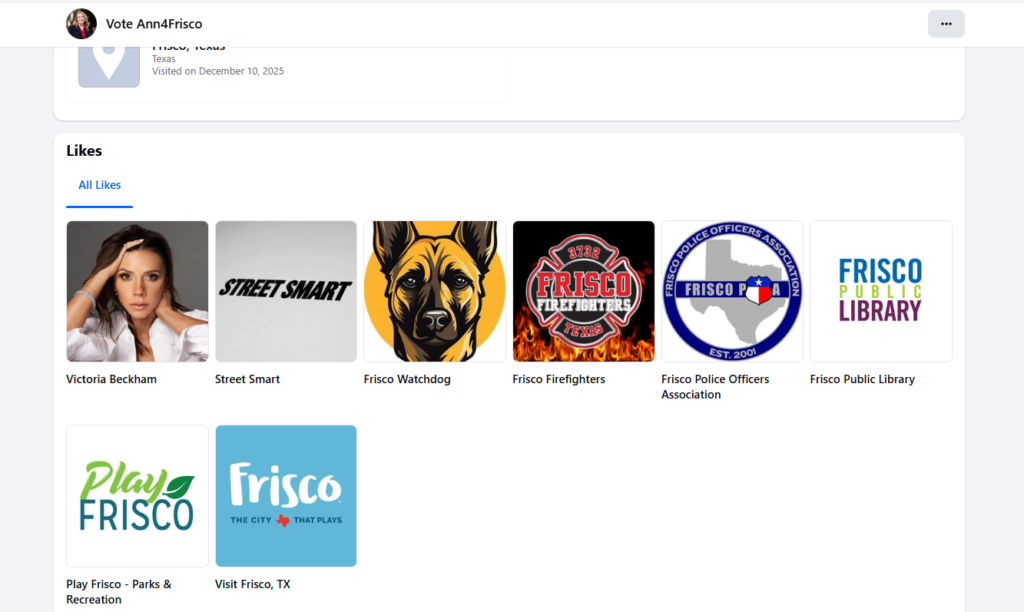
Nothing in the court evidence shows or confirms that the Colberg’s “acted together” on anything. If that is considered evidence to publicly convict someone, then I would argue the fact that Ann Anderson, our new councilwoman, whose campaign page liked Bill’s Blog makes her guilty of working with him and being a part of these false accusations. Or recently re-elected Laura Rummel is guilty of collusion with Bill Woodard because she shared his blog attacking innocent Frisco residents (which she later took down). MYPOINT: THAT IS COMPLETELY RIDICULOUS! A like of a page, a reshare of a post, or a text to a friend is not an admission of guilt on anything.
Mr. Woodard owes the Colberg’s and the readers an apology for misleading them because nothing he published in this specific blog was from actual documentation from court proceedings. His claim is not speculation; it is 1000% pure speculation on his part. Speculation that came out right during early voting in order to possibly upset the apple cart or discredit a candidate.
For legal purposes I must put the following: Disclaimer: This blog includes satire, parody, and comic relief. It contains summarized accounts created solely for humor and commentary. Any resemblance to real events is either coincidental or intentionally satirical. Reader discretion — and a sense of humor — are advised.



I went to her to ask for help with an issue my child that was getting nowhere with the school,…
So whatever became of the $17 million dollars that the city council gave the Mayor to beautify a drainage ditch?
At last count, there are 3 different "spa/massage" businesses in the small office park at the northeast corner of John…
I literally just saw this. Yeah, she used to forward everybody’s emails behind their backs.
You're dropping truth bombs! These mom and pop shops are what should be the least of Karen's worries. If they…