While many want to believe local politics is non-partisan, the truth is your values reflect how you vote and what you support. For the last several elections we have heard candidates say when they door knock communities one of the first questions they are asked is what party affiliation you are. It shows that your party does matter to voters at the end of the day.
Lack of Engagement with the Republican Party
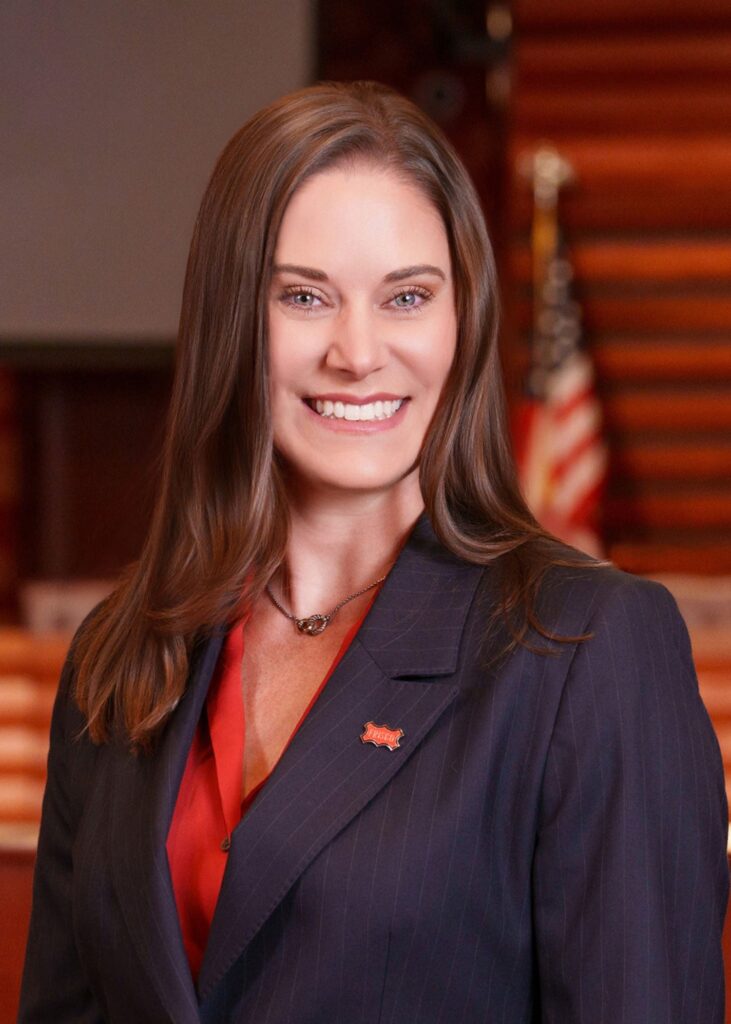
Recently, Laura Rummell went after the Denton and Collin GOP endorsement, and Frisco Chronicles is curious as to why? She has not attended any Republican events, dinners, or meetings. Rummel has not visited or supported local Republican groups, and she has not supported Republican endorsed candidates.
Party Endorsements
She did not receive endorsement in either County. In Denton County, Vijay Karthik received 44 or 49 votes, while Laura Rummel only received 11 and 15 abstained. It was not enough for the 2/3 majority vote. In Collin County, Vijay Karthik received the Collin GOP endorsement in a landslide vote.
Lack of Support for Fellow Republican Candidates
In Frisco, Laura has not supported the last three Republican endorsed candidates and went as far as actively working for their opponents. But when it comes time to get “RE-ELECTED” she shows up asking to the Denton and Collin County GOP’s asking, well expecting their endorsement. Laura also campaigned against Stephanie Elad for Frisco ISD supporting her opponent a hard dem. Most recently Laura supported Ann Anderson for city council who was backed by local democrat groups instead of the endorsed Republican. Here she is supporting Tammy Meinershagen who ran against one of those republican endorsed candidates.
Screenshot
Endorsed by Hard Democrats
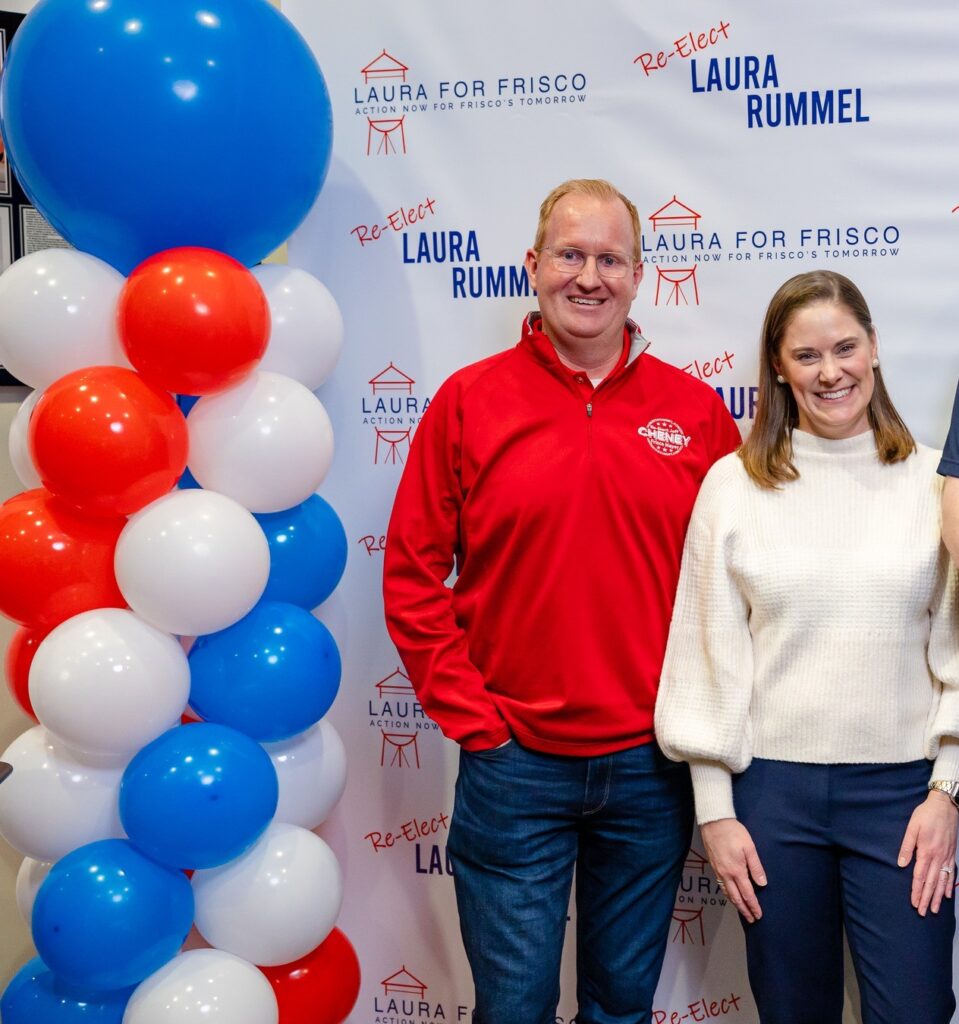
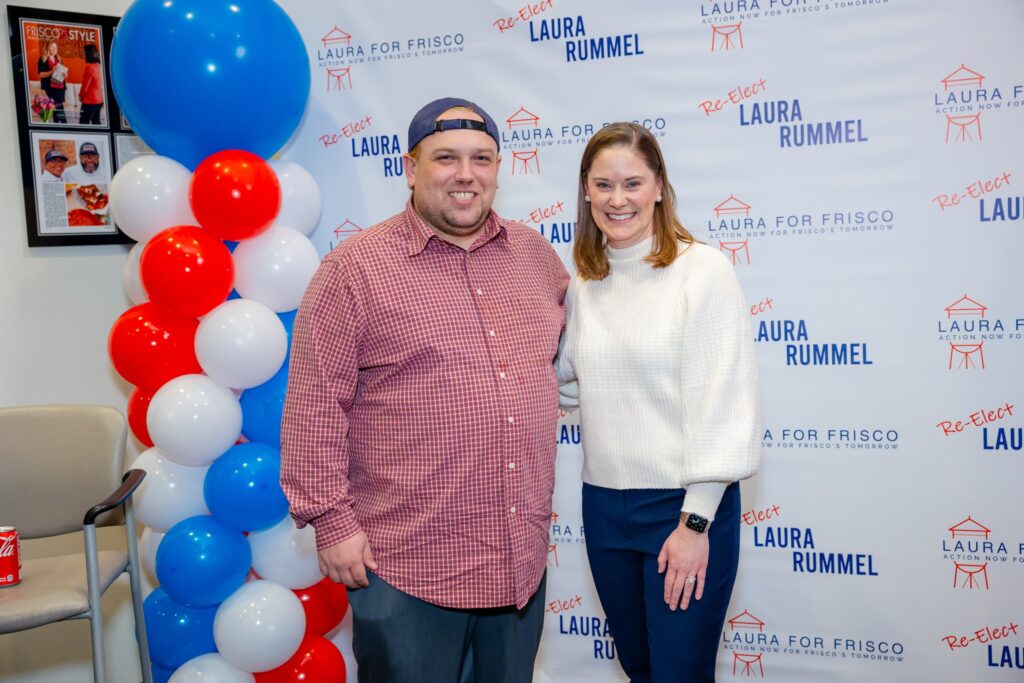
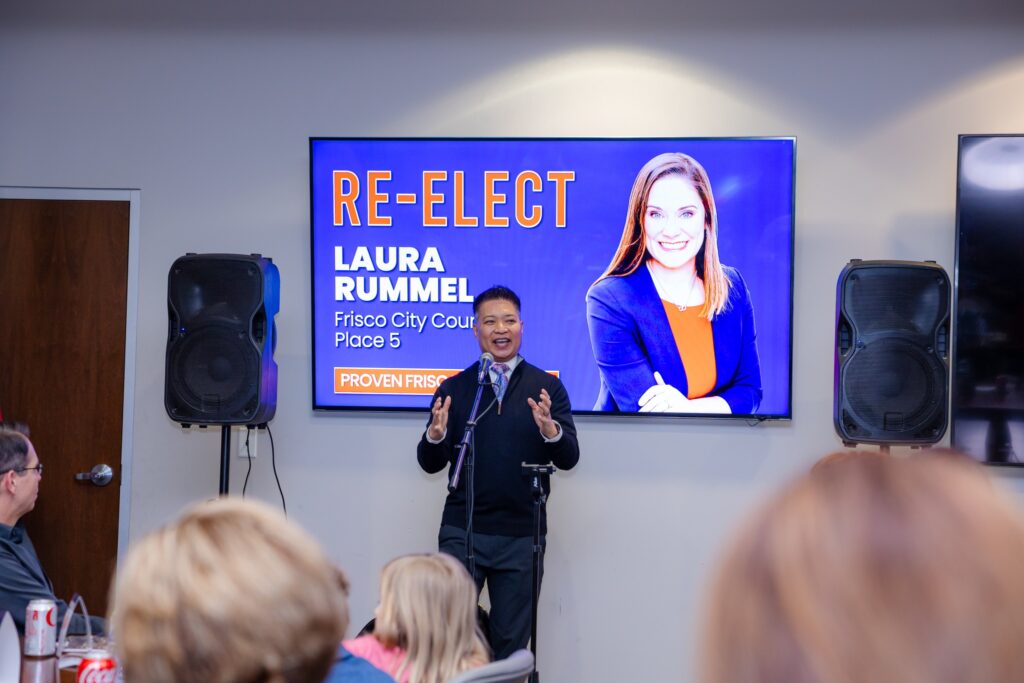
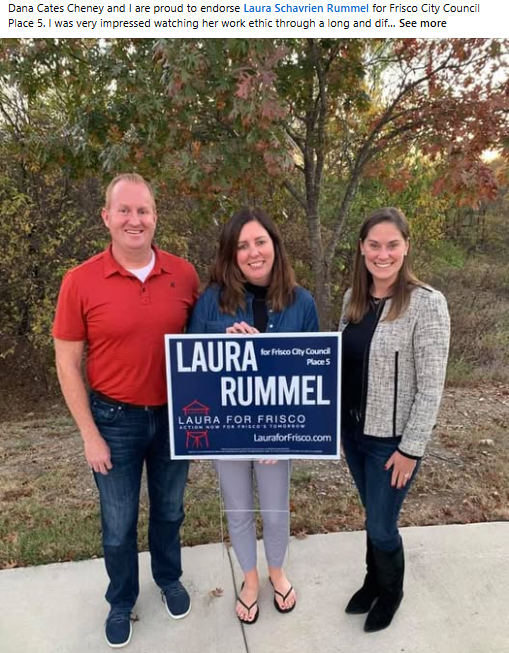
Rummel’s Re-Election Kickoff party in February 2026 was also filled with several hard dem’s. One of the speakers at her kickoff was Traci Reveal Shipman – a hard democrat. She also is very tight with our current Mayor Jeff Cheney and his wife Dana Cheney.
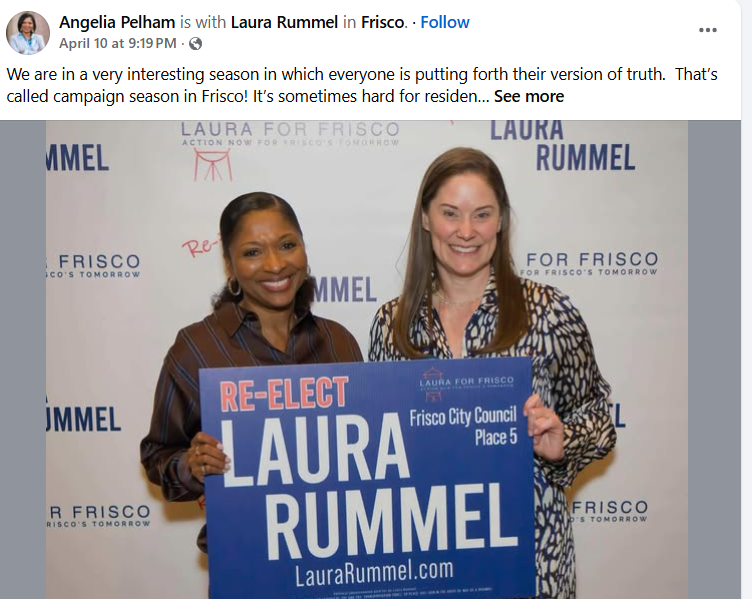
Let’s talk about endorsements. Laura Rummel has been endorsed by several Democrats such Angelia Pelham, the star of the Tammy Tapes, Tammy Meinershagen. Most recently on April 15th, Jesse Ringness a hard dem who has run state office before also has endorsed Rummel in a video on his Facebook Page. Just look at her posts and the who’s who of Frisco Dems are all over it.
Furthermore, at the December 2025 city council meeting Laura Rummel supported Jordan Villareal, a hard democrat, over a republican for the Tax Assessor Board. She has also supported hard democrats over republicans for local city boards and commissions within the city.
Selective Cultural Advocacy
In 2023, the City of Frisco made a public post on social media platforms renaming Good Friday as the “New Spring Holiday” … really? The post had over 340 comments, most of which were complaints about the lack of respect for Good Friday. Rummel said nothing! She supported the city’s post and shared it.
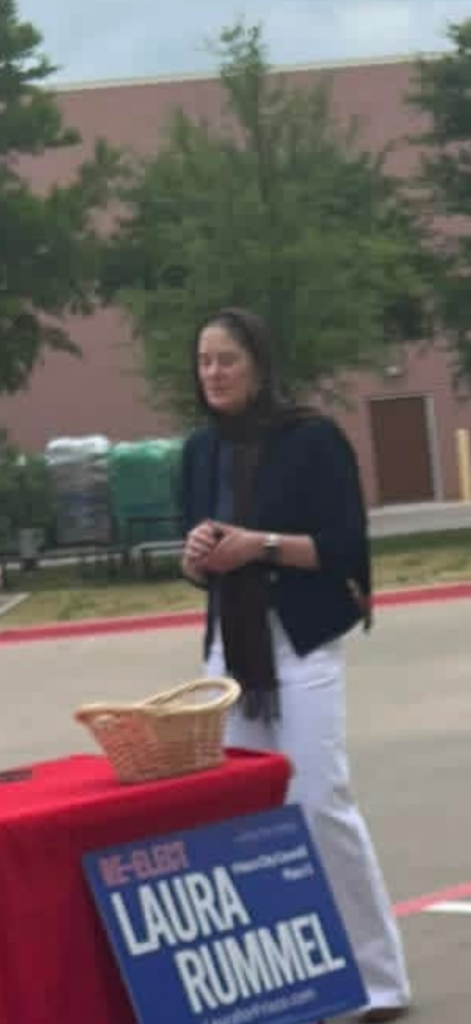
Meanwhile, Rummel shows consistent support for other religions and cultures. She continually supports every Islamic Center Candidate Forum and the Inclusion Committee celebrations of Muslim holidays. Rummel has posted her reflections on different speeches by Imam’s. She continually attends the EID Milap Brunch’s each year. She was a panelist recently at the ICF Woman’s Career Day. In 2023, she attended an event in the parking lot of the Islamic Center where she wore a Hijab. Why would you wear one of those in the parking lot unless the whole goal was to pander to Muslim voters.
Screenshot
At the same time, she has failed to attend the yearly Frisco Chabad events, although she did this last December 2025 because she is running for re-election. She has not attended every city Christmas Tree Lighting. Her lack of support publicly for Christian holidays should be concerning to Republican voters.
Inconsistent Fiscal Messaging and Voting
Rummel voted for Universal Kids! That is a project Frisco Chronicles, and many residents were adamantly against because of the potential crime it will bring. Also, residents were concerned about pedophiles, and the sex trafficking issues these types of parks can bring. After the backlash came from the announcement, the city, council members and the Mayor went on a marketing grandstand to sell the project to residents. The worst part was after doing that the night of the vote they changed the whole proposal, changing key terms of the deal.
For example, the park was sold as ages 3 to 9 then it went to 3 – 12. The original hours were going to be from 10am to 6pm which made no sense to most people. The night of the vote the hours changed from 10am to 10pm with some exceptions for early access at 8am and some late nights till 10 / 11 pm. The initial ride height was sold as 40 to 50 feet but the night of the vote it went up to 80 feet which is 7 stories tall. The initial proposal was not parades, no fireworks, and it would be indoor focused. The night of the vote changed to allow parades, outdoor concerts and shows. This is not the transparency this is a bait-and-switch which Laura Rummel voted for. Screw the nearby neighbors and their home values, just get the deal done at any cost and that is what Rummel voted for.
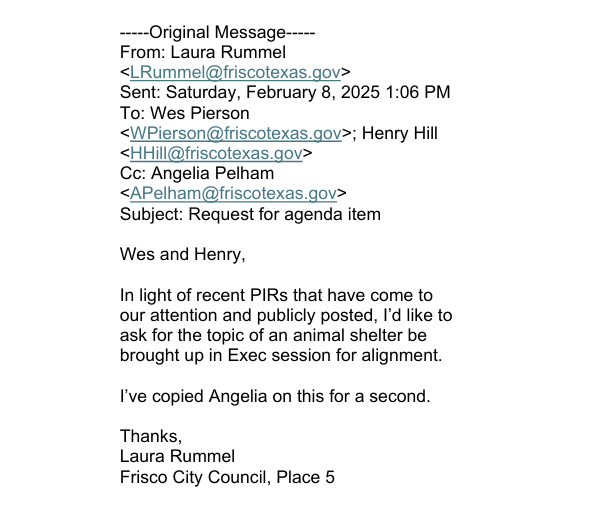
Next Laura Rummel ran on getting residents the long-awaited Animal Shelter they had been asking for. Instead, she is building a … well we don’t know. She voted to spend 12.5 million taxpayer CDC dollars without a FEASIBILITY STUDY. The night of the vote for the LOI she offered to keep it transparent the whole way through with the public, yet a 2025 email shows her asking to move the item to Closed Session to keep it from the eyes of the public.
However, for the last few elections the animal Shetler has come up. When Angelia was running, she told animal advocates of we are almost there – Not True! Tammy Meinershagen told advocates – an announcement is coming soon – Not True! Laura Rummel is doing the exact same thing. It has taken years to get answers from the city, yet Rummel now claims the city has all the answers. Collin County just pulled out supporting Frisco with animal services after the current contract ends November 2028. Within days the city has a website up claiming they have the answer, don’t worry, be happy! Fact is they have nothing, no answers, no plan, and they are using this again as a re-election tool for candidates. What do you want to bet something will happen after the election and it will magically fall apart, and they vote not to move forward? Rummel continues to use Cheney’s line, the Animal Shelter project will raise your property tax.
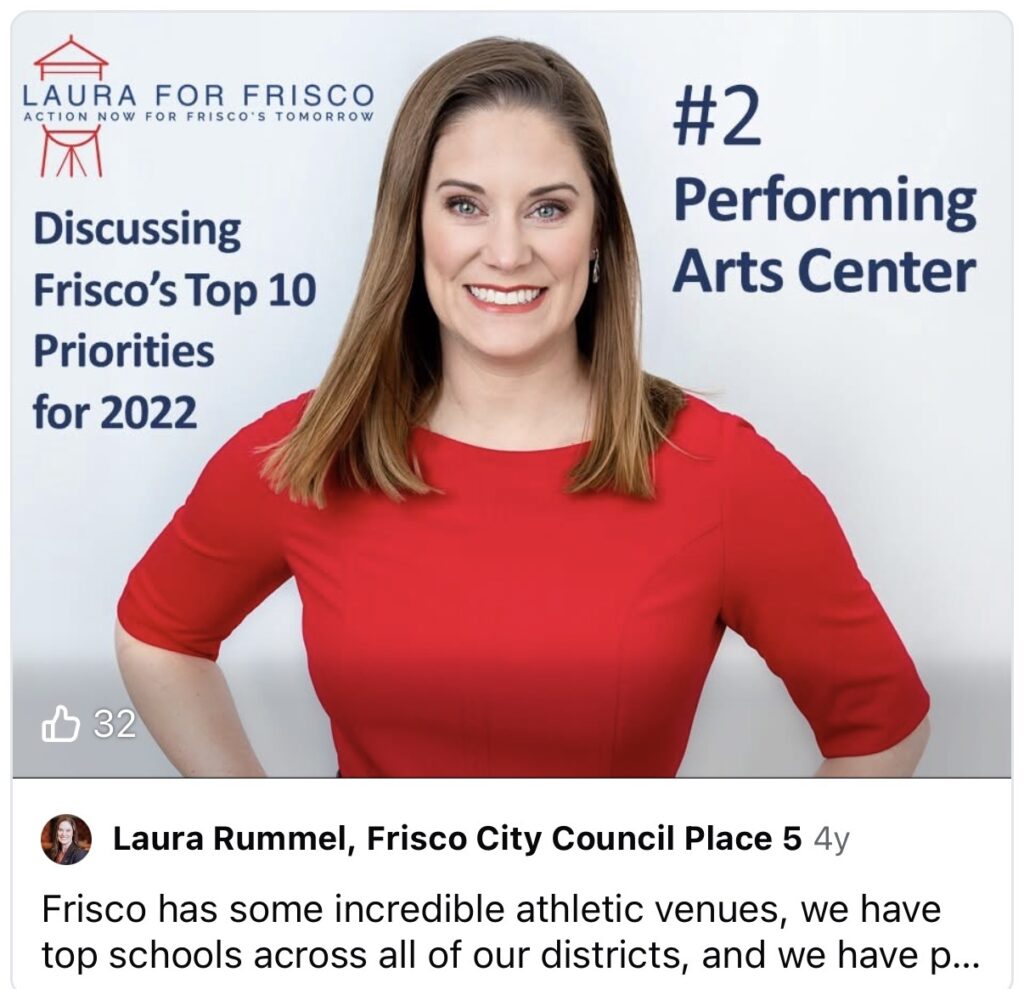
At the same time Rummel was one of the council members claiming the $350 million performing arts center that was going to be city owned would not raise taxes. A performing arts center has been one of her priorities for years on her campaign page. She also advocated for Tammy Meinershagens, whose pet project was a performing arts center, for re-election against a republican candidate. Now that is re-election time, her stance is … OH WAIT I did not support that.
ScreenshotScreenshot
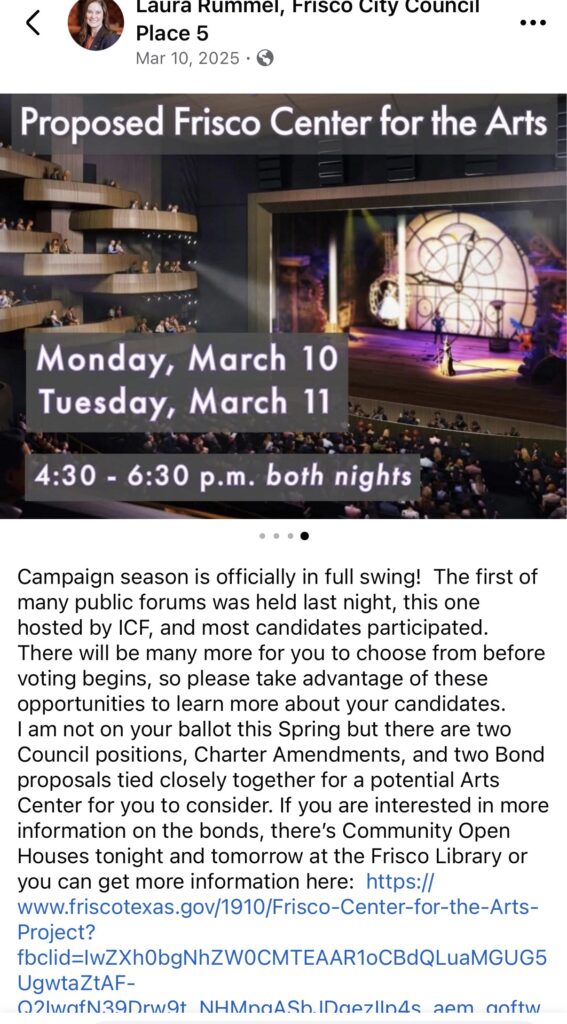
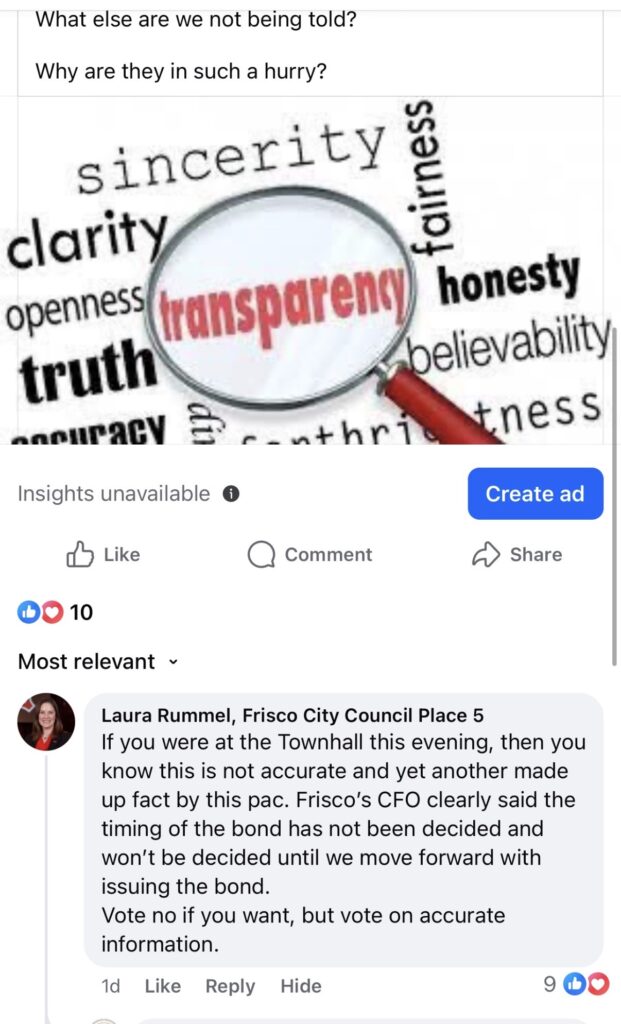
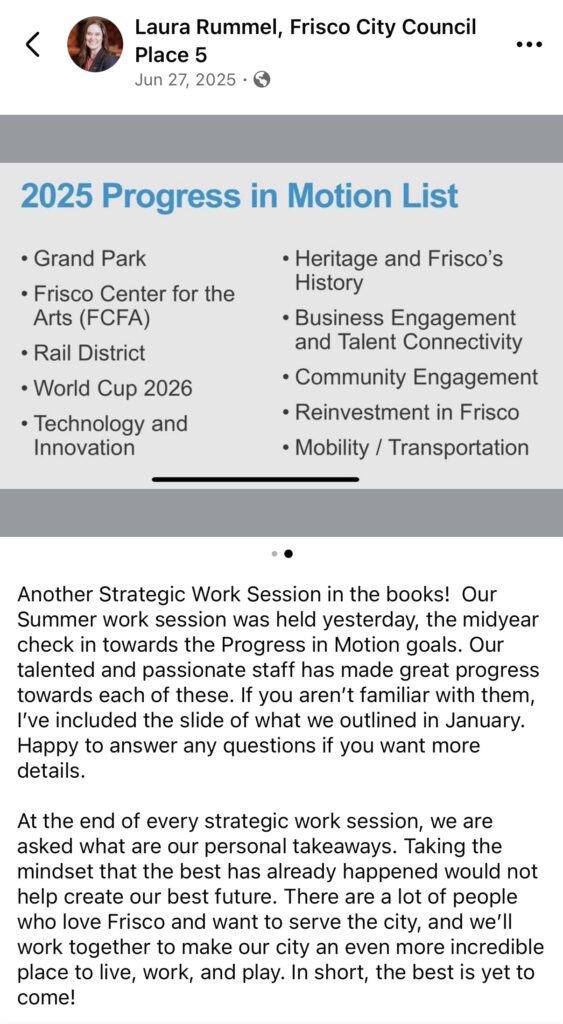
Here she is attacking the PAC who stood against the Broadway Performing Arts Center. Even after residents overwhelming voted NO to a Performing Arts Center, Rummel posted it just two months later as the 2025 Progress in Motion List.
ScreenshotScreenshot
She also supported the employee health clinic that showed it would operate in the red up to the first 6 years. Truth is every project “won’t raise taxes” but an animal shelter. Frisco Chronicles has heard from advocates since our page started and I agree with them that the city is using that line to scare voters away from supporting it.
Her Opponents:
Sreekanth Reddy who you can’t even take seriously. He creates fake straw polls to publish to mislead the Indian Community. Has no original thoughts, plans, or ideas of his own and just agrees with whatever you say. He is more concerned running around town to different events getting a selfie with important people and posting it to display fake support for himself. He could give Jennifer Achu true competition if there was a race for “Selfie Queen of Frisco.”
Her other opponent is Vijay Karthik. Many questioned Karthik’s conversion to the Republican Party in recent years. However, many in the GOP believe he has done more for the party than his counterpart Laura Rummel. The proof is in his actions. Karthik and his wife have supported the last three party endorsed Republican Candidates including Burt Thakur, Jared Elad and Mark Piland. In Thakur and Elad’s election they stood in the hot sun at the polls during early voting to support them. In the most recent special election for Mark Piland, Karthik stood side by side with the candidate in 30-degree weather on election day for the entire day from sun up to sun down. Karthik also supported all three candidates at the polls, door knocking, phone banking and more. He has been honest about his conversion to the Republican Party and what driving principles were behind that. He has presented true concerns about the city’s rising debt and how we can do animal shelter without affecting property taxes. He is a proud American Citizen and Frisco Resident who raised twin boys here with his wife. He is the right choice to replace Laura Rummel.
In closing, Rummel’s record shows she has lied to residents, shifts positions for political advancement, supports democrats consistently over republicans, has inconsistent fiscal reasoning and ignores constituents when it matters most. There is a clear and consistent disconnect between what she claims and what she does. She has never displayed Republican leadership through her actions and decisions. For Frisco Chronicles, Laura Rummel is one of the Frisco Insiders who is here to serve Jeff Cheney and Cheney 2.0 agenda.
Since the Chihuahua has written his blog accusing innocent people of being involved Frisco Chronicles or connected to it, I thought I would clear up a few more of his SO-CALLED FACTS.
Bobblehead Bill listed out the folks who attended the evidentiary court hearing. He claims they came out in support, but my guess is they were just nosey and hoping that I would show up so they could learn the identity of Frisco Chronicles. Like everyone else they too were curious.
However, Bobblehead Bill left off a name. I wonder why? Maybe they sent their own spy that day to watch the court hearing. Well, Lisa Kirby, would you like to tell us why you were there that day? Maybe you can enlighten us why were you not mentioned in the political hit piece written by Bobblehead Bill?
Next let’s talk subpoenas! Bubblehead Bill said, following the deposition, subpoenas were issued to others, including but not limited to City Council member Brian Livingston and campaign manager Chris Fields.
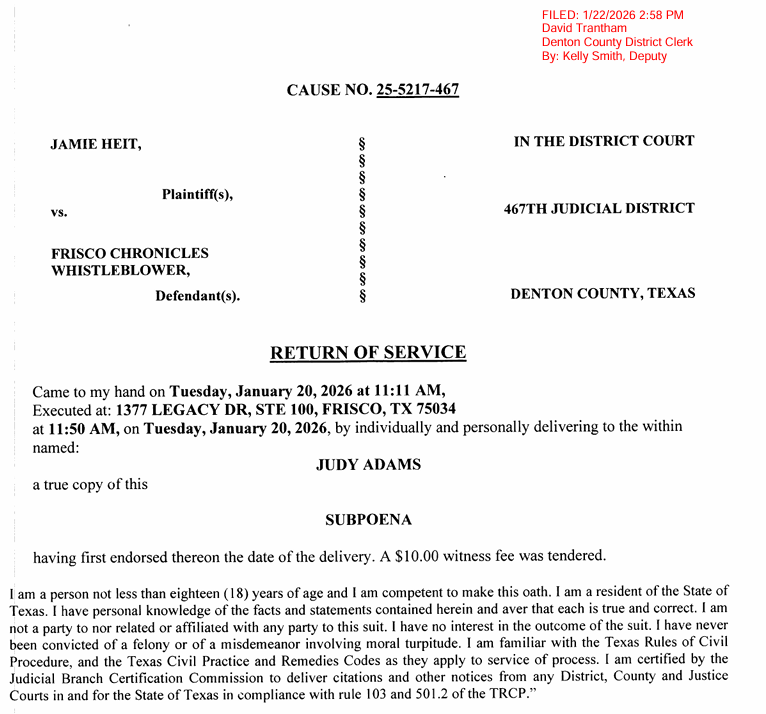
Funny, the Chihuahua forgot to mention their friend Judy Adams! Judy Adams is a Republican Precinct Chair who somehow always ends up supporting Democrats or those linked to Democrats like Mark Hill and Laura Rummel. It sure is convenient Adams was left out of his story tale. No mention of her subpoena!
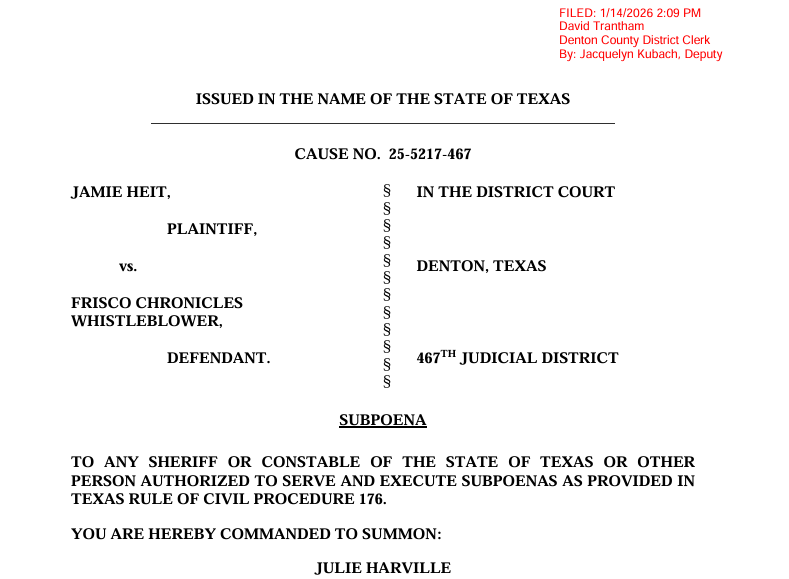
He also failed to mention that Julie Harville received a subpoena. When I first saw that back in January, I wondered why? I cannot recall, nor do I think I have ever even met Ms. Harville.
Harville filed a “Motion To Quash” which was an interesting read. The summary argument states, “Julie Harville is a non-party witness who does not possess first-hand knowledge regarding the identity of the alleged whistleblower or the events at issue.
Any information she has heard or communicated is based on rumor, speculation, or second-hand reports.”
The motion goes on to state, “The subpoena was issued after informal questioning in which Plaintiff’s counsel expressed frustration with witnesses and indicated that the subpoena was being used to compel cooperation rather than to obtain relevant, admissible information.” The facts detailed in the motion are an interesting read.
Il. FACTUAL BACKGROUND (Listed in the Motion To Quash)
Movant Julie Harville is a private citizen residing in Frisco, Texas and is not a party to any pending lawsuit.
On January 14, 2026, Plaintiff’s counsel, Ryan D. Martin, telephoned Ms. Harville and questioned her regarding the identity of the alleged whistleblower.
During this call, Mr. Martin stated that several individuals had already told him the whistleblower was “Shannon Greer.” Ms. Harville did not confirm this and advised that she had no first-hand knowledge.
Ms. Harville explained that any information she may have heard was second-hand, based on rumor or inference, and she declined to speculate or provide names of others. All information Ms. Harville has heard, received, or communicated to others, whether in conversation or otherwise, is based on rumor, inference, or second-hand reports, and she does not possess first-hand knowledge regarding the identity of any whistleblower or the events at issue.
Approximately one hour and fifty-nine minutes after his call, Mr. Martin called Ms. Harville again and stated she would be subpoenaed for a hearing or testimony session scheduled for the following week.
When Ms. Harville asked why she was being subpoenaed, Mr. Martin stated, “We’re sick of everyone giving us the runaround and not telling us what they know, so we’re going to start calling people in…”
Ms. Harville received the subpoena on January 15, 2026.
The requested appearance is scheduled for January 20, 2026, providing fewer than three business days’ notice to a non-party witness.
Ms. Harville does not possess first-hand knowledge of the whistleblower’s identity, actions, or communications, and has no documents or direct evidence relevant to this matter.
Frisco Chronicles believes back in January, when the Plaintiff’s counsel, Ryan D. Martin, telephoned Ms. Harville, it was not because he was looking for the truth. More he was looking to fill a narrative the Plaintiff’s team already had in place, which was Shannon Greer was the mastermind of it all. It would be nice if Mr. Martin or Bobblehead Bill released a list of who “the several individuals” are? Because there are none!
If I were Harville, I would have taken Mr. Martins “if you don’t tell me, we will subpoena you” as a threat. It is basically saying give me what I want, or else. Mr. Martin stated, “We’re sick of everyone giving us the runaround” but maybe, just maybe, everyone was not giving you the runaround. Since Frisco Chronicles started there have been numerous accusations and rumors as to who it could be. Groups of friends trying to guess coming up with their own narratives – but that does not make it true.
If Ryan D. Martin and his client thought it was Shannon Greer, then why didn’t they subpoena her? Why was her name never brought up during my original deposition. Many names were brought up in my deposition, but I can’t recall her name being asked about. They didn’t subpoena Dan Stricklin, Karthik’s, Eisenmann, or others. Why not?
If you are so sure these folks are involved, then put them under oath back in January and get the answers you believed were out there. I am guessing you knew under oath their answers were not going to support your narrative.
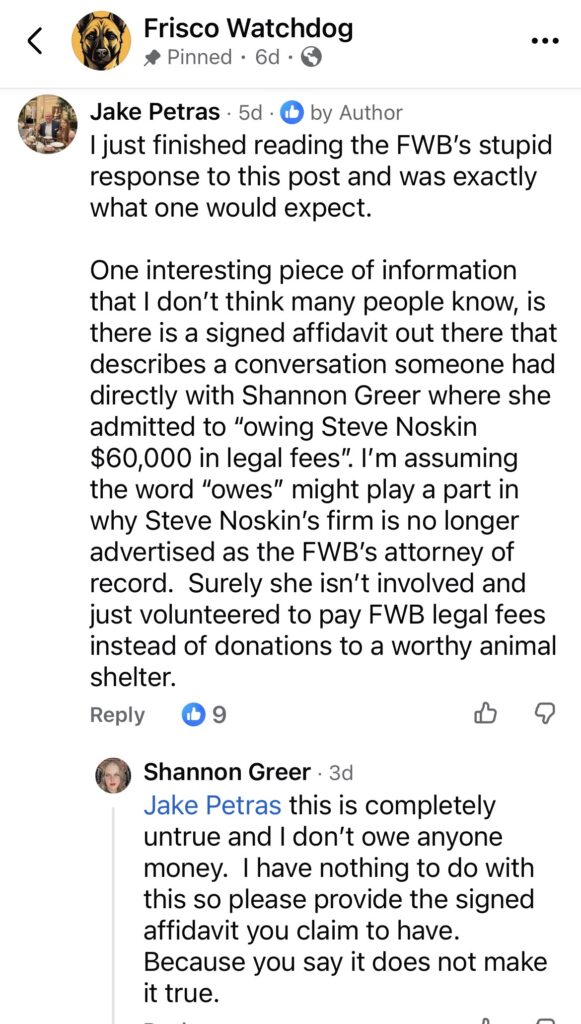
Let’s discuss the continued rumors by regular every day ole citizens like Jake Petras. In one comment under Bill’s post he claims, “there is a signed affidavit out there that describes a conversation someone had directly with SG where she admitted to owing Steve Noskin $60k in legal fees.”
Screenshot
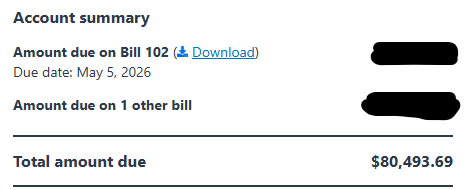
Maybe someone is trying to determine who is talking “XXXX” about them because no one knows what I owe Noskin. It is way more than $60k. Jake conveniently then says he does not have the actual affidavit, but he knows it exists. My guess, someone is trying to figure out who and how their name keeps getting brought into this. In fact, it is $80,493.69 plus, so if anyone would like to help me cover that please visit the Go Fund Me. I would be more than happy to take a $60K donation from anyone to help pay off my legal fee’s!
Hey Jake! Last night I saw an Allien Invasion. The spaceship landed at the Walmart parking lot on Ohio drive. I was coming out of the store, and the Aliens told me they were looking for you. They said something about you breaking up a marriage and having an affair with a school board member.
Oh, wait … I didn’t actually see the aliens land in the parking lot, but I know it happened because someone told me. That must make it true right?
Bill lists residents who donated to a GFM so they must be guilty or connected with Frisco Chronicles. Shame on the bobblehead. Well, should we list all the names on the Karmelo Anthony Go Fund Me that also coincide with FRWC Facebook page and those who like the or commented on that post, then assume they are linked. Because they are linked, they must be guilty of supporting an alleged accused murder. Surely, they are guilty of something and probably donated because of that post by the plaintiff, right? No – that is a ridiculous notion, and common sense can tell you that.
Ask me why I started Frisco Chronicles and you might be surprised by the answer. I supported a young lady who filed five ethics complaints against the city council. I went every other week with her to citizens input and watched how Cheney and the other council members dismissed her as crazy. How the Cabal Insiders attacked her online and somehow, they leaked personal information on her that no one should know. I defended her and I did so because it was the right thing to do. I do not regret standing by this person back then, and she had the guts to do what many of us have talked about for years relating to corruption in Frisco. Where was the backbone of support then for her? That is why I started Frisco Chronicles and as I have said before I stand behind everything I have written. If something is wrong, I will correct it or update it.
Bill’s journalism was nothing but a hit piece to cause upheaval in an election. Create doubt and change the narrative. Many have asked what the difference between his story and me releasing the Tammy Tapes. Facts! Tammy said what she said! Tammy should have never spoken out of turn on her friends and political fellows. Tammy is responsible for her actions and there is a tape to prove it all! No innuendos, no rumors, no fake interpretation of the record.
If you choose to speak up in this town against any sitting council member, the mayor, a city project, or have a political say they disagree with … they will come out and attack you! Like a tornado they swirl around you with the goal to shut you up and make you afraid to talk or comment. Allegedly it is the same little mosquito’s every time, and “several individuals” have confirmed it. The list allegedly includes the following:
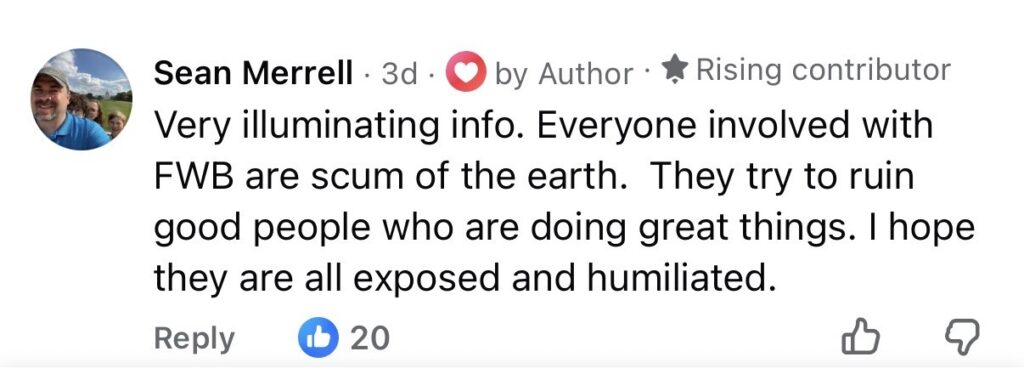
Sean Merrell – on the city planning and zoning board.
Hey Sean there is no everyone, just me! You and Bill should look in the mirror Sean!
Screenshot
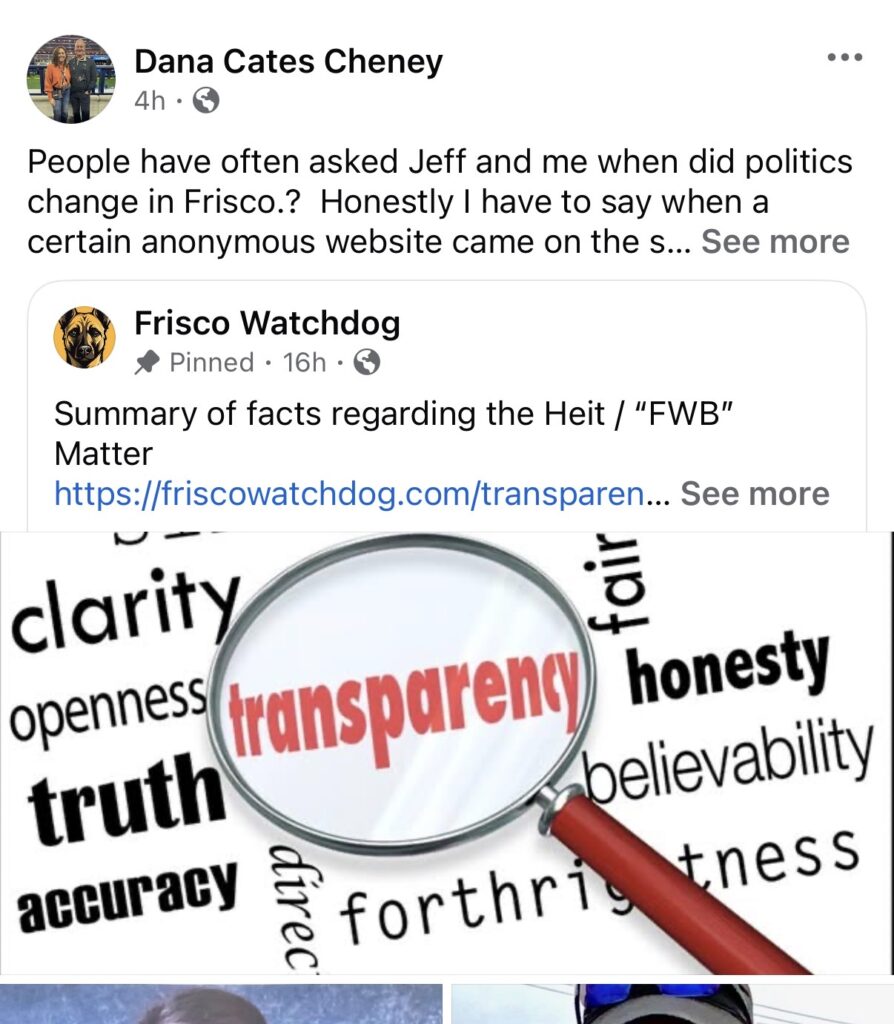
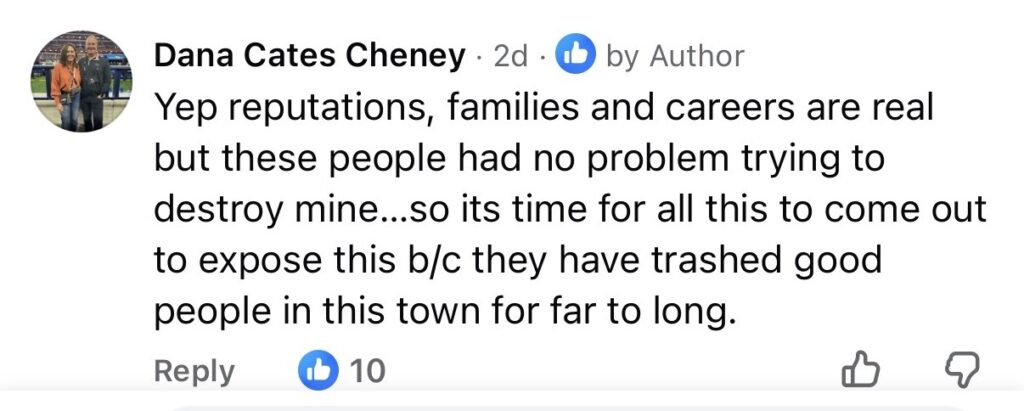
Jeff and Dana Cheney along with Kimberly and Michelle Cheney
Dana, I think many people in Frisco don’t hold you in high regard, not just me!
ScreenshotScreenshot
Jake Petras – also served on several city boards and commissions
Rene Archambault (Jake Petras lover) – former Frisco ISD Board President
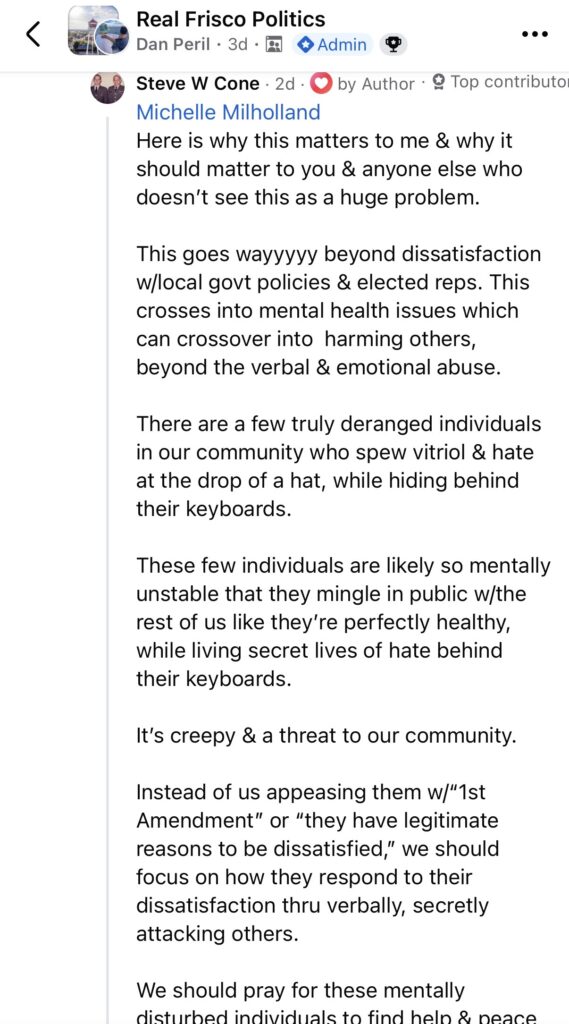
Steve Cone – serves on Planning and Zoning (I hope he never serves on a jury trial and convicts someone without evidence)
Screenshot
Dawn Sample – probably the most vile of them all
Tracy Gamble – does not even live here anymore
Rob Cox – former Planning and Zoning and former resident of Frisco
Heather Zacny –
Karen Cunningham – serves on boards and commissions, former City Council Candidate
Dan Peril – who runs the most vile political page on Facebook
Lance Taylor – allegedly screwed his neighbors over in Cobb Hill during Universal
Lisa Kirby – also sits on city boards and commissions and attends court hearings
Simon B – he doesn’t even live anymore
Amanda Baze Hall
Sadaf Haq – leads the ICF Forums
Judy Adams – precinct chair who turned against her party
Stephanie Cleveland
Lorie Medina – Jeff Cheney’s former Chief of Staff and political planner
Tracie Reveal Shipman “The Ethical Leader”
Cindy Dobbs Hons
Jesse Ringness
Bill Woodard “The Chihuahua”
Jennifer Achu
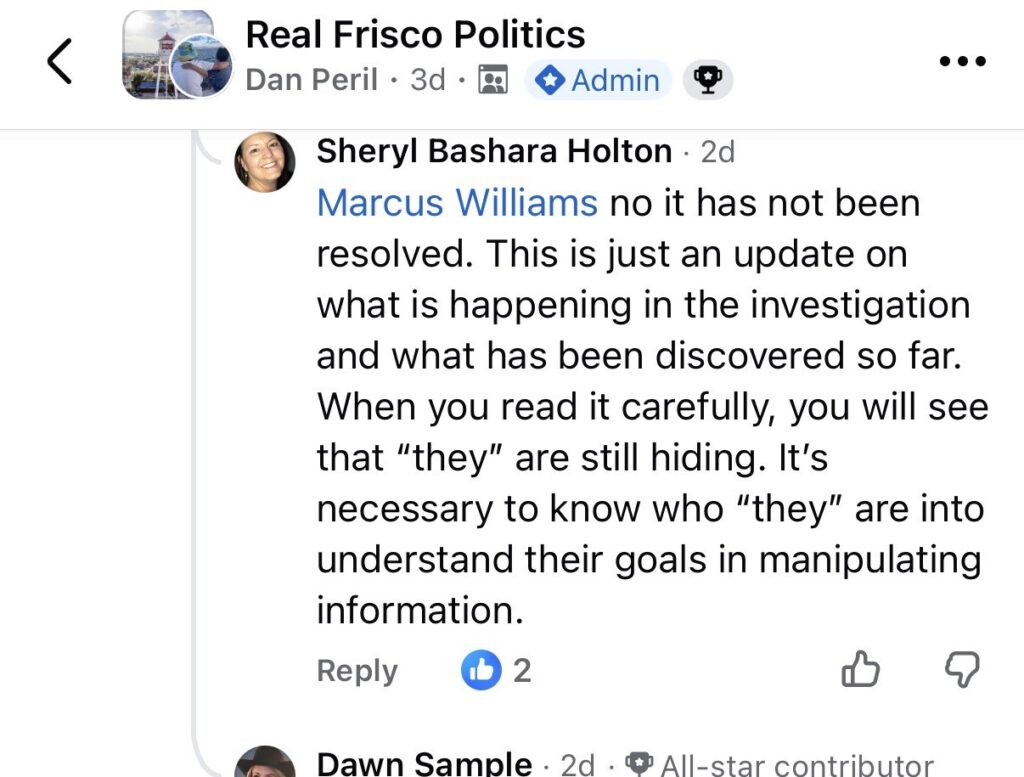
Sheryl Bashara Holton – says we and they are still hiding. No, I am not! I am right here always have been. I am glad we now know who you are and how you judge others on one-sided information.
Screenshot
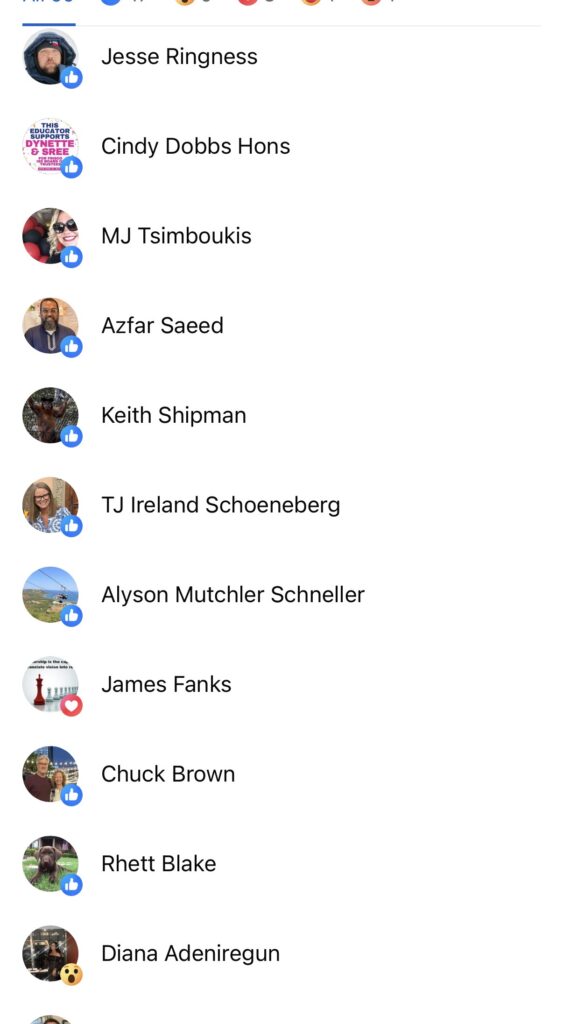
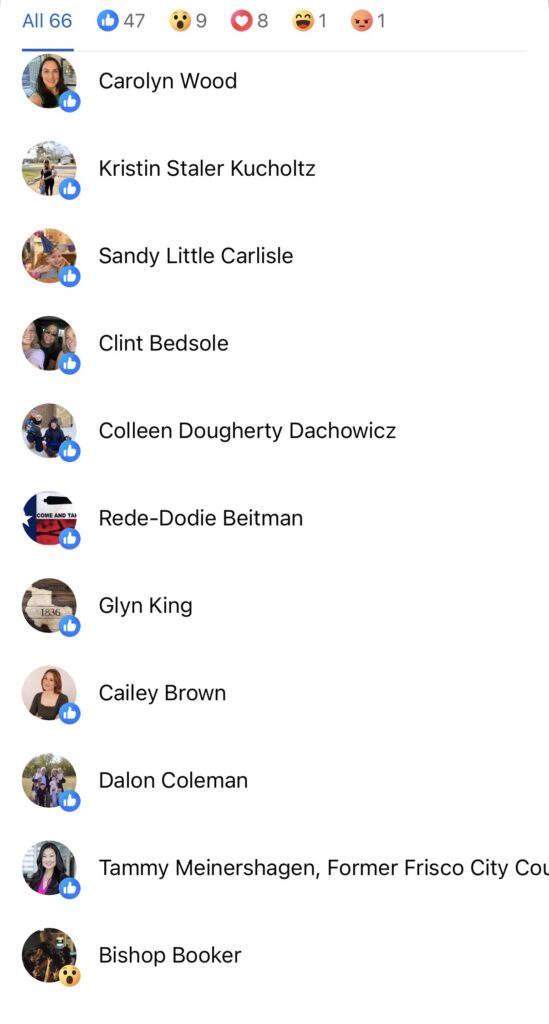
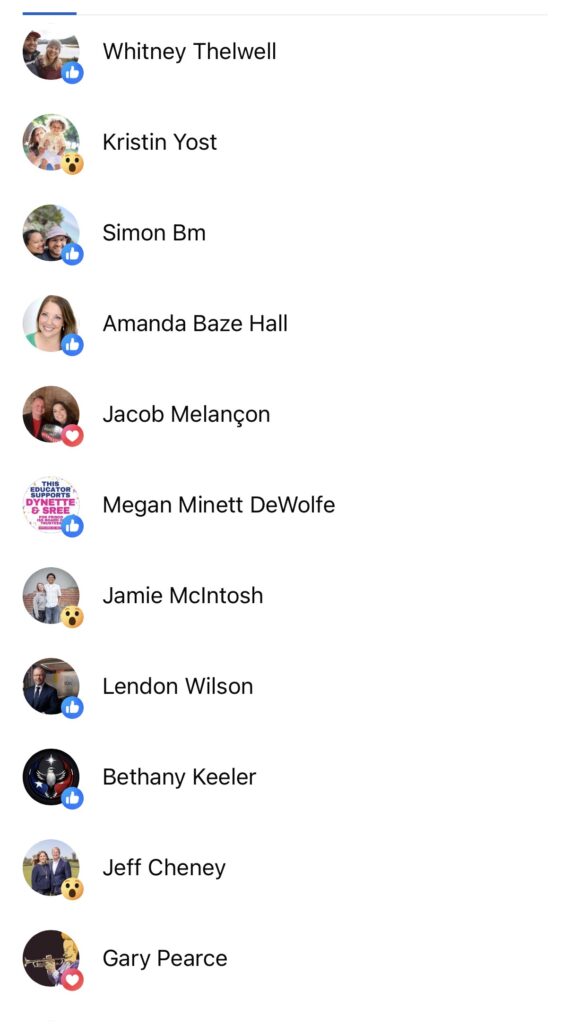
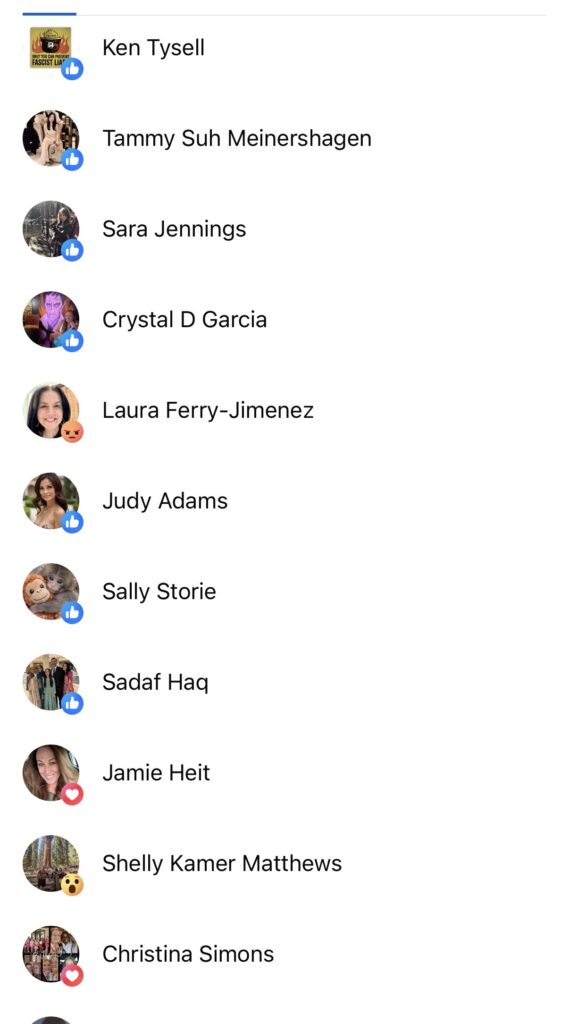
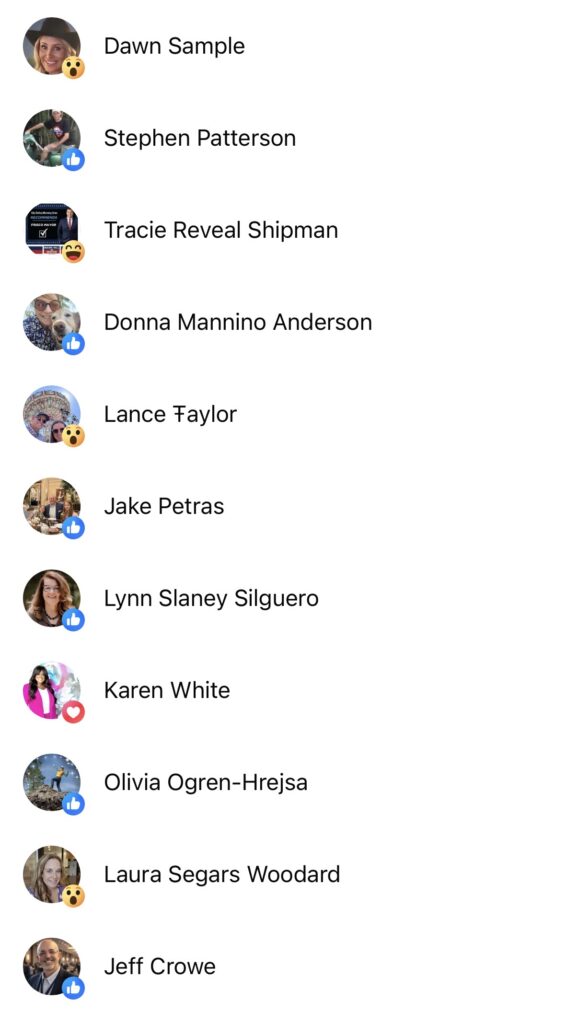
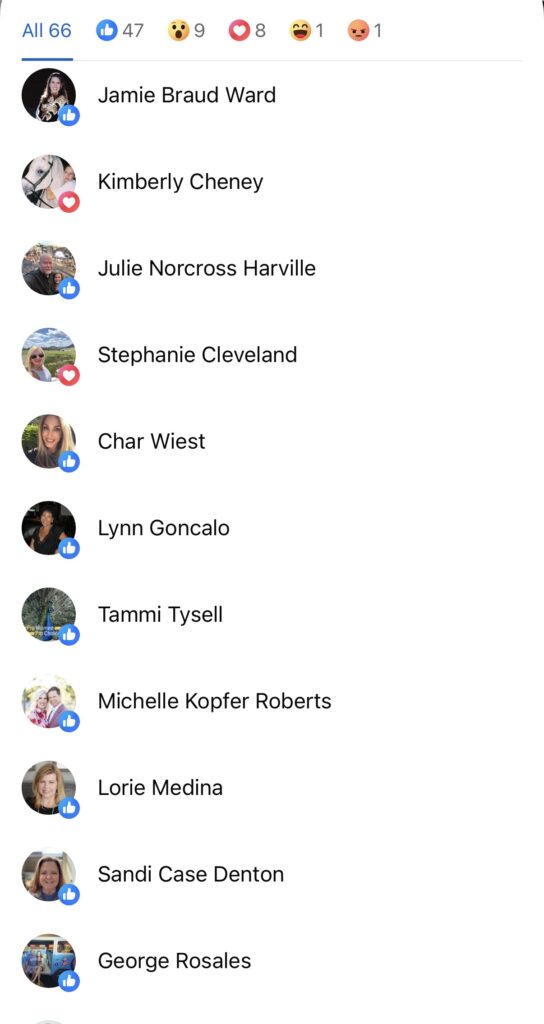
Who liked the Chihuahua’s post that is filled with rumors, innuendos, false and defamatory information regarding everyday citizens. This information is still being vetted and more updates will come! (Sound Familiar)
Disclaimer: This blog includes satire, parody, and comic relief. It contains summarized accounts created solely for humor and commentary. Any resemblance to real events is either coincidental or intentionally satirical. Reader discretion — and a sense of humor — are advised.
Rules for Thee, Not for Me: The Frisco Insider Playbook Strikes Again
If you’ve watched Frisco politics long enough, you start to notice a pattern. It’s not subtle. It’s not accidental. And it’s definitely not new. It’s the classic insider move to weaponize the rules when it benefits you—ignore them when it doesn’t.
Welcome to the latest episode.
The “Gotcha” That Wasn’t
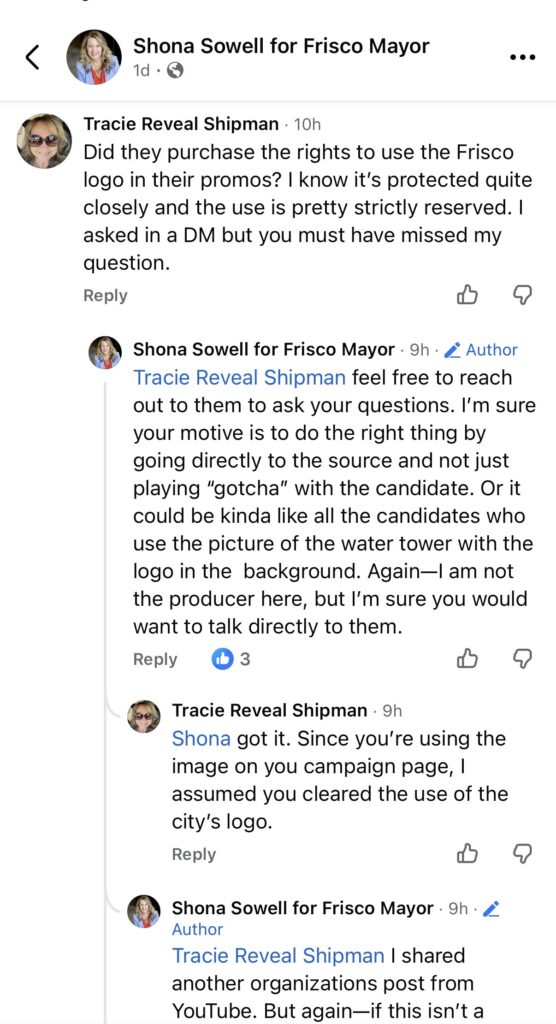
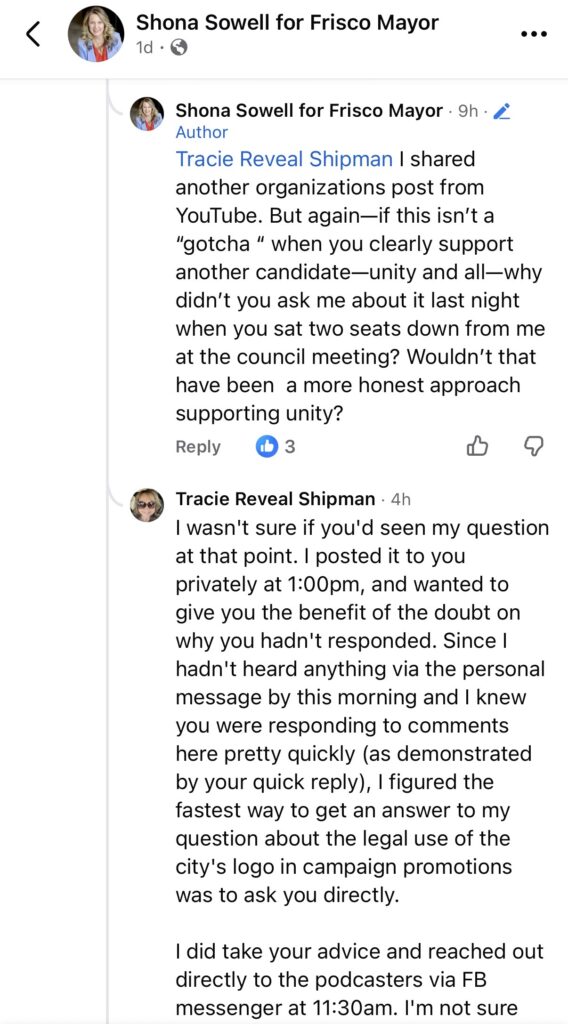
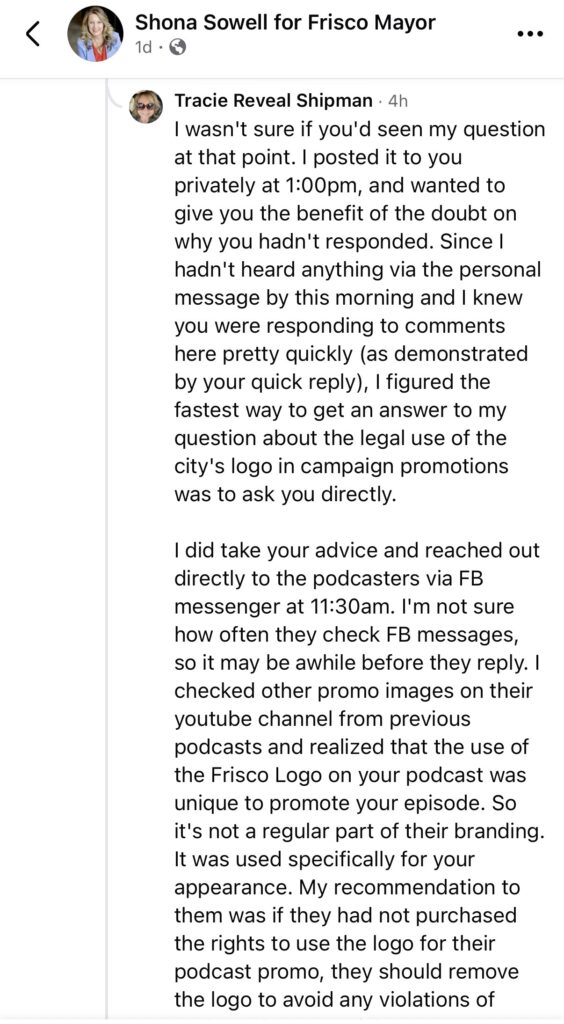
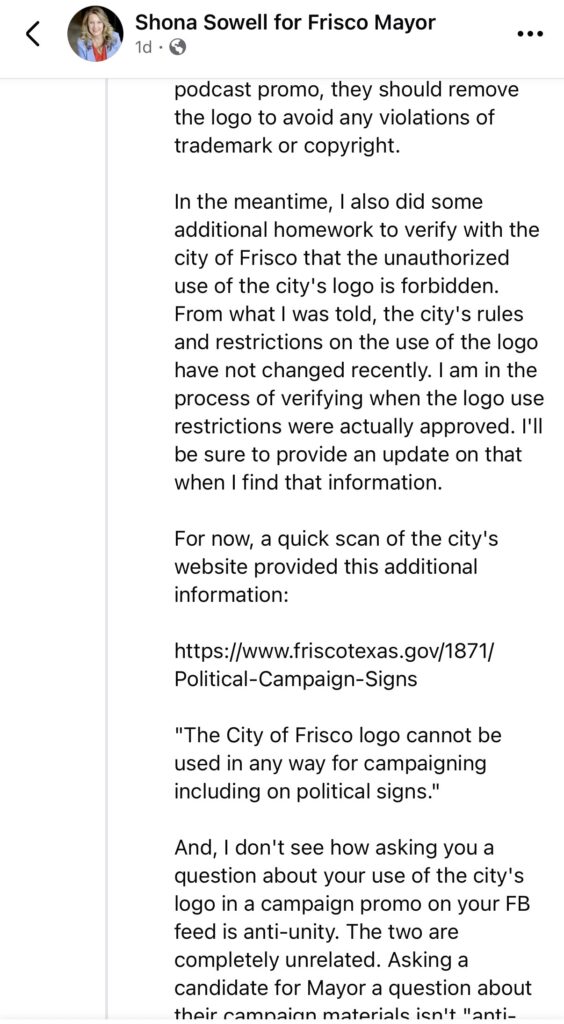
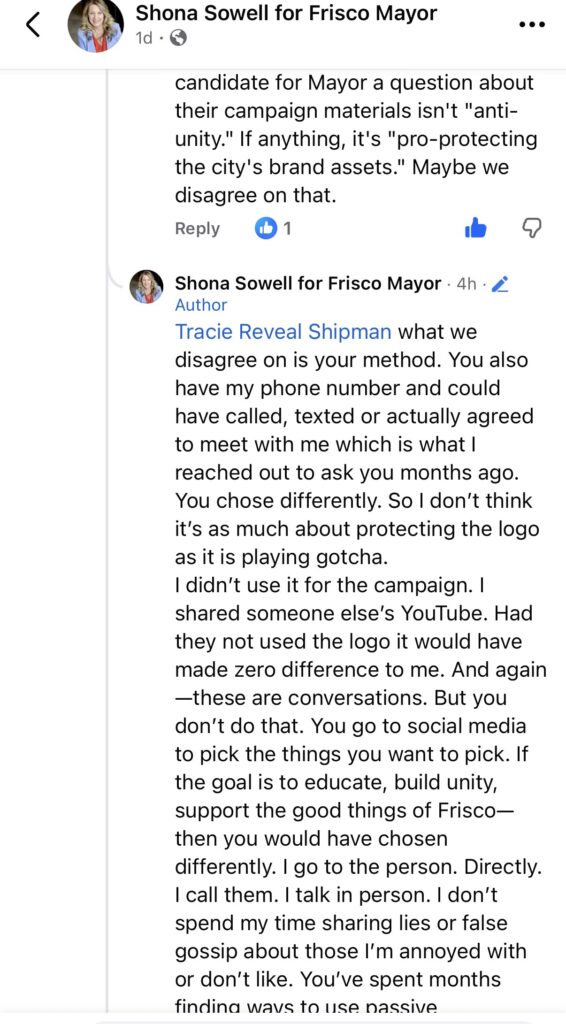
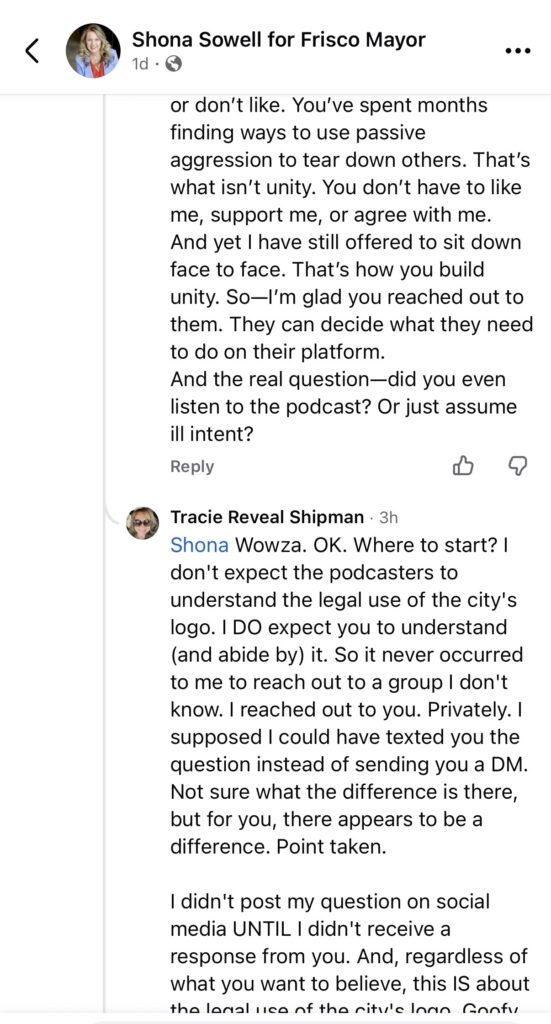
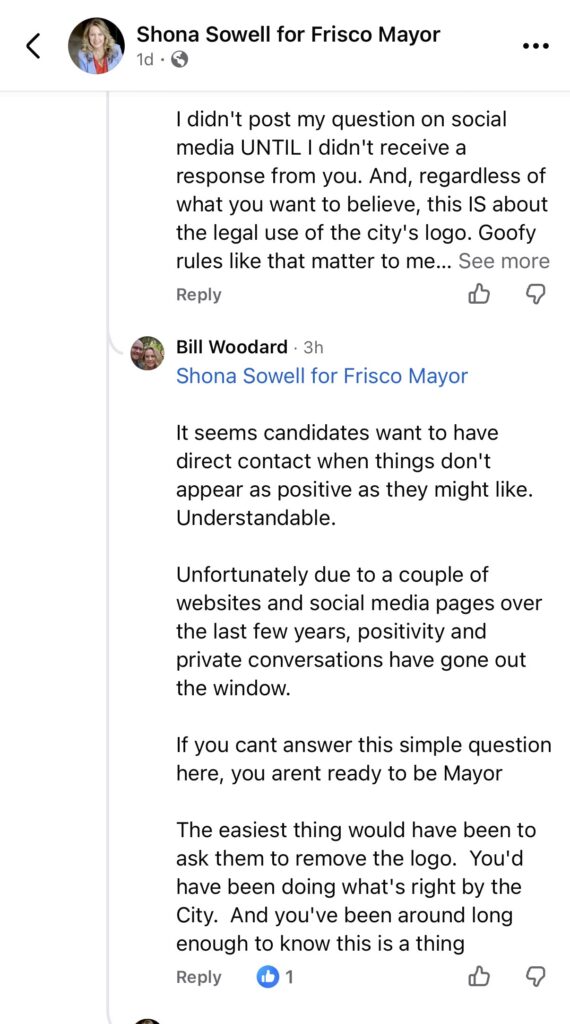
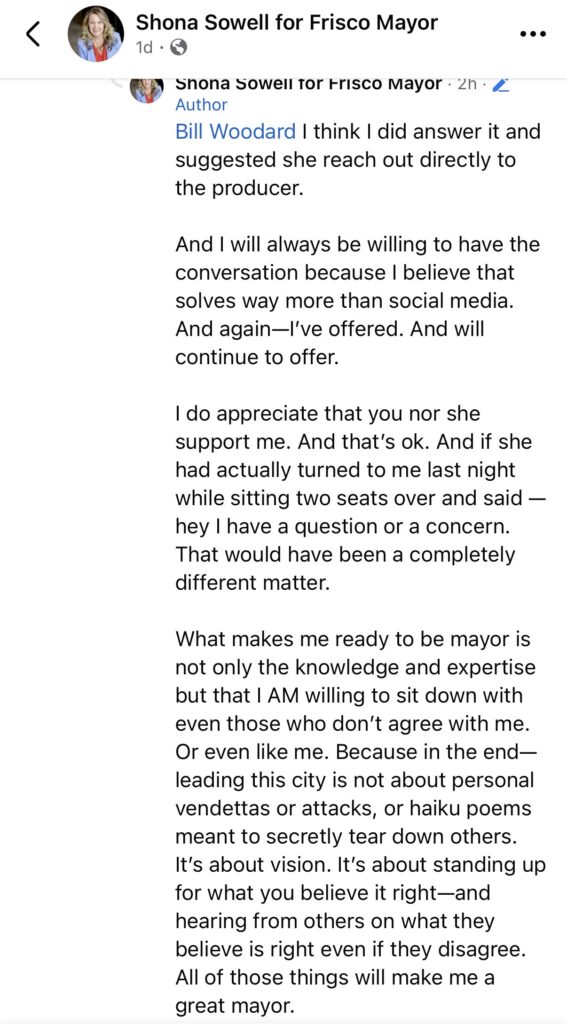
Recently, Tracie Reveal Shipman and Bill Woodard publicly questioned Shona Sowell over a podcast post shared to her campaign page. The issue? The alleged use of the City of Frisco logo in promotional material. Shipman raised concerns about whether the logo was used legally—suggesting it might violate city rules.
On the surface, that sounds like accountability. But scratch just a little—and it starts to look a lot more like selective outrage.
ScreenshotScreenshot
Let’s Talk About Context (Because It Matters)
Sowell’s response was straightforward and she is correct – she did nothing wrong! She was a guest on a podcast. She didn’t create the promotional graphic. She didn’t design the branding. She shared content produced by a third party. That’s not a loophole—that’s reality.
If there’s a question about logo usage, it falls on the content creator. Not the interview guest who hit “share.” Otherwise, every candidate better start lawyering up before retweeting anything.
Now Here’s Where It Gets Interesting
Because while fingers were being pointed, something else quietly sat in plain view: A candidate video featuring Shipman… Filmed in front of the Frisco flag… And promoted through the Frisco Chamber of Commerce.
So, let’s ask the uncomfortable question: Why is one use of city imagery a scandal… and another just Tuesday?
Where is Bill Woodards outrage and why did he not publicly question his best friend when she did it in 2021. This video was promoted by the Frisco Chamber of Commerce and still is on their YouTube page today.
Is the flag somehow less “official” than the logo? Does intent suddenly matter when it’s your own content? Or are we just bending the rules depending on who’s in the frame?
The Insider Immunity Clause (Unwritten, Of Course)
This is the part longtime observers recognize immediately. There’s an informal system in play—a kind of political VIP section—where certain players get the benefit of the doubt, while others get the microscope.
And when that double standard gets called out … cue the deflection. Cue the “you should ask someone else.” Cue the slow walk away from the actual question.
The Bigger Problem
This isn’t really about a logo. It’s about credibility. Remember Tracie prides herself on “ETHICAL LEADERSHIP.” Bill Woodard claims to call himself the Chihuahua Watchdog of Frisco. He likes to write blogs about proper governance, but the rules don’t apply for his friends.
Because when the same voices who demand strict adherence to the rules appear to interpret those rules… creatively… when it suits them, people notice. Voters notice. And they start asking a much bigger question:
Are these rules about fairness, the ability to discredit a candidate, or about control?
Time for Some Answers
If Shipman and Bobblehead Bill believe the use of city branding in campaign-related content is inappropriate, that’s a fair position. But it comes with a responsibility: Apply it consistently.
Explain why one scenario is acceptable and another isn’t. Clarify where the line actually is. And most importantly—own your own use of similar imagery. Because right now, it looks a lot less like accountability… and a lot more like the dirty politics Frisco Insiders like to pullout during elections. And in Frisco, voters are getting tired of that playbook.
Endorsements are funny things. Sometimes they come back to bite you in the butt! Other times they can help someone decide who to vote for. We have heard most of the Muslim and Indian community in Frisco are Voting for Mark Hill, the same Mark Hill that was endorsed by Abraham George and Byron Henry. We have also heard many Republicans are voting for Mark Hill but do they know how entrenched he is with Democrats? Let’s dive in to all three questions.
Why would the Muslim community vote for Mark Hill based on Abraham George’s endorsement?
I wonder if they have seen today’s video that Abraham posted where he sits down with John Guandolo to discuss the Muslim Brotherhood and how Texas is the target for them to fight the Jihad. Maybe they should watch it.
At the end of the video Abraham states, “All right. I am more scared than ever before. Uh not for me, but well for me and honestly for the future of Texas and our generations to come. This is why this conversation matters. And Texans believe in religious freedom, but we do not compromise on rule of law.
This is one of the systems that are a peril system that we will not allow a structure, a parallel government that we are going to have to fight. As we head to the state convention, this issue is rising to the top of the uh priorities because Texans understand what’s at stake.”
Why would the Indian Community vote for Mark Hill based on Abraham George and Byron Henry’s endorsement?
They must not have seen Byron Henry (Mark Hill’s law partner) talk about the Indian invasion on Steve Bannon’s War Room podcast. Henry states “We’ve had an explosion of immigration in Collin County. There are literally advertisements in India to move to Frisco, Texas in the heart of Collin County.” He goes on to say part of the problem is we imported a lot of labor – referring to Indians and we have seen the immigration disaster and its effect here in Collin County.
I ask why would our Indian community hitch their wagon to Mark Hill? It is probably something we will never understand.
Why would Republican’s vote for Mark Hill when he has heavy support by Democrats?
First: Abraham George, the Chairman for the Texas Republican Party endorsed Mark Hill because they have a long-time friendship. However, friendship is not the reason you should endorse anyone, it should be because they are the best candidate.
So, did George think Mark Hill was the best candidate? Has he sat down with the three other candidates? Was George aware of the amount of Democrat support for Mark Hill?
The Proof is in the Pudding: Has Abraham George sat down with the three other Candidates? No!
One of Mark Hill’s biggest donors is Das Nobel of MTX Group, a global technology consulting firm. Nobel donated $25,000, according to Mark Hill’s campaign finance report.
Who else has Das Nobel donated to in the past? According to opensecrets.org he has also donated to the following Democrats:
$5000 to Kathy Hochul NY Democrat
$20,800 to Michelle Lujan Grisham NM Democrat
$10,000 to Democratic Congressional Campaign (Federal)
$2200, $2800 to Charles Schumer (D)
$6000 to Wes Moore MD Democrat
$5000 to Turnaround Team PAC (Federal) which is noted as unauthorized independent PAC. They have not made any donations to candidates since conception seems weird.
Questionable Donations
Another donor on Mark Hill’s campaign finance report is Ravi Dokku who contributed $5000. I am curious if this is the same Ravi Dokku of Irving who in 2018 faced a Federal Case for Visa Fraud and pleaded guilty to unlawful employment of Aliens?
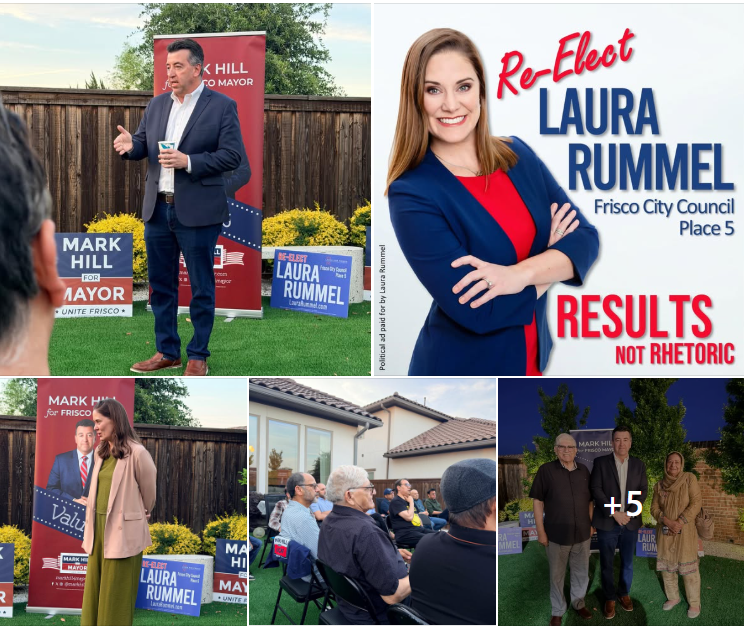
It is no wonder Laura Rummel (also heavily backed by Democrats) and Mark Hill are doing all their events together. Birds of a feather, stick together they say. So, why are Republicans thinking they are conservative?
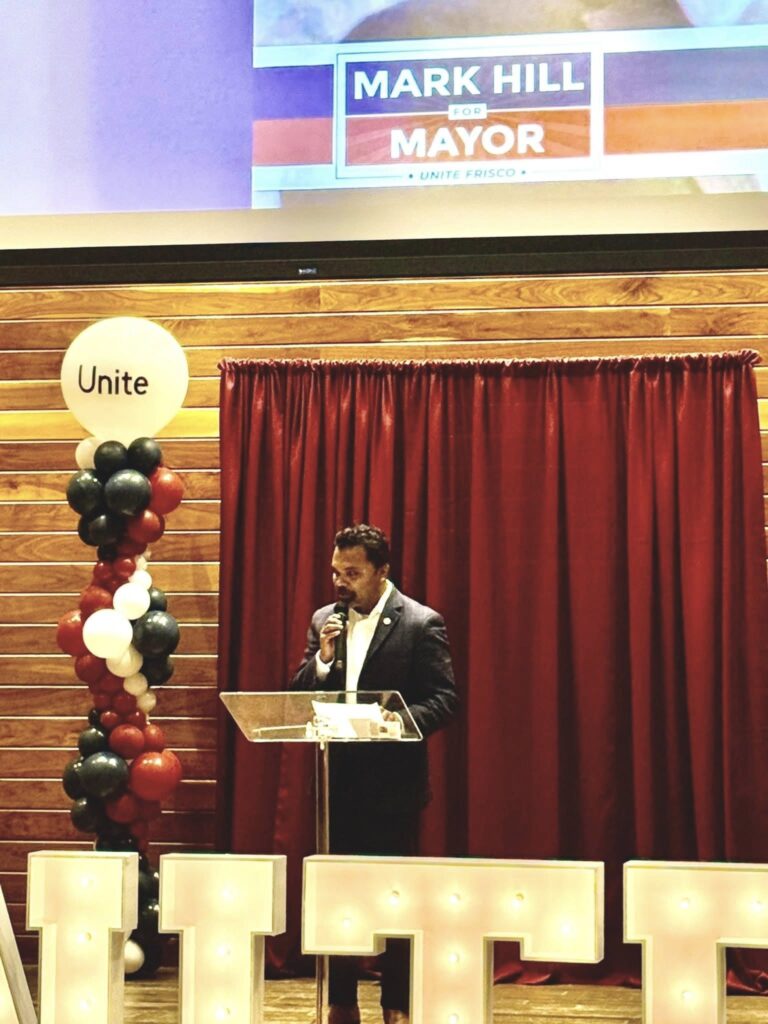
Mark Hill claims to be the one who will UNITE Frisco, but when you look at his kickoff pictures, it is a who’s who of Frisco. It is clear he is the Frisco Insiders “Choice to Win” so he can keep the status quo that Jeff Cheney has created. The only question I have now is how does John Keating feel? He was supposed to be the golden boy they stood behind. He groveled, did their bidding for years and gets thrown to the curb, it has to hurt.
Earth Week Irony: Who Speaks for the Trees in Stonebriar?
There’s something almost poetic about celebrating Earth Week while chainsaws warm up in the background.
Residents in Stonebriar reached out with an urgent concern: their HOA is moving to remove a line of mature, 30-year-old trees—trees neighbors say are healthy, beautiful, and part of the character of their community. According to residents, they expect a permit to be issues today by the city even though a city tree expert initially indicated the trees were not diseased and did not warrant removal. Yet somehow, the situation appears to have shifted, and a permit is now moving forward.
That raises a fair question—one that deserves a clear, public answer:
Why are healthy, decades-old trees being slated for removal against the wishes of the very residents who live among them?
This isn’t just about landscaping preferences. Mature trees:
provide shade and reduce urban heat
improve air quality
increase property values
and contribute to the identity of a neighborhood
You don’t replace 30 years of growth with a sapling and call it even.
Decisions like this shouldn’t feel like they’re made behind closed doors or above the heads of the people most affected.
To be clear: HOAs have authority. Cities have processes. But both also have a responsibility to explain their decisions—when neighbors sentiment is to keep the trees. And the timing couldn’t be worse. During a week meant to highlight stewardship of the environment, residents are watching established greenery disappear—not because of disease or safety, but, they believe, because of preference.
That disconnect matters.
So here’s where things stand:
Residents say the trees are healthy
A city expert reportedly agreed
The permit decision is likely to happen today
Removal is imminent
What’s missing is a transparent explanation. Stonebriar HOA owes its residents clarity. The City owes its residents consistency.
Until then, the question hangs in the air like the shade those trees still provide—for now:
Are we protecting our environment this week… or just talking about it?
Update # 2 Stonebriar – Save The Trees
I have learned that the HOA Board Treasurer is none other than Ed Kelly. If that name sounds familiar they are a huge supporter of the Frisco Inner Circle and Mayor Jeff Cheney. He also serves on the Frisco Citizen Bond Committee. His wife Linda Kelly is the head of SLAN (which is the communities of Stonebriar).
If the city originally determined the trees are healthy and don’t need to come down, then why would the city issue the permit to allow the HOA to take them down? Could influence play a role in this decision? Could it be Ed Kelly and his connections influence the cities decision to approve the permit?
Update # 3 Different Opinion
We received a letter from another neigbhor who said that 4 years ago the Landscape Committee recommended “freshening up” some of our medians to make them not look so tired & worn out. They went on to say some residents felt the medians presented a real safety issue with not being able to see walkers or even cars. The Board at that time approved this refresh by trying to enhance & do something nice for the community.
When they removed the 30-year-old Nellie Stevens “gumdrop” shrubs, they planted taller young trees in their place as any responsible party would. This project began last year. A few of the residents petitioned to not have their gumdrops removed. The resident said she believes the soil they are in is totally depleted of life & nutrients.
The resident went on to say that many residents in Stonebriar Village are tired of hearing the whining from this select group of people and felt like Frisco Chronicles did not tell the whole story. That is why I wanted to share her remarks.
For legal purposes we must post this disclaimer: This blog includes satire, parody, and comic relief. It contains summarized accounts created solely for humor and commentary. Any resemblance to real events is either coincidental or intentionally satirical. Reader discretion — and a sense of humor — are advised.


I went to her to ask for help with an issue my child that was getting nowhere with the school,…
So whatever became of the $17 million dollars that the city council gave the Mayor to beautify a drainage ditch?
At last count, there are 3 different "spa/massage" businesses in the small office park at the northeast corner of John…
I literally just saw this. Yeah, she used to forward everybody’s emails behind their backs.
You're dropping truth bombs! These mom and pop shops are what should be the least of Karen's worries. If they…