Frisco Chronicles recently told you that local businessman, Jason Young, obtained a liquor contract allegedly worth millions of dollars with Universal Kids Resort and Universal Kids Theme Park. We published the liquor license on our Facebook page and questioned how Young always seems to appear whenever major opportunities land in Frisco.
Youngs longtime relationship with Mayor Jeff Cheney and current Mayoral candidate (aka his best friend) Mark Hill is hard to miss, as he brags about it on social media. It lends to the other rumblings sent to us that Young has alleged contracts with Toyota for the World Cup (FIFA) games and the ever-coveted PGA Championship events coming to town. One could ask, “Does being the current Mayor’s golf buddy have some benefits?”
It begs the question is nepotism, or favoritism based on relationships, at play in Frisco? Every resident should question when public projects, insider relationships, and massive money collide, why does it make transparency become a treasure map?
Frisco Chronicles would like to know how many other alleged or potential contracts may have been awarded to the same friends of Cheney and other committee members.
What do Public Records and Business Connections Reveal?
Through OpenCorporates you can learn about publicly listed businesses, business interests and more. My research started by creating a list of Jason Young’s business. OpenCorporates lists the following businesses.
Board and Bread LLC lists names include Donny Churchman, manager and Jason Young, agent & manager
The Parlour
Elaine’s Cocktail Kitchen
Alora Hospitality Group LLC lists Donald Churchman as the managing member, Erin Myers as the agent and managing member, and Young as a managing member.
Verona Villa Frisco LP
JYVV LLC, lists Jason Young as the agent and director
TexBev Services LLC listsJason Young as the manager and United States Corporation Agents, Inc., as the agent
Donny Churchman, Jason Young’s business partner and self-proclaimed “lobbyist for the Building Industry,” appears to have been a smart friend choice for Young. Churchman’s company lists were too long to share here. The question has been asked is his hand in the development of downtown Frisco deserves closer public review. You can mosey on over to OpenCorporates.com for the full breakdown.
Next step, compare the names of the business to the minutes for City of Frisco meetings, boards and commissions. Would we find any connections?
The Grant
The Frisco Community Development Corporation, or FCDC, offers the Rail District Reinvestment Grant Program. Based on the description of the program, it provides matching grants of up to 50% of private investments, with a maximum of $300,000 per project, to property owners and businesses.
The city states the program “aims to enhance the built environment of the Rail District” through partnerships with property owners and businesses. Another document states the overall goal is to enhance the architectural character, economic viability, and pedestrian experience in Frisco’s historic downtown. But what is the primary intent of the grant?
Well, according to the city website the grant’s PRIMARY INTENT is “to improve the architectural character and pedestrian experience of the Rail District through matching grants for building façades, streetscapes, and social spaces like patios and courtyards.”
The Connection: Found In The Agenda Details
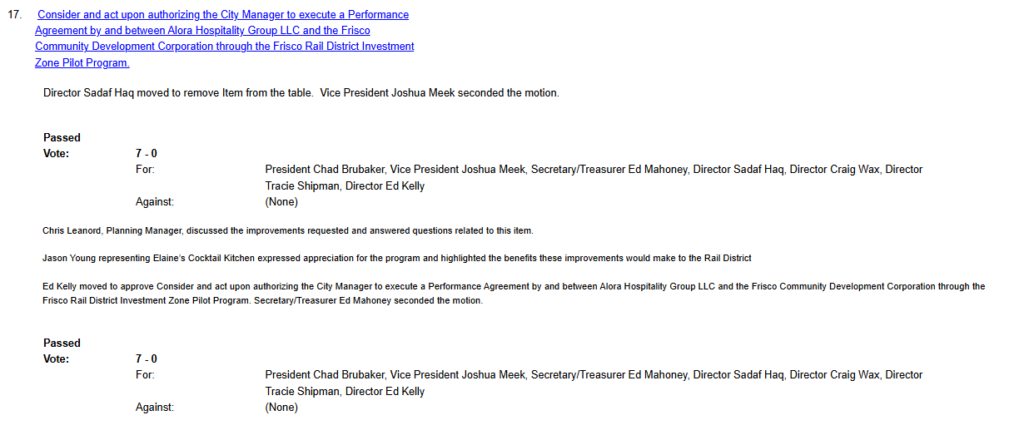
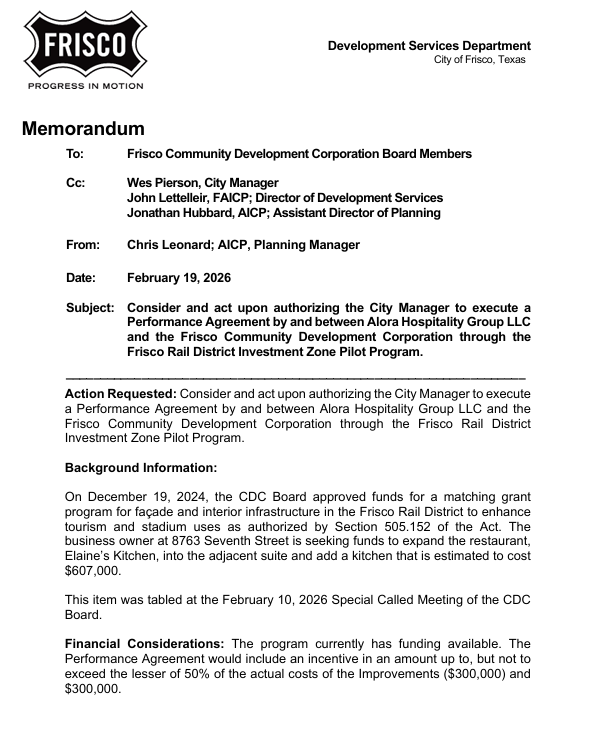
While doing research, comparing Young’s company names to City of Frisco agenda and minutes – we found a connection! Surprise, surprise. Well, not really. The connection is item #16 in the agenda for the Frisco Community Development Corporation on February 19, 2026. It reads,
According to the minutes posted on this city website, Chris Leanord, Planning Manager, discussed the improvements requested and answered questions related to this item. Jason Young representing Elaine’s Cocktail Kitchen expressed appreciation for the program and highlighted the benefits these improvements would make to the Rail District. Ed Kelly moved to approve, and Secretary/Treasurer Ed Mahoney seconded the motion. The item was passed unanimously in a 7 to 0 vote by President Chad Brubaker, Vice President Joshua Meek, Secretary/Treasurer Ed Mahoney, Director Sadaf Haq, Director Craig Wax, Director Tracie Shipman, and Director Ed Kelly.
The Big Question
When downtown restaurants were hurting, falling into debt, and losing their businesses, why did Jason Young’s new business, Elaine’s Kitchen, allegedly receive one of these Frisco CDC $300,000 grants for a kitchen remodel?
Remember the Tier 1 core details of the grant program appear to include:
Eligible improvements: exterior building enhancements, streetscapes, patios, courtyards, interior improvements, and upgrades to building safety systems.
Match structure: reimbursement of up to 50% of approved development expenses after the project is completed.
Target area: restricted to properties located within the designated Old Town Commercial Zoning Boundary/Rail District Grant Zone.
Frisco Chronicles has to ask the qeustion: How does an alleged $300,000 reimbursement from the Frisco CDC for a remodeled kitchen fall under those rules?
Which other merchants in downtown Frisco were able to take part in this program?
Nepotism Running Rampant
Look at the list of names who voted for Jason Young to receive this grant. Then look at his social media and you will see these are not just Frisco CDC Board members but many of them appear to be good friends and political allies of Jason Young.
It leads one to ask, is that not the definition of “conflict of interest” and nepotism?
Imagine that money being used to help suffering merchants instead of allegedly reimbursing Jason Young’s kitchen remodel.
Who is Chef Nick? According to OpenCorporates, Dominic Sean Parks Jr. owns Chef-Nic Catering LLC. He is listed as the Director and Agent.
Frisco Chronicles also received information that Chef Nic, who provides meals and some catering for the city, may allegedly have the Universal Kids contract for his services.
The Famous or Infamous Jake Petras
While we are at it, Jake Petras, former Frisco P&Z commissioner, good buddy, and keyboard warrior of Jeff Cheney, appears to have allegedly cashed in as well. If my memory serves me right, Jake was allegedly down on his luck and facing serious personal financial stress, an impending divorce and that his alleged lover, former Frisco ISD President Renee Archambault, may have been strained at the time.
Jake’s company, LMIF Real Estate, LLC, where he serves as director, appears to have scored big last fall. According to the August 5, 2025 Frisco City Council Agenda Item #33, the applicant LMIF Real Estate, had a request to repeal Ordinance No. 18-10-56 consisting of 80.1+ acres on the southwest corner of Mahard Parkway and University Drive to AMEND the Zoning Ordinance to REZONE the property as Planned Development-271-Office-2/Retail/Residential, and to consider to direct Staff to prepare an Ordinance of the same.
Guess what, it passed 6-0. Could this be another example of nepotism or quid pro quo?
Zoning Case No. Z24-0002. Applicant: LMIF Real Estate, LLC. (Development Services/JH) Reference Links:
Another example of alleged Nepotism maybe the recent “warehouse” deal that upset our Richwoods community. We learned some interesting, alleged connections but we will talk about that in our next blog post – so stay tuned on that.
In Closing
I would like to know how many other contracts may have been awarded to the same friends of Cheney and other committee members. In Frisco, the question is no longer whether favoritism exists — it’s how comfortable city leadership has become with it. When grants, opportunities, and city-backed incentives repeatedly seem to land in the laps of those with the right relationships, the public starts to notice a pattern.
The average business owner filling out paperwork, paying taxes, and trying to compete fairly deserves to know the playing field isn’t tilted toward insiders with direct lines to City Hall. Yet time and time again, residents are left wondering whether qualifications matter less than connections. If you know the mayor, attend the right events, donate to the right campaigns, or move within the right circles, does the red tape suddenly disappear? Do the rules become “flexible”? Does public money somehow become easier to access?
That perception alone is dangerous. Government runs on public trust, and once citizens begin believing there are two sets of rules — one for insiders and one for everyone else — confidence erodes quickly. Transparency becomes theater. Accountability becomes selective. And taxpayers begin asking whether city programs are truly designed to benefit Frisco as a whole… or simply reward the politically connected.
Frisco deserves leadership that serves residents, not networks. Because when special treatment becomes standard operating procedure, it’s no longer economic development — it’s a country club with taxpayer funding. And in Frisco, membership appears to have its privileges.
Disclaimer
This article is written as opinion, commentary, and personal interpretation based on publicly available records, meeting observations, agenda materials, and information gathered from community sources. Any statements involving motives, intent, conflicts of interest, contracts, relationships, or behind-the-scenes activity should be understood as alleged, suspected, or maybe opinion unless directly supported by cited public records. Readers are encouraged to review the linked materials, attend public meetings, request records, and form their own conclusions. Nothing in this article should be interpreted as a final statement of fact about any person’s legal conduct, criminal behavior, or ethical violations.
Over the past 15–20 years, bringing “quality jobs” or corporate headquarters to Frisco has been a common campaign theme across many city council and mayoral candidates. As Frisco transitioned from a bedroom suburb into a regional employment center, candidates across political factions have run on platforms tied to economic development, corporate relocations, and high-wage job growth.
For communities like Frisco, smart corporate development isn’t just about landing big company logos—it’s about long-term financial health, balanced growth, and protecting taxpayers. Cities like Frisco have to think carefully about what kind of development they pursue and where it goes.
Mayor Cheney and other city leaders have frequently said Frisco “must pursue” major employers so the city becomes a regional job center instead of a commuter suburb. Cheney has emphasized pursuing large corporations and creating office districts where employees can live, work, and socialize.
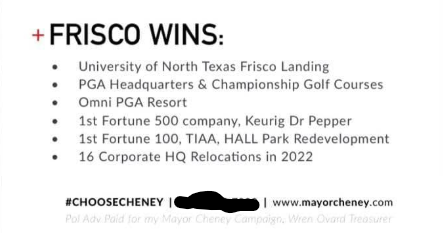
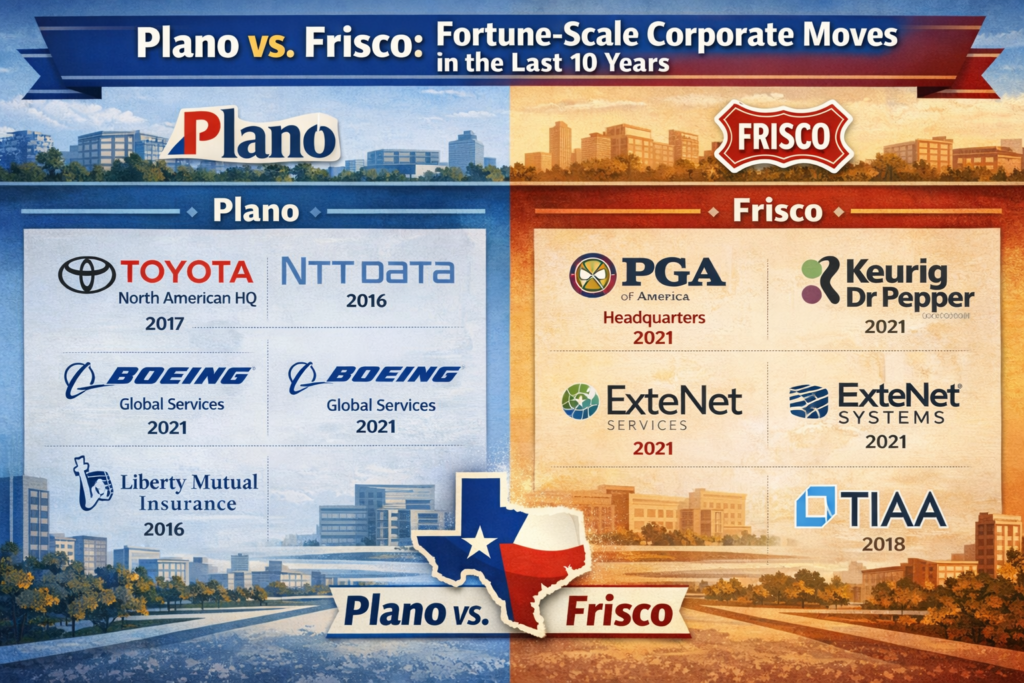
Lifestyle Frisco wrote an article in October 2019 titled “Mayor Jeff Cheney Announces Re-Election Campaign” which centered around Mayor Cheney’s own words. Cheney continues, he was seeking residents votes on May 2, 2020, so he can continue to bring more jobs, expand the tax base, create beautiful neighborhoods, and provide top tier entertainment. He notes that Frisco won our FIRST-EVER Fortune 500 relocation with Keurig Dr Pepper. He continues, the goal is to deepen our Sports City USA brand by adding the National Soccer Hall of Fame, professional lacrosse, and an esports team. His political mailer in 2020 listed his so-called wins. It still does not compare to Plano’s wins that will bring more high paying quality jobs that have a better economic impact to the city.
For years we have listened to candidates and current Council Members talk and campaign about bringing “high-paying primary jobs” to reduce commutes for residents, diversify the city’s tax base, and to support the city’s financial stability. In the most recent special election, we were shocked to learn our newly elected council woman, Ann Anderson stated she was glad that AT&T chose to relocate to Plano. Wait what?
Frisco Chronicles began to question have our city leaders fulfilled their obligations and promises to Frisco residents? Shockingly, no! Residents need to pay attention.
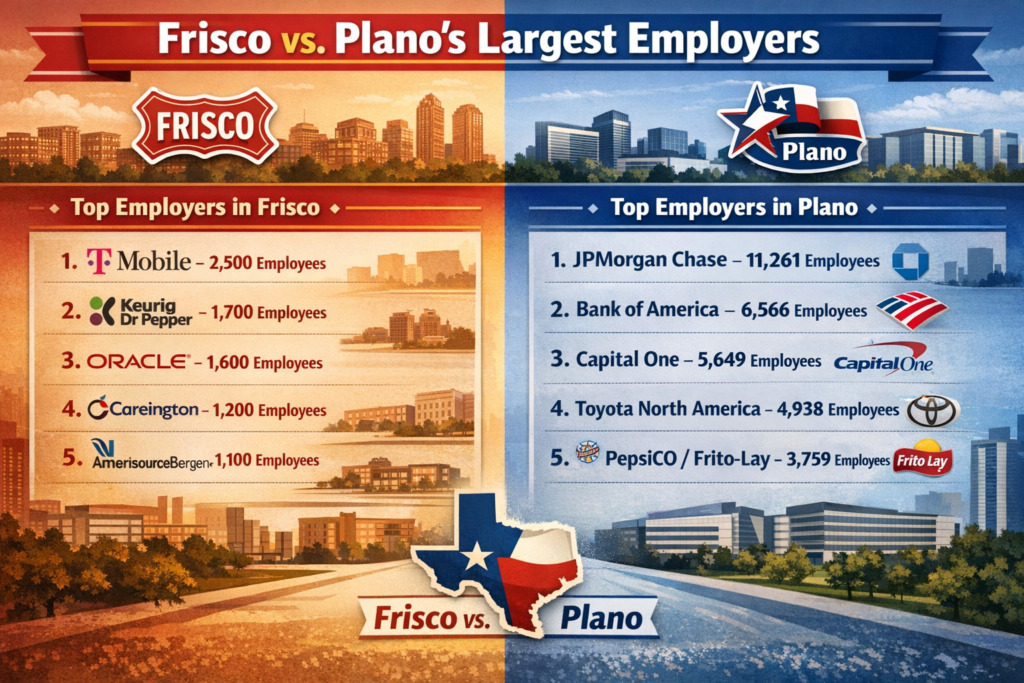
Frisco vs Plano Comparison
Who is the largest employer in each city?
Frisco: Frisco Indepenent School District – 8,800 employees vs Plano: JP Morgan Chase – 11,261 employees
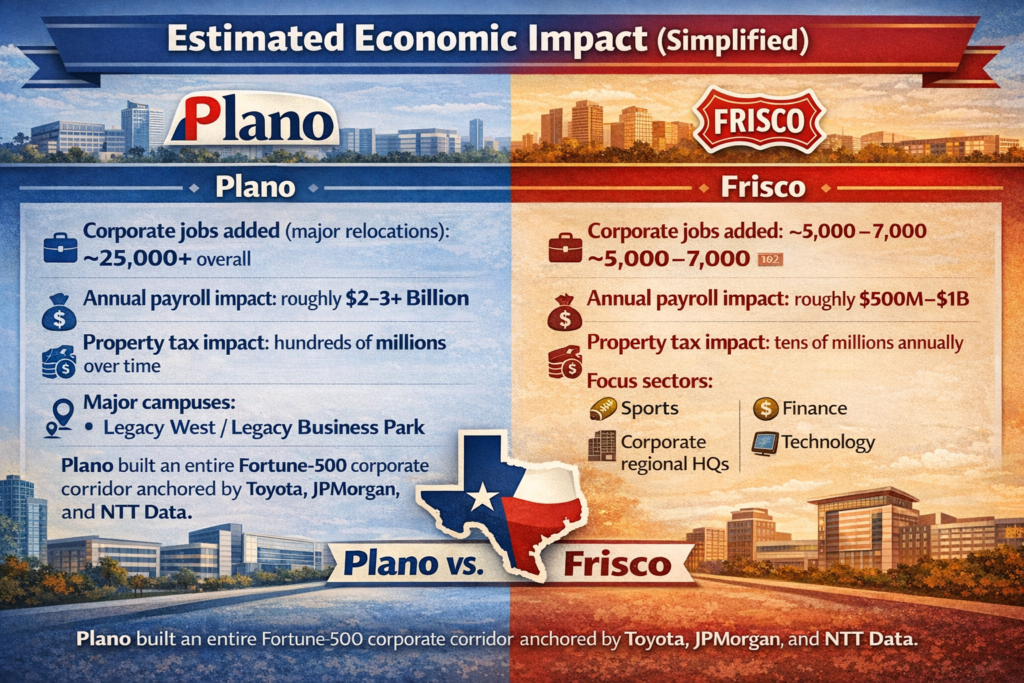
Frisco vs Plano Economic & Corporate Landscape
Which city has added the most corporate jobs?
Frisco: 5000 to 7000 vs City of Plano: 25,000+
Which city has had the greatest Economic Impact?
Frisco Annual Payroll Impact: Roughly $500M to $1Billion vs Plano Annual Payroll Impact: Roughly $2 to $3 Billion
Frisco Property Tax Impact: Tens of millions annually vs Plano Property Tax Impact: Hundreds of Millions over time
Frisco
Major employers are a mix of private and public sector. Frisco has attracted some high-profile corporate offices, but its largest employers tend to be public sector or regional service-focused, rather than Fortune 500 headquarters.
The focus has been on building a diversified but smaller-scale corporate base rather than creating a dense Fortune 500 corridor.
There’s evidence of success in certain sectors, but less concentration of high-paying corporate headquarters jobs compared to Plano.
Plano
Plano has built a robust corporate ecosystem, especially along Legacy West/Legacy Business Park, attracting Toyota Financial Services, JPMorgan Chase, NTT Data, Fujitsu/Ericsson, and Capital One.
The city has successfully attracted major Fortune 500 companies which created tens of thousands of corporate jobs and generated billions in annual payroll and hundreds of millions in property taxes.
Plano’s strategy has emphasized large-scale corporate relocation and campus development, which creates a strong economic multiplier effect.
Community Impact Comparison:
Frisco’s Potential Issue: With a large portion of the top employers in the public sector, Frisco’s economic growth may be more sensitive to government budgets, policy changes, and public funding cycles, rather than the stable expansion seen in private corporate headquarters. This could limit long-term job growth and tax base expansion.
Resident Impact Comparison
Plano: Residents benefit from high-paying corporate jobs, a strong tax base that funds public services, and a built-in ecosystem that encourages additional businesses and amenities.
Frisco: While still attracting quality employers and offering amenities, the job base may be narrower in sectors that generate higher wages and broader economic spillover. Public sector dominance among top employers may limit diversity in employment opportunities.
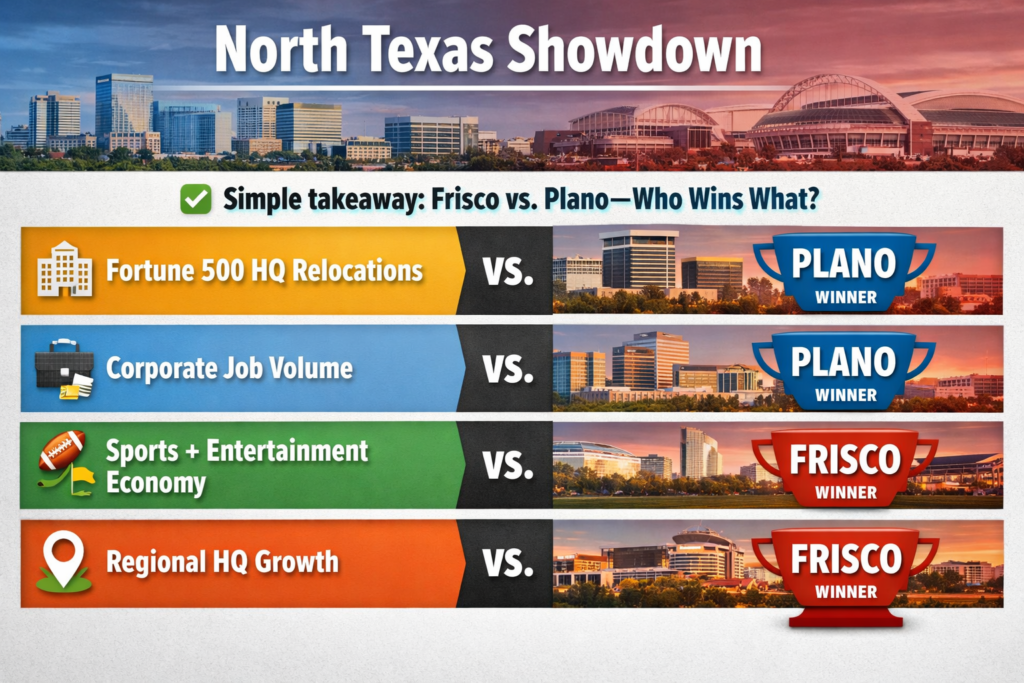
WHO WINS: FRISCO OR PLANO
Plano emerges as the city with a more aggressive, high-impact corporate strategy that directly benefits residents through employment opportunities, payroll tax revenues, and large-scale infrastructure support.
Frisco has been moderately successful in attracting employers but may face long-term challenges due to the nature of its largest employers and a less concentrated corporate corridor.
ELECTION TIME: VOTE WISELY
You constantly here residents in Frisco complain they are tired of growth without infrastructure. Why is that? Because our city leaders have done nothing to reduce our commute to local jobs or bring quality paying jobs to our community. By putting a heavy emphasis on “TOURISM” and “HOSPITALITY” they have created more traffic issues and attracted less quality paying jobs.
A recent big win the city likes to talk about is Universal Kids Resort, which is bound to add to Frisco’s traffic congestion. City leaders are hoping that over the years tourist attractions will bring in enough tax revenue to offset what the corporate relocations could have brought to our community.
A search of the internet for jobs at Universal Kids Resort displays the following available jobs: Lobby Attendant, Quick Service Associate, Dispatcher, Full Time Lead Technician, Lifeguard, Ride Operator Attendant, Wardrobe and Costume Supervisor, and many more. The requirement a HS Diploma or GED, Customer Service Experience. No pay scale offered for any of the positions. Universal offers very few highly paid management positions.
We did find one job for a Senior External Affairs & Corporate Communications Manager which states a bachelor’s degree in political science, Public Relations, Communications, Business Administration or related field is required. It also says at least 7+ years of corporate communications, legislative, government or external affairs experience is required, or equivalent combination of education and experience.
Why is all this important?
Every election the same people stand before us and ask for our vote, and Frisco Residents who are none the wiser continue to just elect the same regime. The result is our leaders have failed to bring quality paying CAREERS to our community. This will affect us down the road when it comes time to paying the big bonds they have asked us to pass over the years.
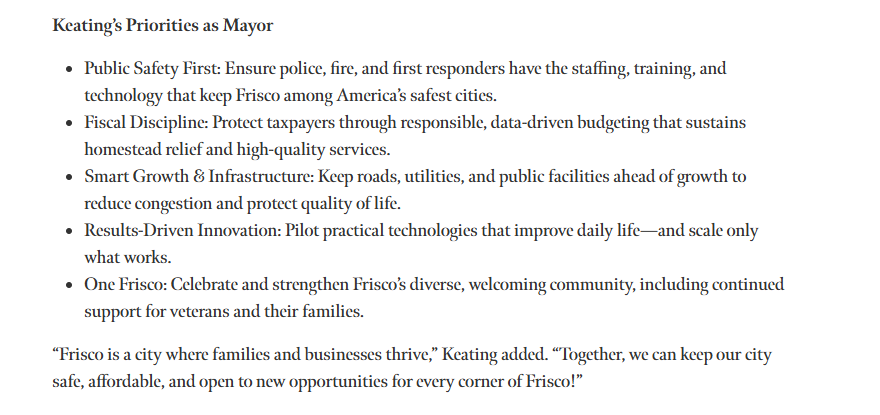
John Keating’s website brags he has served on the council “FOR MORE THAN A DECADE.” Frisco Chronicles is curious if he can name one Corporate Relocation (besides the PGA) that he pushed hard to win that brought high paying quality jobs to Frisco? Keating’s website lists his priorities as Mayor and not one of them directly states the goal to bring high quality CAREERS AND CORPORATIONS that protect taxpayers. He offers the same priorities just re-written that he has failed to complete before in his decade on the dais. Keating’s time is up!
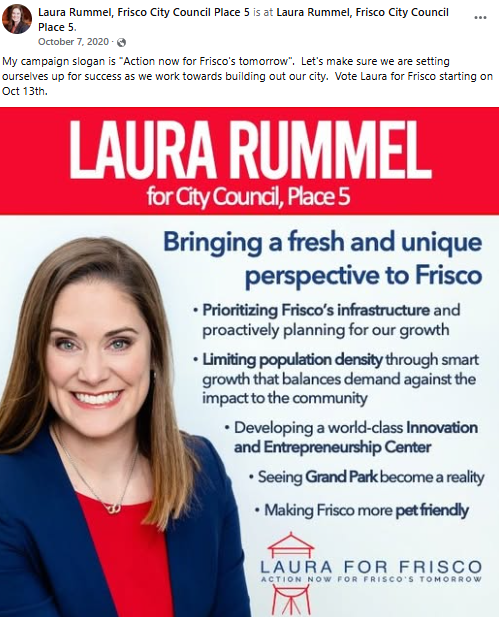
Laura Rummel is back to also ask for your vote! Her website states her priorities include Frisco’s infrastructure, smart growth by asking developers to offer smaller format housing options such as condos, townhomes, zero lot line home alternatives and fuel innovation and entrepreneurship. Her website states, “Start-ups typically provide slow and steady organic growth for the city, as well as bringing high-paying jobs, two attributes I would like to see us continue to recruit here to Frisco.
How will Laura Rummel help Frisco compete with Plano and the economic windfall they are having with corporate relocations? Rummel has had 5+ years on council now and she has no win to call her own! It takes a long time for startups to grow into a Capital One or AT&T and provide an economic impact to residents that we need here.
In closing, when will Frisco Residents say WE HAVE HAD ENOUGH AND WE WANT HIGH PAYING QUALITY JOBS THAT CREATE AN ECONOMIC IMPACT like other surrounding cities. The big wins Frisco claims are great, but they are nothing compared to our neighbor the City of Plano which has built one of the largest corporation corridors in North Texas. Plano employers include major financial institutions, corporate headquarters, tech firms, and large service centers that anchor Plano’s economy and make up a significant share of local jobs. A linear “corporate corridor” lined with major employer logos, emphasizing Plano’s role as a corporate hub
Frisco residents need to ask, “How will we repay the $1 Billion in debt we have?” Frisco leaders have dropped the ball and if you look down the road none of the “WINS” our current leaders like to claim will bring in the billions that major corporate relocations could have. At the last city council meeting you saw them approve a warehouse along the 121 roadway – is that the best use of that land or could it have gone to something else that would have brought in more high-quality paying jobs. Frisco’s future is not as bright as residents would think when it comes to financial stability. The One Billion in debt has to come from somewhere so where will it come from? Get Wise Frisco!
Disclaimer: This blog includes satire, parody, and comic relief. It contains summarized accounts created solely for humor and commentary. Any resemblance to real events is either coincidental or intentionally satirical. Reader discretion — and a sense of humor — are advised.
Largest Employers in Frisco
Employer
Sector
Employees
Frisco ISD
Education
~8,800
Dallas Cowboys
Sports & Entertainment
~2,000
City of Frisco
Government
~1,800
HCL Technologies
Corporate
~1,500
T-Mobile
Corporate
~1,300
Keurig Dr Pepper
Corporate
~1,200
AmerisourceBergen
Healthcare
700+
Baylor Scott & White Health
Healthcare
600+
Collin College
Education
500
Mario Sinacola & Sons
Construction
500
Oracle
Corporate
400
Baylor Medical Center of Frisco
Healthcare
450
Lexipol
Corporate
420
Top Employers in Plano, TX
Plano’s largest employers based on the most recent city and economic data (2025–2026 estimates):
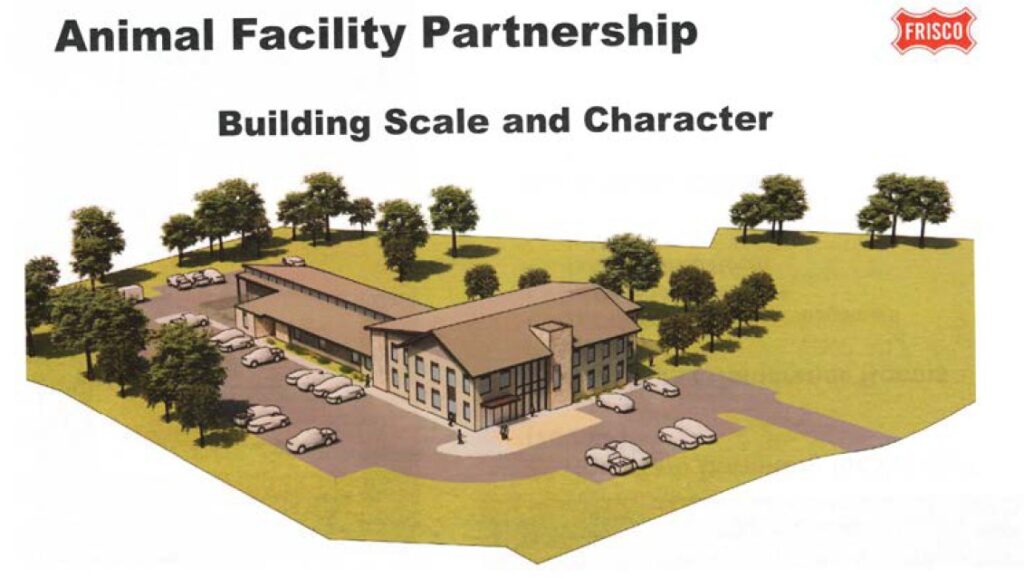
You’ve probably seen the glowing headlines as the local media can’t stop wagging their tails. But behind the news reports that this is GRAND there are Animal Advocates who are growling. From questionable facility operations and designs to compliance and transparency concerns many are asking: Who’s this facility really serving — the animals, or the headlines?
Dana Baird, City of Frisco Communications Director, was right about one thing in her press release “its a first of its kind” but where she was wrong was “in North Texas.” After reading everything sent to us by animal advocates this type of facility with a “private partner” which really means “PRIVATE BUSINESS” has never been done anywhere from our research. Ms. Baird made sure WFAA, her former employer, only reported the “GOOD NEWS” like she usually does.
Yesterday we were cc/d on an email sent to everyone on the City Council, most of the folks in the City Manager’s Office, and almost every news outlet in town (including us). My guess, it won’t be published by any local news outlet because we never anything “bad” published against the city. The email also included several local animal advocates and rescue folks in Frisco.
What was the consensus? They animal welfare folks are growling at the new proposal, and one said to us off the record that “we feel this was thrown up in time for election season and to shut down animal advocates who have been working for years for a full-service animal hub / shelter (not a holding facility).” After reviewing the presentation, we tend to agree! Link for presentation is at the end of this blog!
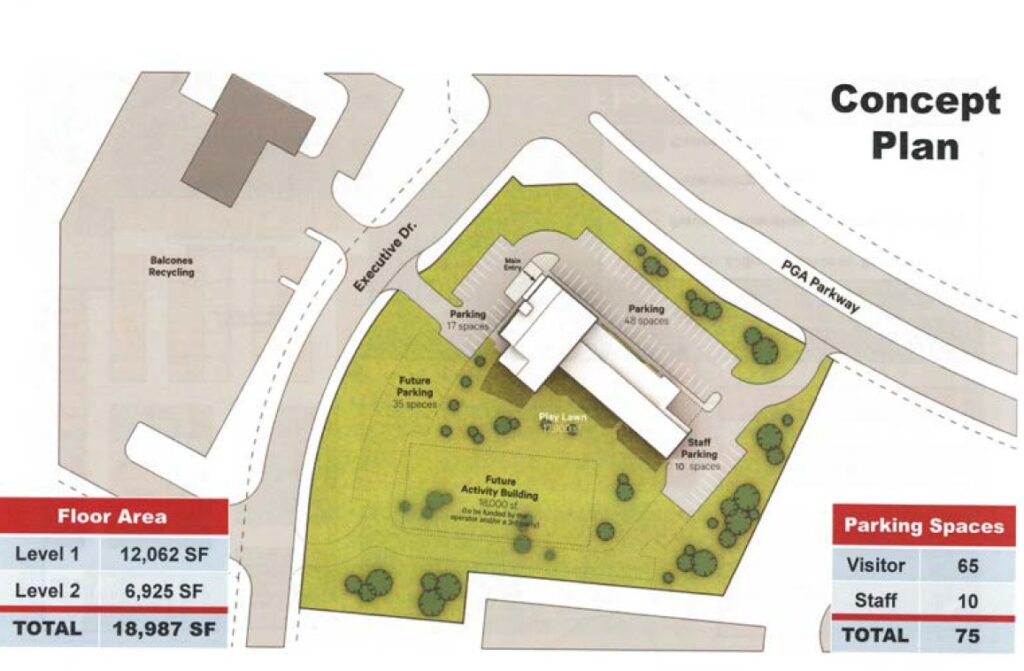
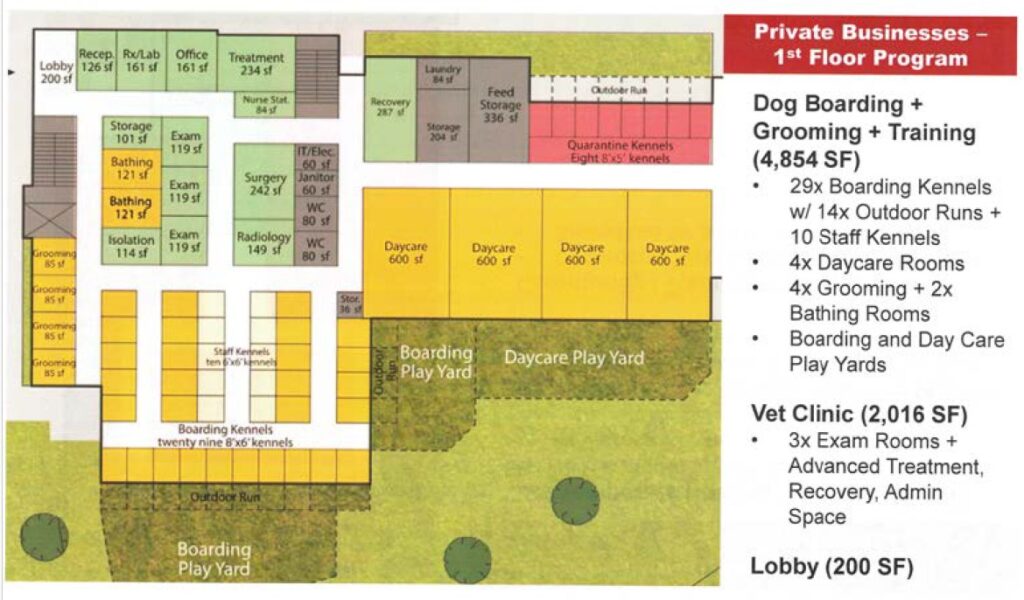
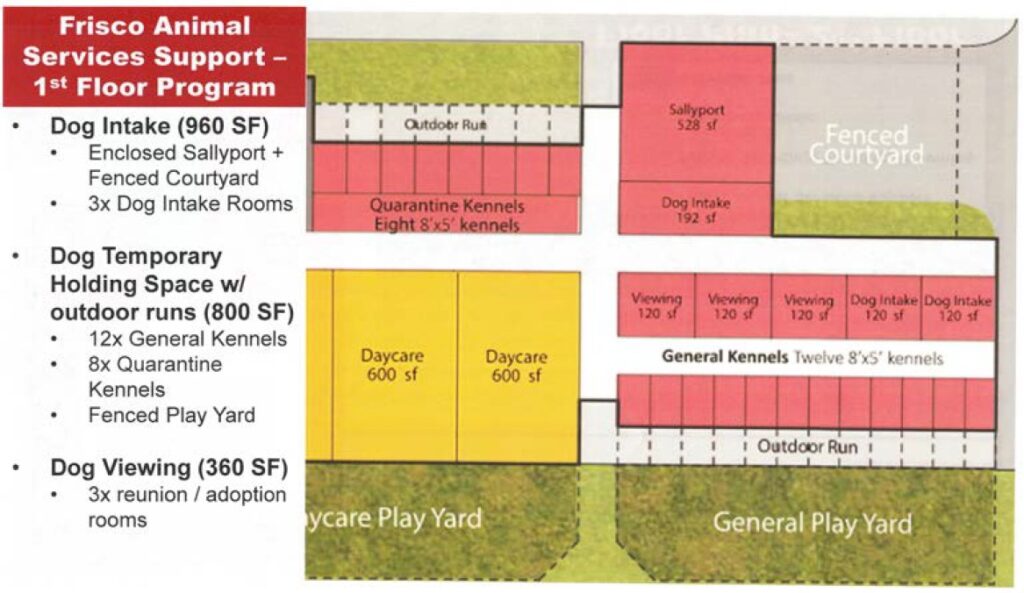
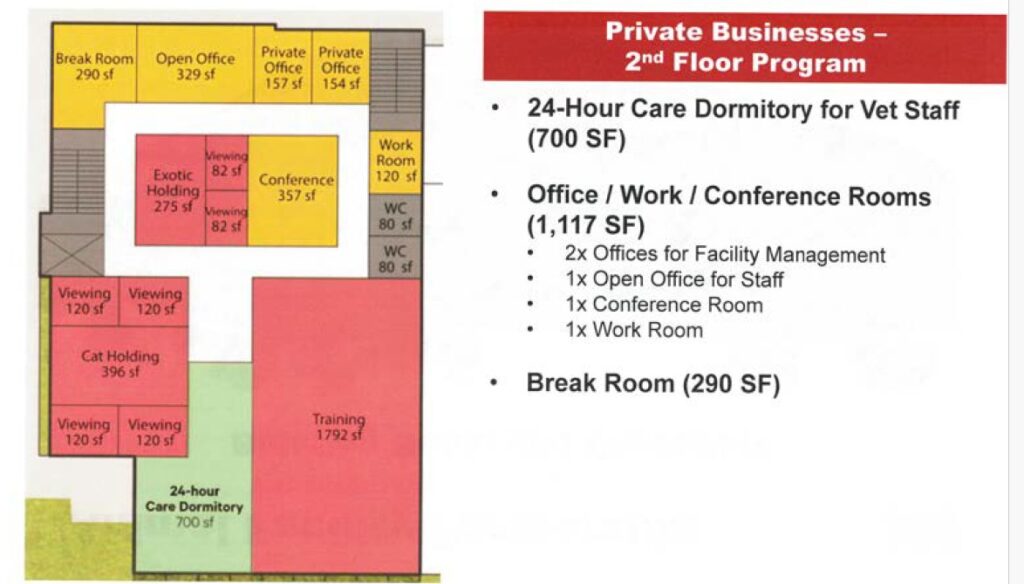
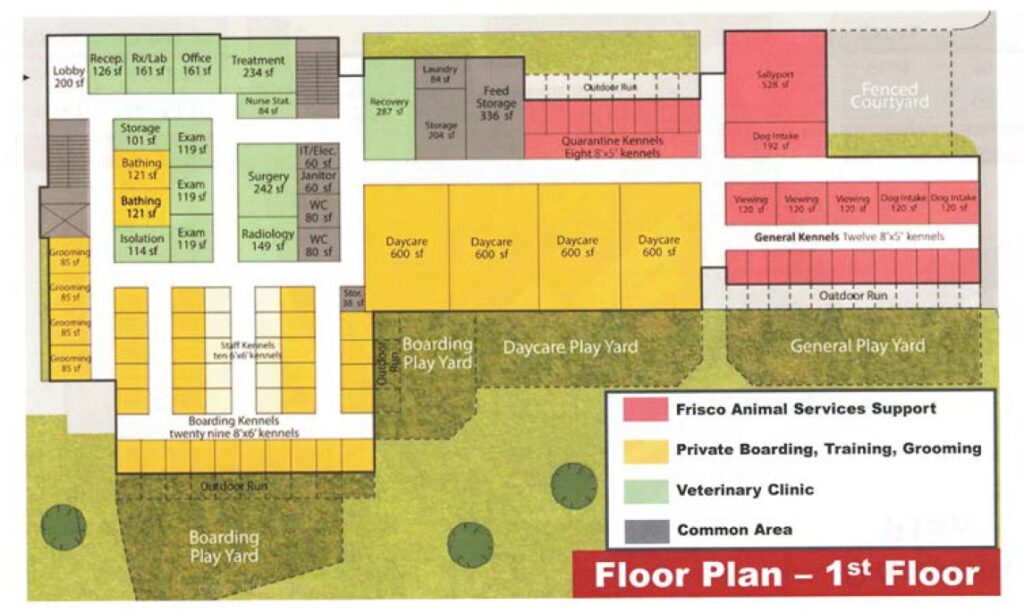
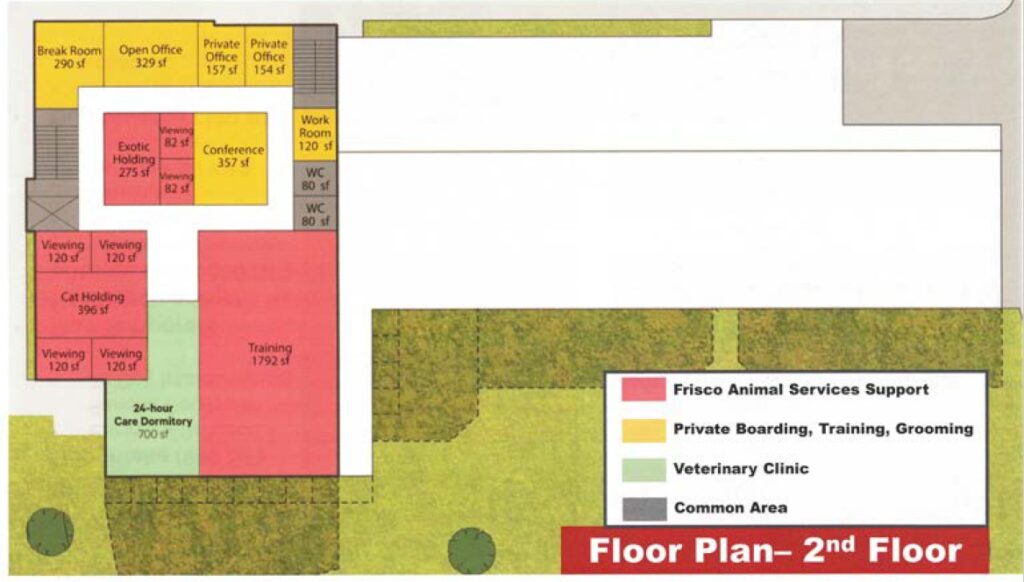
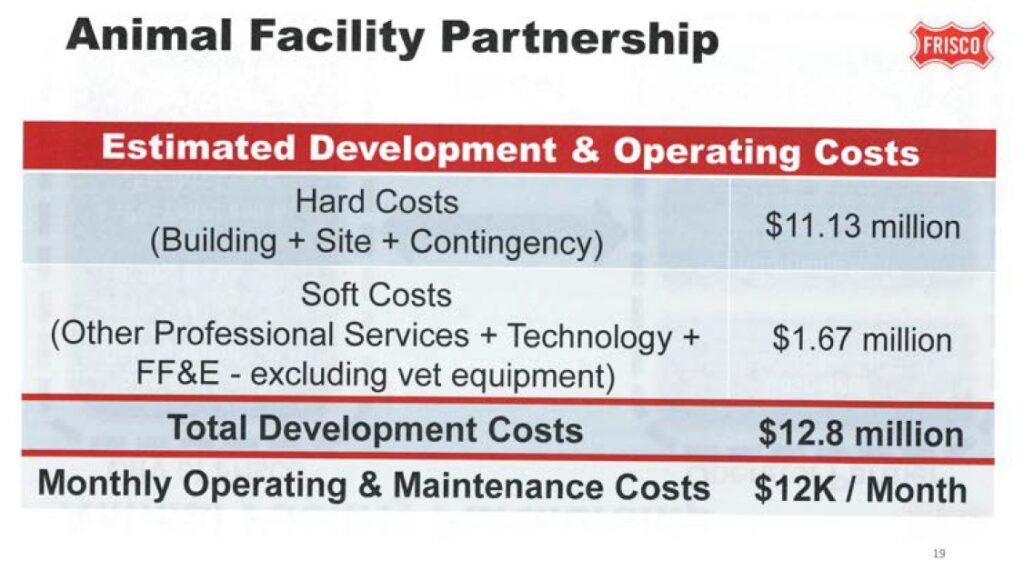
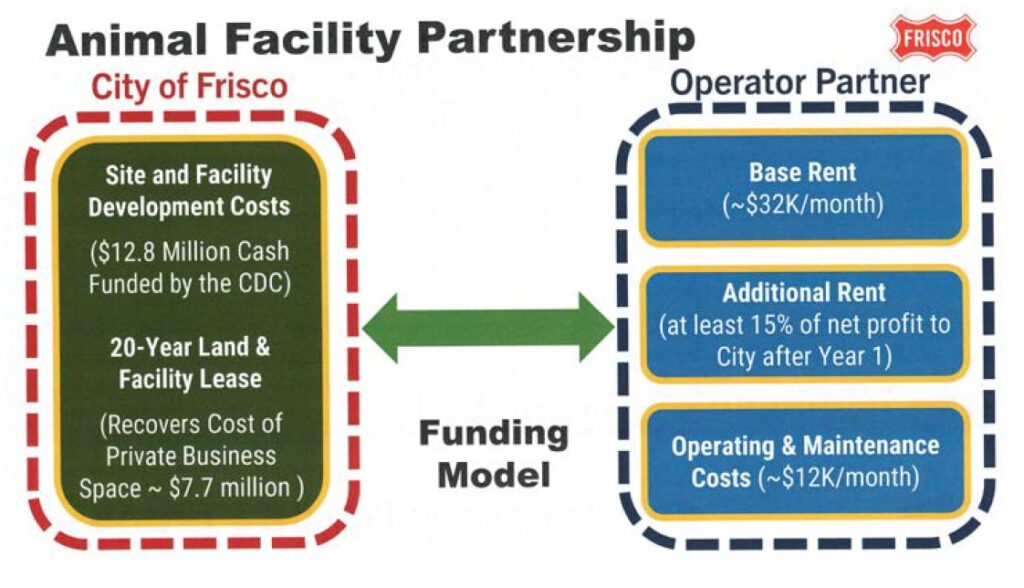
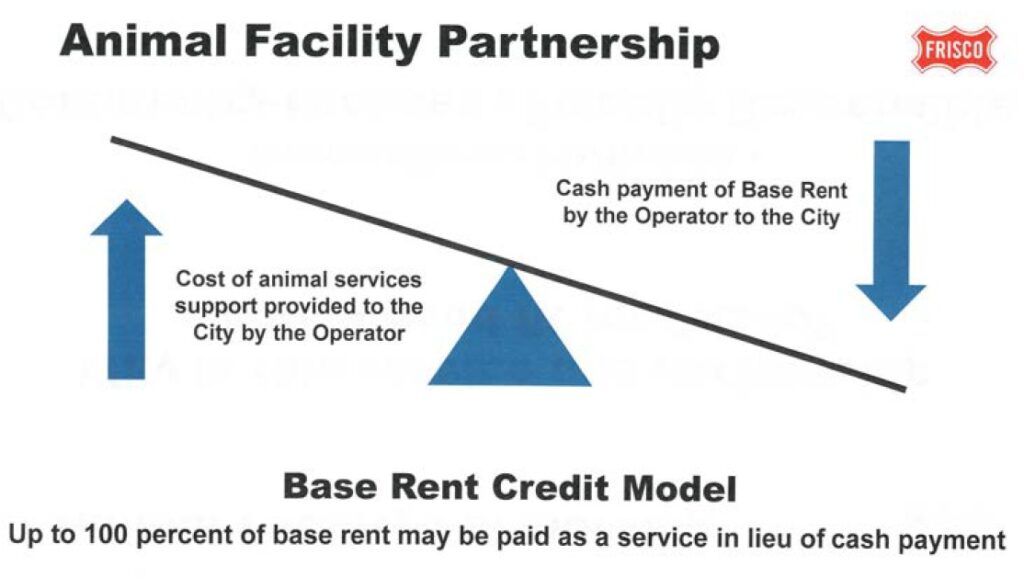
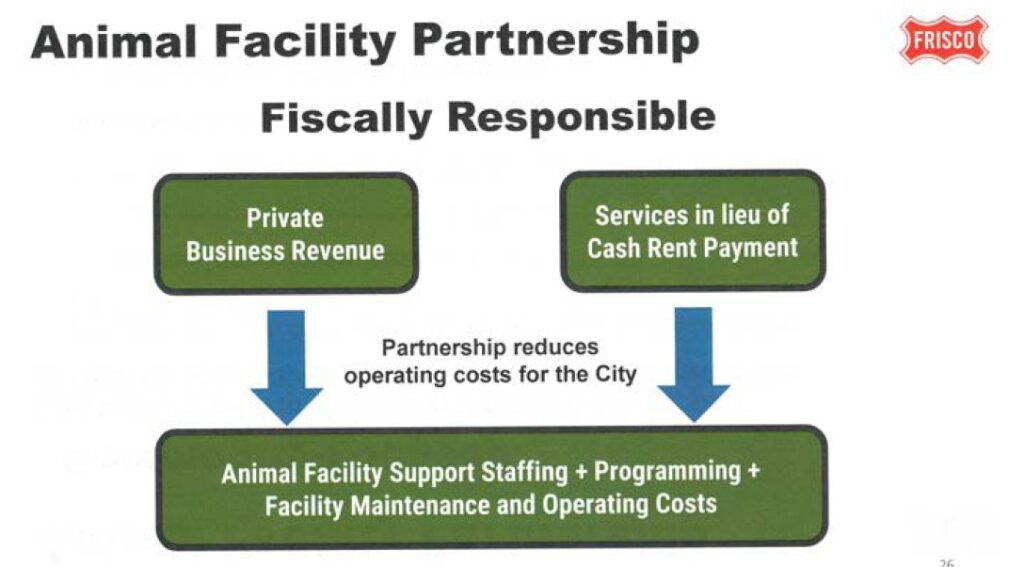
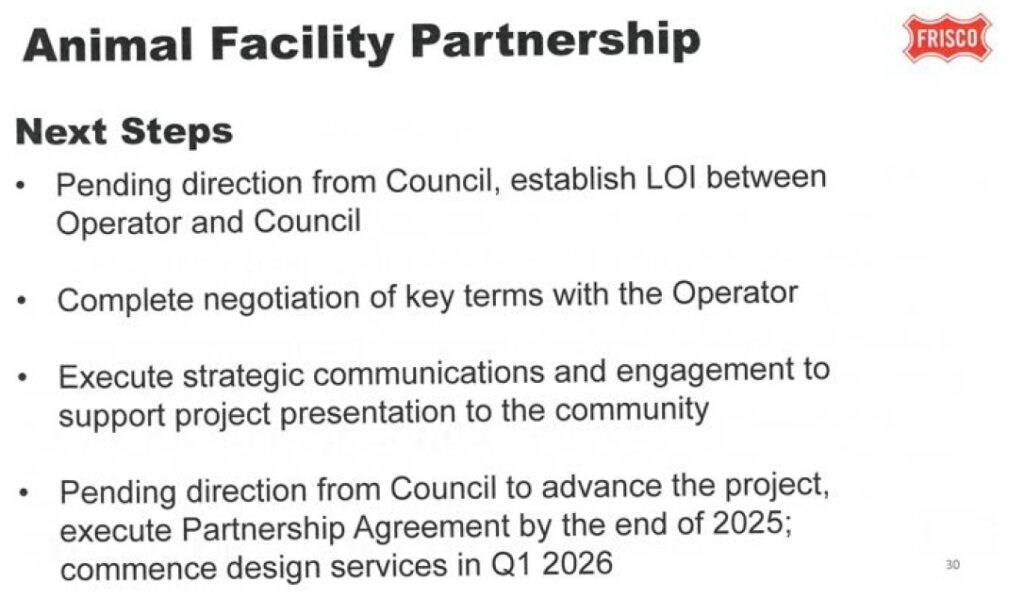
We will publish the letter sent to the city and media in its entirety below. We don’t know much about animal welfare, but we can understand the concerns after reading it. In my opinion, this appears to be a $12 million facility funded by CDC taxpayer money to support a private business. If that is the case, why not fund downtown and #SAVEMAIN? The building will be a two-story structure with a floor plan of 18,987 square feet. How does that break down? The breakdown: 10,769 square feet will be used by the private business, 5,277 square feet belong to the City of Frisco, and 1,100 square feet will be for utility space for both, such as laundry, storage, electrical, and janitorial. The private partnership is with a for-profit business called Wiggle Butts, and they will rent out space to a tenant (veterinarian). The question we have is why they have not held any community sessions or input sessions like they did for Universal Kids or the Performing Arts Center. With to little information and what looks like rushed planning, this looks like a hot mess. After reading the letter, I agree with the Animal Advocates that this has too many potential risks.
Dear Council Members,
This email was put together by several animal advocates who have concerns over the new Animal Holding Facility. While I know this email will be long, I encourage you to read it thoroughly because the liability the city could potentially hold with this model could be costly.
There is a reason animal shelters across the country don’t mix owner owned dogs with stray or adoptable animals. Most public/private partnerships across the United States are done with groups like ASPCA, Humane Society, Best Friends where they run an entire operation for a municipal entity. Why? There is too much liability when you have a “privately owned for profit business operation” within the same facility. The current presented facility violates your own Frisco ordinance today for kennel operations and is a liability to taxpayers who will end up footing the bill in a lawsuit.
Here are the concerns and questions from local animal advocates across Frisco after the recent work session related to the facility operations & design, veterinary services & oversight, financial & contractual concerns, public safety & liability, animal intake & disposition, the relationship with CCAS, staffing & training, legal & regulatory compliance and transparency concerns.
Facility Operation & Design
Two key areas of design in shelters are functionality and public health and safety. Shelters (aka holding facilities) must meet Texas Administrative Code (TAC), Title 25, Part 1, Chapter 169, Subchapter A (Rabies Control) and Health & Safety Code Chapter 826. Functionality or Flow Efficiency is important. A one-way flow design that allows animals to move from intake à medical à adoption/release (or in this case transfer to CCAS) without backtracking to prevent contamination. The current design does not have a “one-way flow” at all!
If Frisco Animal Services drops off a dog via the sallyport it will be moved into the “dog intake” area and then transferred over to the quarantine kennels or general kennels. The hallway space is not self-contained meaning airborne zoonotic diseases can transfer to other animals in that hallway space. Now let’s say one of the stray dogs needs to see the vet and you walk it down the hallway to the “green area” for vet care, that dog could have potentially contaminated that main hallway.
Contagious Diseases (some deadly) such as Parvo, Distemper, Upper Respiratory are transferred by touch, clothes, shoes, or airborne. Even if you have separate HVAC systems in the kennel runs that does not protect “owner owned dogs” that are being paid to be boarded at a private business from contamination in these hallways or walkways. This is a serious liability to the city and the business. It can also have deadly consequences for owned dogs.
Now Wiggle Butt has a dog in boarding, and they move the dog out of the yellow kennels and over to the “daycare” space which is accessed off the same main hallway. What happens? If the stray that was in the hallway before the “owner owned dog” is unvaccinated, carrying a contagious disease it could potentially transfer that to that owner owned dog. Owner owned pets can have not contact AT ALL with strays which is why at shelters they have specific areas for meet and greets or pet introductions. The layout of this facility is a walking liability for taxpayers, residents, Frisco pets, the city and this business.
This leads to the following set of questions because the disease prevention and control aspects of this design are very worrisome.
Has the city conducted a FORMAL FEASIBLITY STUDY? No! Why not?
The city has done this for every other project, including the recent Performing Arts Center.
Why not use a legitimate company like Quorum to do a formal feasibility study because this presentation does not reference best practices in municipal animal care.
Quorum / Shelter Planners of America can give you better demand planning than using arbitrary numbers from Collin County that do not truly represent Frisco’s intake.
Who helped design this model? What professional input did you have?
How was the kennel count determined? No data sets were given, and did you consider the forecast for today vs 10 years from now?
What experts were consulted on the design and functionality of this building? (outside of those who have a vested interest)
While Councilwoman Laura Rummell has stated online that design will have different HVAC systems that does not matter in shared spaces. Please explain in more detail which areas will have separate systems with separate air zones?
Will the HVAC systems be in compliance with the Association of Shelter Veterinarian standards?
Which veterinarian’s (other than those with a vested interest) were consulted for input in this design? Did any of them specialize in shelter medicine?
Will the private partner and its staff be required to take the same certification classes on Zoonotic Disease control that Animal Control Officers are required to take?
What will the cleaning workflow be? Where will cleaning supplies be stored? In the storage room on the main hallway? Will the supplies be used on both sides of the facility?
Will you have separate cleaning equipment and facilities for the “Frisco side” versus the “private business side” to prevent complete contamination by staff from one area to another? For example, will use the same floor mops throughout the facility?
Where will the food bowls be washed and cleaned?
How will the private business / city prevent airborne zoonotic diseases being transferred by clothes, shoes, hands, etc., around the facility to different areas of when they are crossing over areas where you have owner owned dogs?
If you must take a dog from the “Frisco” side to the medical area to see the vet (in green) how will you prevent diseases from being transferred to the staff kennels, daycare and grooming area. They must walk right into it to get the medical portion of the building.
Will used food and water bowls be transported back and forth in the main hallway to the feed storage room after the dogs have used them allowing potential airborne diseases to be released in the main hallway?
For liability reasons we are curious why privately (owner-owned) boarded animals are located directly next to quarantine and adoptable animals that have the risk of disease?
Who was the architect for this project? Do they have any experience in animal shelter designs?
What SOP will be in place and has it been written with the help of experts to confirm sick/healthy animals will be physically separated? Especially from “owner owned dogs” that are in the care of the private business housed in the same facility.
2. Animal Intake & Disposition
What isolation set up will you have for the first 24 hours an animal is in the facility to watch for illness before putting a dog in the “Frisco kennels”?
What types of oversight and reporting methods will this private business have (subject to PIR’s)?
Will the facility spay or neuter these animals before they are transferred to CCAS?
Will animals be vaccinated upon intake or while at Frisco’s facility?
What medical services will be offered to these stray’s before being transferred to CCAS?
What shelter management system will be used for keeping track of records?
How will we prevent non-residents from using the facility and dropping of strays? What will be the method to get those animals back to the proper facilities? What is the method to monitor this?
Will the public be able to drop off strays? At the presentation it was said yes, however WFAA is reporting the public cannot drop off animals to the facility?
Will Frisco Animal Services be the only ones with access to drop off at this facility?
If it must go through Frisco Animal Services, how will after hours strays be handled? Will residents still be able to drop off found dogs after hours at Frisco Emergency ER?
The proposal mentions that animals will be transferred to rescues within 3–5 days. Is it 3 days or 5 days?
Will Collin County count that stray hold period towards the number of days in their stay hold period?
It was mentioned that the private partner will be transferring the animals to Collin County, how is this being accomplished?
If the private partner transfers animals to Collin County will the partner also use the same vehicle to transport owner owned animals to clients? If yes, this allows for the increased potential of cross contamination (without separate vehicles)
Is CCAS on board with private business dropping off strays after the hold periods? Who will be doing the paperwork?
It was mentioned by the private partner they have connections with rescues and plan to move some of the dogs after a stray hold to a rescue. Which Rescue? Have any Rescues committed to that in writing?
Considering that rescues across Texas and the country are already at or beyond capacity and other shelters can’t get them to pull animals we are curious what magic element this private entity must make that happen.
Is the proposed director suggesting these animals be transferred to her own rescue? If so, that raises significant questions about transparency and potential conflicts of interest.
According to the press release you’ll be doing adoptions at the facility (which is fantastic). Why do you need to transfer dogs to CCAS?
After the stray hold is complete, and a dog is kept there for adoption, who will the adoption be through? The City of Frisco, from Wiggle Butt?
Which legal entity will be responsible for the animals while in custody? Does the liability fall on Wiggle Butts or City of Frisco?
If the facility is full and a stray comes in, what is the plan? With no space where will the pet go? Frisco ER, CCAS? Who will you make those decisions with?
Who will be responsible for managing clear intake & stray-hold policies: Exact stray hold period, owner notification plan, microchip scanning, and how/when animals are declared property of shelter/rescue. (Statute requires microchip scanning and gives cities duties.) Is the hold time / stray time the same for microchipped vs. non-microchipped pets?
3. Staffing & Training
Will the training for the staff be different for the private business versus the staff overseeing the “Frisco Animals”
Will there be SOPs for staffing & training standards
Will there be a requirement for minimum staffing ratios and animal-control training? Will the staff working with “Frisco Pet” have to complete the same required Animal Control Officer Certifications as a standard ACO? Who will pay for that training?
Will the Animal Advisory board help oversee this process required by Chapter 823 including independent vets and animal welfare members.
Regarding the proposed facility, what experience does the proposed veterinarian and director have working in or managing municipal shelters?
Has the city talked with any local municipal shelters for feedback?
Have they handled large-scale animal intake and the complex decision making that comes with public shelter operations?
Do either of the operators have certifications and relevant courses taken from the National Animal Care & Control Association?
Without the proper training and knowledge, the facility risks noncompliance and liability issues so who will be responsible for that, the private entity, the city, or both?
4. Veterinary Oversight & Public Services
What kind of veterinary services by law can you offer while a dog is on stray hold?
Who will have that Euthanasia authority? What will the decision matrix be? If no, then will the animals be sent to Collin County for euthanasia?
If EU is conducted, who decides euthanasia, under what standards, and what review/appeal rights exist? How will triage be done during capacity crises? Will the facility have humane euthanasia if needed for an injured animal?
We assume the vet will also be allowed to continue their private practice in the facility (same as Wiggle Butts). Will there be any restrictions to whom they can service in the facility through private practice clients?
Who will be writing the biosecurity & infection control SOPs: Daily cleaning, PPE, isolation protocols, vaccination requirements for boarding clients, staff vaccination/training, disease reporting.
Veterinary oversight and VCPR: Is there a written VCPR for boarding clients (if clients will receive vet care on site)? Who pays for emergency vet care for customers vs strays?
Zoonotic diseases are transmitted through direct contact, aerosol transmission (airborne), and ingestion via food or water bowls. If a stray animal comes out of the kennel and is walked down the hallway to the clinical area of the vet and it has a medical issue that is contagious, are you aware the hallway is not contaminated? Who will clean the whole hallway before any other animal could potentially walk on it in order not to transfer a zoonotic disease or contagious virus from the floor.
That same hallway will be used to walk owner owned animals from their kennels to a boarding / training room along that hallway without it being cleaned they could transfer zoonotic viruses
Public Services
Since the beginning of these discussions, it has been mentioned several times that this facility “may have” services for the public. What services will be available? What cost?
Low-Cost Access for spay & neuter, dental care, set of yearly vaccines including rabies for dogs and cats of all ages, microchipping, parasite prevention, and heartworm testing?
Heartworm Prevention medications?
Wellness Subscription Plans for low-cost annual services over 12 months for budget affordability?
In the presentation the owner of Wiggle Butts mentioned the facility will try to offer services to those who need to surrender in hopes that it will help them be able to keep their dog instead. Some of the suggestions were a food pantry, training, behavioral, etc. Who will be providing the training? What is the cost for this? Will it be low cost or at her current prices of $250 per session (which most people can’t afford).
5. Relationship with Collin County Animal Services (CCAS)
Will Frisco continue its contract with CCAS?
Will the current contract remain in place, or will there be a new contract?
How much is that costing taxpayers on top of the new facility?
What changes will be made to the contract now that Frisco has its own holding facility?
Will it change to a price per animal drop off?
How much will the city of Friso have to contribute to the building of CCAS expansion if we have our own facility? Will that be on top of the $12 million cost for our own facility?
Currently when an animal arrives at Collin County, they have a 7-day stray hold policy.
Will the time an animal spent at the Frisco facility count towards the CCAS stray hold period?
If no, will CCAS then hold the dog another 5 to 7 days under their stray hold policy? (in addition to the Frisco hold time)
Will the dogs or cats that are transferred to CCAS, after the stray hold period at the Frisco facility, be at the top of the list for potential euthanasia since they have already been held for a stray period?
How will CCAS determine what animals are adoptable when transferred over to them since they will have no contact with the animals while in Frisco’s care?
The hold period allows staff at shelters to determine how adoptable a pet can be.
How many animals currently housed at the Collin County Animal Shelter originate from the City of Frisco in a weekly or monthly period?
How many dogs are being dropped off at Frisco emergency clinics or veterinary offices?
Is there a way to determine how many of those animals dropped off are from outside city limits?
According to the presentation No owner surrenders will be accepted at the Frisco Facility and Frisco residents will still have to contact either Animal Services or schedule to take them to Collin County Animal Services, correct?
Do you feel this is a confusing message to residents?
Reality Check: That is a very confusing mixed message to residents. “Go here for A but go here for B or maybe C call Animal Services” The end result will be the same as every other city Residents will dump their dogs in a nice neighborhood hoping they are found and taken to the shelter as a stray. What will it take for the Frisco facility to allow surrenders?
Has Collin County been informed of the future changes and their role in the new set up? How does Collin County feel about this plan? Have they agreed to these changes to be your euthanasia headquarters and surrender headquarters?
Has CCAS agreed to have a private entity transport strays to them (instead of Frisco Animal Services) and do you have a signed agreement on that?
6. Public Safety & Liability
Bite Quarantine
Will you have a designated isolation area for “official quarantine dogs” or will you handle that process through your CCAS relationship?
Who will properly train staff in safe handling techniques and the use of appropriate equipment such as catch poles, muzzles, and protective gear.
What will happen when an animal comes in that is human-aggressive, or a dog or cat with a confirmed bite history?
Volunteers
At the presentation the owner of Wiggle Butts said they hope to have a volunteer program put together soon. Generally, people cannot “volunteer” for a private, for-profit business without pay under federal and Texas labor law, so how will volunteers fit into the equation?
If this facility is run by a private business such as a private kennel, trainer, or boarding business and has unpaid people walking dogs, cleaning kennels, feeding animals, or helping customers — that’s work that generates profit and violates the Fair Labor Standards Act (FLSA). Legally, they must be paid employees or independent contractors (rarely fits).
What is the plan to handle aggressive or dangerous animals that may pose a risk to staff, volunteers, and the public?
If a volunteer is bitten by a stray who will be liable? The City? Wiggle Butt? The animal’s owner since it is on stray hold?
What will the behavioral assessment and process be for strays? Potentially Adoptable Pets? Bite Quarantine Animals?
How does a “fear-free” training approach align with public safety and the legal responsibilities of a municipal facility?
While the “fear free” approach is a positive and compassionate philosophy, it must be applied realistically. Not every animal entering a municipal shelter can be safely rehabilitated or rehomed, and public safety must take precedence over idealism. It can lead to inadequate space, staffing, or resources, often leads to overcrowding, increased stress, and higher disease risk.
Therefore, what will be the balanced approach—combining humane care with practical decision-making to ensure that the shelter fulfills its mission responsibly and sustainably?
This is a complicated, high-risk setup (owner owned animals vs strays) unless the contract and operations are written and run with rock-solid public-health, veterinary, procurement, and liability protections. Who will be responsible for this?
Does this model currently create a substantial liability risk for the City of Frisco and its taxpayers?
7. Legal & Regulatory Compliance
Which legal entity will own the animals while in custody? City or private operator? (This impacts who is allowed to provide medical care under the owner-exemption.)
Which statute will govern each function since you have a private kennel with a city facility?
Shelters operate under the Texas Health & Safety Code Chapter 823 while “Kennels” defined as a facility that boards, trains or handles dogs or cats owned by others for compensation operates under THSC Chapter 824.
Will shelter animals be run under Chapter 823 and boarding clients or under Chapter 824 — and how will conflicts be resolved?
Records & Public Information: Who will maintain the records, where will they be kept, and how will public-records requests be handled? Owners have a right to privacy and now you have a private business with access to resident information which is usually considered confidential.
Consumer protections for paying customers: Will the operator and vet be required to provide written informed consent to private paying customers of the business that the facility will be holding strays that could be unvaccinated, possibly be carrying an infection disease, maybe there on an aggressive quarantine hold, etc.?
Will there be a written notice about how refund/compensation terms if a paying customer dog gets exposed or injured to protect taxpayers from a potential lawsuit.
Who will be responsible for Performance metrics & termination rights: Return-to-owner rate targets, disease outbreak thresholds, audit rights, corrective action, and termination for failure to meet standards.
Will the private partner be subject to PIR’s for city data or details?
Will the city carry its own insurance to protect us from potential lawsuits from this setup? (outside the private contractor’s insurance)
CURRENT CITY OF FRISCO’S ORDINANCE: Defines a kennel as “Any premises wherein any person engages in providing pet care services (except veterinary) for four (4) or more animals, such as boarding, grooming, sitting and training pets, except as prohibited by the City of Frisco’s Comprehensive Zoning Ordinance, as it currently exists or may be amended.”
Veterinary services are excluded from that definition (i.e. if you’re a vet you may have other rules).
The current ordinance requires kennel clients to provide “Proof of current rabies, parvo, distemper and Bordetella vaccinations must be maintained for all dogs, cats and ferrets four (4) months of age” so will the for profit Kennel portion of the business have to disclose to potential paying clients that unvaccinated, pets potentially carrying a zoonotic virus will be contained inside the building?
8. Financial & Contractual Concerns
Does operator have a 10-year history of financial and business credentials?
Does the current business currently have a history that shows they can cover the potential monthly cost of over $50k +15% of profits (2nd year)
What is the back up plan if the operator cannot fulfill its obligations?
Will, or has, the city publicly advertised for operators now that they have a business model?
Has there been a Proforma (of Financial Forecast) of Income & Expenses for City
Has there been a Proforma (projection) for services, policy and operational costs and expenses?
Is the private entity positioned to benefit financially or professionally from this proposal through their private businesses? If yes, how?
Furthermore, what is the clear contingency plan if the operation proves unsustainable?
If the director is unable to meet intake demands or financial goals, there must be a backup strategy—such as returning management to municipal control, restructuring the program, or appointing new leadership—to protect both the animals and the community?
What type of Contract language will there be: indemnity / insurance / risk allocation: Minimum insurance amounts, municipality indemnity carve-outs, who pays defense costs, and whether municipal immunity applies. Will the city require the private operator as an additional insured (and vice versa as appropriate).
Procurement transparency: Show how the city selected the vendor, RFQ/RFP documents, competing bids, and legal justification under Local Government Code. Confirm the contract was pro-cured properly.
Will, or has, the city publicly advertised for operators now that they have a business model?
9. Transparency
With the private partner announcement, did the “private partner” have any input or say on this while in her role on the city’s Animal Advisory Board? Is that a conflict of interest?
Will she remain on the Animal Advisory Board in the future? Is this a conflict of interest?
Will employees of the business have access to information on strays and how does this potentially violate privacy issues of residents. What about paying owners privacy?
Procurement transparency: Show how the city selected the vendor, RFQ/RFP documents, competing bids, and legal justification under Local Government Code. Confirm the contract was procured properly.
In conclusion, this Animal Facility Presented is a liability issue all around. Too many variables have not been considered. This puts the city, the business owner, residents and Frisco pets at risk. There is a reason this has not been done before, so what makes Frisco think they can do it better?
For this to move forward it would need to have strict SOP Clauses in the Contract (to protect taxpayer dollars from potential suits)
Customer consumer protections: “Contractor must obtain written informed consent per Chapter 824 for boarding clients, disclose co-location with municipal shelter, fire-safety systems, and emergency plans; refunds/credit policy for exposure incidents.”
Strict physical separation clause: The contractor shall maintain distinct, walled, separately ventilated areas for municipal-custody animals and boarding/training clientele. No shared runs, HVAC, food/water bowls, or grooming equipment. The floor plan should be reworked to have strays nowhere near a potential owner-owned animal.
Biosecurity & outbreak clause: “Contractor will implement DSHS-recommended isolation, cleaning, and cohorting plans; immediate notification to city and mandatory temporary suspension of boarding if an outbreak is suspected.”
VCPR & veterinary authority clause: “All veterinary care for paid clients must be provided under a documented VCPR; shelter animal care will be under the shelter VCPR as required by law. Contractor will not offer paid medical services to owners of boarded animals without expressed written authorization and compliance with TBVME rules
Insurance & indemnity: “Minimum commercial general liability (specify high limits), professional liability for vet services if provided on site, and contractor named as additional insured on city policy. Contractor indemnifies city for contractor negligence; city indemnifies contractors for actions taken under city directives.”
Records & transparency: “Contractor will maintain intake, medical, and disposition records on premises; microchip scans on intake; monthly reporting to city; records available for audit and subject to public information requests.
In our last blog, we looked at Mayor Cheney “in his own words.” And one thing became painfully clear: residents and business owners have more questions than answers. We pointed out that our very own Mayor somehow became the “Official Realtor” of the Rail District and proudly used this in his marketing. Not sure how that happened? Neither are we. Seems like a convenient title to slap on it when you’re the guy with the gavel and the guy with the yard signs. But here’s the question that really matters today:
Who’s knocking on Main Street’s doors right now?
Not the shoppers looking for a boutique candle. Not the residents grabbing tacos or a cup of coffee. Not the neighbors wanting to support local businesses. Are businesses in The Rail District getting visits from investors, developers, and opportunists? Folks who see dollar signs where you see memories. They’re not coming with a smile and a handshake — they’re coming with contracts and cash offers. Are property owners being pressured to sell?
Are these small businesses — the ones who fought through COVID shutdowns, construction dust, and skyrocketing rents — now staring down the possibility of being bought out, flipped, and priced out. Let’s call it what it is: cashing in on a revitalized downtown.
We received this email, which left us with numerous questions. It takes a lot for businesses in Frisco to reach out, because many fear retaliation for speaking up. We commend Randy for speaking up and after reading his email, we are alarmed! We are publishing the entire contents as we received it.
Dear Whistleblower,
My name is Randy Burks, and I own Randy’s Steakhouse in downtown Frisco. Someone suggested I reach out to you regarding an experience I had that raises serious concerns.
Recently, I attended a meeting between Frisco city staff and downtown merchants about the ongoing Main Street construction. During the meeting, one merchant stated that 14 businesses had already closed due to the project. A city staff member laughed and asked whether those businesses closed because of the construction or because they were “bad operators.”
At that moment, no one in the room knew that I was facing severe financial difficulties—bouncing checks, draining my wife’s and my savings, and borrowing from family just to keep the doors open after 32 years in business. I stood up and told the group that Randy’s Steakhouse maintains 4.7 stars on OpenTable and 4.4 stars on Google, ranking among the top restaurants not only in Frisco but across the Metroplex. I asked if they thought I was a “bad operator.” It was humiliating to be forced to share personal financial struggles in front of both city staff and fellow merchants.
Other merchants then spoke up, saying their businesses were down 60–65% due to the construction. Just a few hours later, I received a text message from Jason Young asking if I was interested in selling my restaurant. While I’ve always been open to retirement discussions at a fair price, the timing felt far from coincidental.
We arranged to meet at 8:30 PM that evening, though he did not arrive until 9:00. He brought with him a man he introduced as Mark Hill, an attorney who he claimed worked with the CDC. Instead of discussing a purchase, Jason asked personal questions about my wife and daughter, while Mark Hill walked around the restaurant taking photos. After a while, I excused myself, angry that my time had been wasted.
The next day, Jason texted me an offer of $2 million for my restaurant. I replied that I would not sell for less than $4 million. Since then, I have heard—but cannot confirm—that his restaurant group includes investors such as Mayor Cheney and Donny Churchman.
I feel compelled to share this because of the sequence of events—the city staff’s dismissive remarks, Jason Young’s immediate outreach, and the potential involvement of city leadership—raises serious concerns of conflict of interest.
Thank you for taking the time to read this. I am prepared to provide additional details, messages, or documentation if helpful.
Sincerely,
Randy Burks
Randy’s Steakhouse
“Déjà Vu: Same Block, Different Spin”
While many love to believe we are biased here at Frisco Chronicles, we do try to be fair! We reached out to Jason Young with some of our questions, and he quickly responded. His comments are intertwined with our questions below.
1. What city staff member would laugh when a merchant says 14 businesses have closed already due to this project and after laughing ask if the business closed due to construction or because they were “bad operators?” We talked to a source inside that meeting, and allegedly that staff member was Ben Brezina, Assistant City Manager. Currently, we have no confirmation from the city Brezina was the staffer with the horrible attitude.
2. The timing of Jason Young’s text message to Randy Burks – is it strategic? Is it coincidental? Hours after Randy pours his heart out at a city meeting, another local business owner who happens to also be a developer is reaching out. Just based on the optics, it doesn’t look good, in fact it looks bad, and it also feels very dirty in our opinion.
We asked Jason Young this question and Jason replied, “I’m not sure what you mean by city meeting or circumstances or timing. I reached out to him because my friend had recently finished restoring a property in Downtown (city) and was looking for a new project. We also are looking at a similar historic home opportunity in Downtown (city) as a potential bed and breakfast, event venue or restaurant. I have projects in Downtown (city) and (city) as well. Our focus is on old downtowns in North Texas. **Anywhere there was a city name, we removed it**
3. Mark Hill? Mark Hill who is a Frisco ISD Board Member? Mark Hill who is a member of the City of Frisco CDC Board? Why was Mark Hill allegedly taking photos of Randy Burks’ property? Is Mark Hill the attorney of record for Jason Young’s business? We go back to one word every time … OPTICS!!! The way Randy describes it, it looks bad, it feels dirty, and you can’t blame him for asking the questions or for feeling the way he does. It does not feel random! It does not feel organic!
We asked Jason Young, when you went to visit Randy steakhouse, you brought with you Mark Hill. Is he your attorney of record? Because the optics of it look as if someone from the EDC or CDC board came to scope out of business. Why would Mark Hill attend the meeting.
Young replied, “The day I visited Randy I by happenstance was with Mark. I told him I was gonna go visit Randy and invited him to come with me to grab a burger at the bar while we chatted which we did. I’ve known Randy for 20 years, used to go weekly to eat from like 2004-2010 until I started dating my wife and she said no more lol. Randy and I served on Frisco Convention and Bureau Board together. I hadn’t seen him in 8 years or so and Mark and I ate at the bar and caught up with Randy. He shared some health concerns, and he gave me a tour of his kitchen.
4. The 2-million-dollar text? Why would you text someone an offer for their business? Why not pick up the phone or send an email with the offer? To us, after reading Randy’s letter, it felt like a fishing expedition on Young’s part, which made us wonder what he would use that intel for? Again, that is how we FELT, there is no evidence that it was a fishing expedition. Given how we felt, we can fully understand why Randy is questioning the sequence of events and potential conflicts of interest. The OPTICS don’t look good.
In talking to Jason Young he stated, “It was simply a text question asking if he would be interested in selling to which he responded yes. So, I went and chatted with him for a few hours. The next day we had a text exchange about a value which we didn’t agree on and he said no hard feelings. It was very brief. No ill intent, just a question.”
5. Three Empires Brewing
After reading the letter our natural reaction was to dig deeper. In that quest, we heard Jason Young may have also invested in Three Empires Brewing on Main Street. What we find interesting about that potential investment, is the owners of TEB back on September 4, 2024, went before city council during citizens input to tell the council the construction is taking a toll on their small family-owned business which they had put their life savings into.
In our conversation with Jason Young, we asked him if he had made offers to any other downtown businesses. Young replied, “In Sept of 2024, I made an investment in a minority percentage of Three Empires Brewing. In early July 2025, I had a brief conversation with Randy regarding the Steakhouse. In late August, another RD business approached me about potentially replacing one of its partners and I declined.”
We expressed our concern about the optics to Jason Young and flat out asked him if he has any business dealings with Mayor Cheney or Jeff Cheney Real Estate Mogul. Young replied, “I have no business dealings with Jeff. He is not at all and never has been an investor of mine.”
In The End: We are just Dazed & Confused
We go back to THE OPTICS … it does not look good! To a “Regular Ole Joe,” it comes across as if a downtown business is in trouble due to the impacts of the construction. That business then goes before the city council during citizens’ input and asks for help to stop the bleeding from the construction. Next thing you know, Jason Young is reaching out to say hi! Oh, and wants to know if you are interested in selling or need an investor for your business. It doesn’t sound good, does it?
We mentioned to Jason Young in our communication that he is a respected member of our community, and he is an influencer on social media; what he says carries weight with many people. In the past, he has been strong in defending the city and council members. Unfortunately, that does not help the optics of this situation.
Randy Burks has every right to question the sequence of events because it does not feel like this meeting happened organically. Unfortunately, that is the optics of the situation. We have reported both sides and it is up to residents to determine what they believe is the truth.
For us here at Frisco Chronicles, after Mayor Cheney’s remarks today on his Facebook page, it does not feel like this is about “progress” or “vibrancy” — it feels like it is about control. We believe there are potentially more players trying to buy up Main Street, lot by lot, brick by brick? That leaves us wondering, who gets to decide what Frisco’s history is worth, and at what price? Only time will tell …
For Residents: Get Out! Go Downtown! Shop Frisco First! #SAVEMAIN
To be blunt: Shop, Eat Frisco First! If you do, you could be saving one of these businesses from having to open their doors to an investor or developer. By shopping and eating FRISCO FIRST, you are saving Main Street’s soul from being put on the negotiating table. #SaveMain isn’t just a slogan. It’s a warning. Because once the doors close and the deals are done, Main Street won’t look like Main Street anymore. It’ll look like somebody’s investment portfolio.
For more information visit SaveMain’s website: click here
For more information on The Rail District: click here
Disclaimer: The information presented in this blog post is based on publicly available records and sources believed to be accurate at the time of publication. Frisco Chronicles and its authors do not guarantee the completeness or reliability of this information and cannot be held responsible for any errors, omissions, or outcomes resulting from its use. All individuals are presumed innocent until proven guilty in a court of law. This content is provided for informational and commentary purposes only and should not be construed as legal, professional, or personal advice.
At Frisco Chronicles, we’ve never pretended to be anything but what we are: a voice for the people. Not the polished PR spin. Not the sanitized city hall version. The real voices—the ones too nervous to post on their own pages because in Frisco, speaking your mind can still get you whispered about, iced out, or flat-out retaliated against.
That’s why we’ve said it before and we’ll say it again: if you’ve got something to say, a question to ask, or facts to back up your concerns, we’ll give you the microphone—anonymously, if needed. All it takes is writing it down (be your own journalist for a day) and send it our way at friscowhistleblower@protonmail.com.
Today, one resident did exactly that. They sent us a letter about #SAVEMAIN, and asked us to share it with you. So… here it is.
Frisco’s Downtown Disaster: Where’s the Money? Where’s the Timeline?
This is not about politics. This is about survival.
Our downtown merchants are suffocating under a project that seems endless. Blocked streets, sidewalks, and driveways have cut them off from their customers. Owners are going broke — draining savings, maxing out credit cards, borrowing from family, and closing their doors forever. And what’s the response from City Hall? A flimsy half-million dollars, spread so thin it’s practically meaningless.
Gift cards and flags don’t save businesses. T-shirt sales won’t stop the hemorrhaging.
Meanwhile, speculation is running wild. Residents are asking why construction drags on for months with little activity. Why are there days with just one or two workers downtown when this project should have round-the-clock crews? Why do we see contractors working on other projects around town while Main Street sits unfinished?
These are not rumors to laugh off. They are questions that demand answers.
We Demand Transparency
Here’s what we, the people of Frisco, have the right to see:
The Contract – What was promised regarding scope, deadlines, and penalties for delays?
Change Orders – Every single adjustment approved that raised costs or extended timelines.
Budget & Expenditures – How much was allocated, how much has been spent, and where exactly the money went.
The Timeline – When this project was supposed to end and when it will actually end.
These are not “nice-to-haves.” These are public records. Taxpayer records. Our records.
Under the Texas Public Information Act, every resident has the right to request these documents. But we shouldn’t have to file paperwork and wait weeks. If the city has nothing to hide, they should post it all online — today.
No More Excuses
Merchants begged. They cried. They pleaded for help. And City Hall responded with pep talks about “communication” and “brainstorming,” as if it were the responsibility of small businesses to solve a crisis created by city mismanagement.
Enough.
We don’t want slogans. We don’t want t-shirts. We don’t want hollow promises.
We want the documents.
Post the contracts.
Post the budgets.
Post the timelines.
Show us where our money is going. Show us when this will end. Show us the truth.
Anything less is an insult to every merchant, every taxpayer, and every resident who believes downtown still matters.
Disclaimer
Frisco Chronicles is a community-driven blog. The views, opinions, and allegations expressed in guest submissions or reader letters are solely those of the original author and do not necessarily reflect the views of Frisco Chronicles, its editors, or contributors.
We provide a platform for residents to raise questions, share concerns, and present information. While we encourage fact-based submissions, we cannot and do not independently verify every detail provided by contributors. Readers are encouraged to form their own opinions and, when necessary, seek additional information from public records or official sources.
Frisco Chronicles shall not be held responsible or liable for any errors, omissions, or the outcomes resulting from the use of this information. If you have concerns about specific content, please contact us directly.
Frisco is one of the oldest cities in the metroplex and over the years we have not stopped growing! Every day you see more modern buildings going up and more new developments along the Tollway. From the PGA to The Star there is always something to do! BUT, WHAT ABOUT MAIN? WHAT ABOUT THE HEART OF OUR CITY?
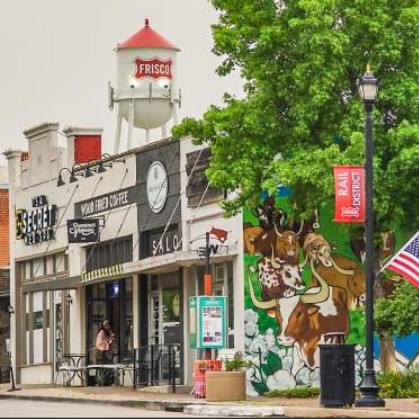
Just beyond the glamour and stadium lights of Toyota Stadium sits a unique and historic downtown. The downtown Rail District is home to an eclectic group of independent, locally owned restaurants and businesses. The district boasts unique street murals and one-of-a-kind shops. This historically preserved area offers visitors a glimpse into the “Real Frisco,” not the Touristy Frisco. The Rail district is surrounded by residents who enjoy living in the area and is home to locally owned small-town businesses that have invested in our community for YEARS. Now, they need the CITY TO INVEST IN THEM!
Yes, downtown needed to be REVITALIZED, that we can all agree on. It has taken the city DECADES to come up with a plan, and now they are moving right along! HOWEVER, residents and local business owners are asking COULD THE CITY HAVE GONE ABOUT IT A DIFFERENT WAY? The impact on these small businesses has been devastating! These are locals who have invested in Frisco for years, paid taxes, and now they are in trouble because of REVITALIZATION. It is time for them to realize the impact on downtown businesses and that it is NOT NATURAL. It HAS BEEN CREATED by OUR CITY! KEY POINT: The trouble they are in is not because of the economy; it is the IMPACT OF THE CONSTRUCTION that is #DestoryingMain!
The people finally had enough. And no, not the “enough” where you write a passive-aggressive Facebook comment while sipping your venti latte—this was real, in-the-flesh frustration. Residents and small business owners lined up one after another at Tuesday night’s City Council meeting. Stepping up to the microphone, voices cracking between anger and heartbreak, to say what everyone driving down Main Street already knows: Main is broken, Businesses are broken, and it is time for the Council to stop pretending it’s fine.
Citizens Input: Main Street, or Main Mess?
FACT: Main is supposed to be the beating heart of Frisco. Instead, it’s looking more like endless traffic, crumbling infrastructure, and the ever-growing list of businesses just barely hanging on. Main isn’t thriving—it’s BARELY surviving.
The people who spoke didn’t come armed with consultants, shiny renderings, or buzzwords like “synergy corridors.” They came with lived experience: the store owner whose sales have dropped because customers don’t want to fight the chaos to park or try to cross the street without a Frogger-level survival plan. Main used to be a place you wanted to stroll on a Friday night.
LIMIT THE TIME
It started with Jeff Cheney looking for a motion to limit the time to speak from 5 minutes to 3 minutes (because there were more than 10 people). Keating, who hopes to be your next Mayor (remember that) was the first to motion to “CUT THE TIME,” which was seconded by Livingston. These are local businesses, and you can’t take 5 minutes to hear each one of them?
Next, Mayor Jeff Cheney did exactly what Mayor Jeff Cheney always does (side note: we are reaching out to the Texas Municipal League to see if our mayor may have violated the open meetings act), talking before anyone had taken the microphone to discuss an item NOT ON THE AGENDA! Why? He announced the city planned to allocate $500,000 towards Main, and they will hold a public discussion sometime around October 7th.
The Voices of Frisco Business Owners & Residents:
First Up: Erik Colberg spoke as a resident who lives in the Rail District
Lee Gonzales – Owner of La Finca Coffee & Bakery located at 7511 Main Street #150
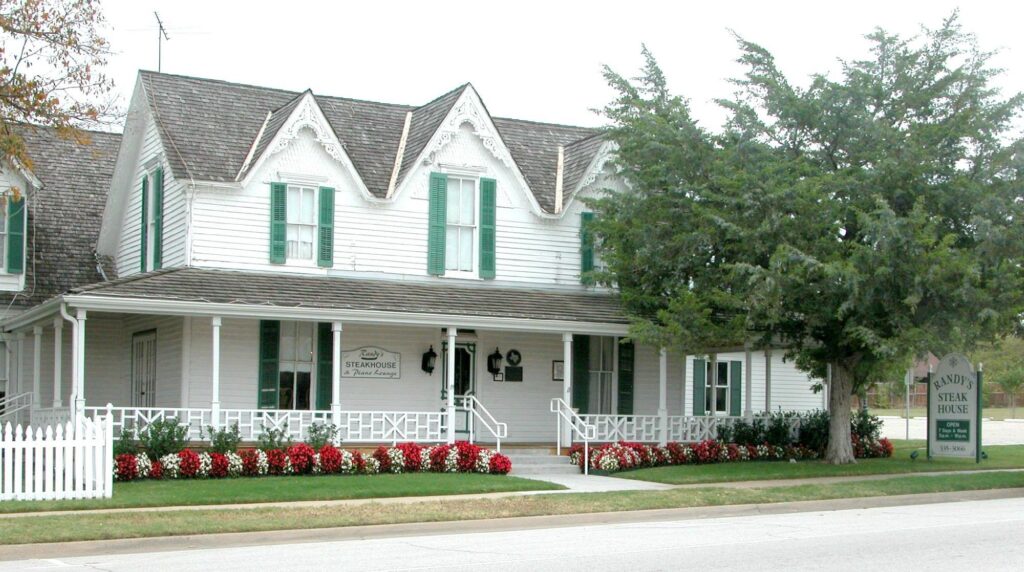
Randy’s plea brought tears to the eyes of many sitting in the council chambers. Randy’s started his businesses here in 1993 and today Randy’s Steakhouse sits in the Old Victorian Style Home along Main Street that used to belong to Frisco native Vivian McCallum. The impact has devastated his business.
Steve Anderson – Music Services located at 6726 West Main St
Jason Taylor – Owner of Endur3Bikes located at 6699 Main St
Rich Vana– Chef/Owner of Heritage Table located at 7110 Main St
Samar & Luna Binat – Owner of La Suprema Market located at 6726 Main St, Ste 100
Taylor Lattery: Frisco Music Store
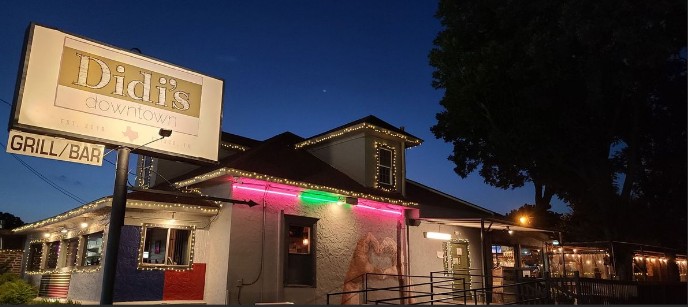
Scott Hoffner – Owner of Didi’s Downtown located at 7210 W. Main St
Local Frisco Resident: Paul Jessen
Local Rail District Resident: Brittnay Colberg
Council’s Response: Insert Shrug Emoji
Mayor Cheney (as usual) took his time to respond. The Texas Open Meetings Act states: The city council shall not deliberate on any item that is not on the agenda, and for such an item, members of council may either: (1) make a statement of fact regarding the item; (2) make a statement concerning the policy regarding the item; or (3) propose that the item be placed on a future agenda. As we have said before, we believe Cheney continually violates this during citizen input because he is not making a statement of fact, he is not talking about a policy he is pontificating his opinion.
As for the rest of the council, well, Keating wants a T-shirt! That will be good clickbait for his Mayoral Campaign website (once he announces his BIG secret)! As for the rest, the reaction was predictable. Council sat nodding politely, practicing their best “I’m listening” faces while probably drafting their next campaign slogans in their heads. Because what’s the use of listening if it is not a billion-dollar developer!
The Hashtag Heard Around Frisco
The people weren’t asking for magic. They weren’t asking for a monorail or a Disneyland Main Street redo. They were asking for action—basic, common-sense fixes, leadership, and accountability. Instead, what they’ve gotten so far is a year of excuses, construction delays, and much of the time businesses have been non-accessible.
#SAVEMAIN is more than a social media slogan—it’s a rallying cry. It’s the people saying: stop patting yourselves on the back for “economic development wins” when you can’t fix the most visible, most essential street in the city. If the Council won’t act now, when?
Frisco, the people have spoken. They showed up. They demanded better. Now the ball’s in Council’s court. They can either lead—or they can keep ignoring the obvious while the rest of us tweet #SAVEMAIN until our thumbs cramp. Because here’s the truth: the citizens already told you the answer. You just must stop pretending not to hear it.
Residents Should Be Asking…
Why now? For years, the councils have gone back and forth about the redevelopment of downtown Frisco. Why not do this during the Covid shutdown so businesses did not suffer twice?
When this started in June 2024 – what was the expectation for the future?
The businesses who are struggling from this construction – who is knocking on their door to “Buy or Save” their business?
What is a revitalized downtown without the heart of downtown – the businesses?
Stay Tuned for Part 2
Disclaimer: This blog includes satire, parody, and comic relief. It contains summarized accounts created solely for humor and commentary. Any resemblance to real events is either coincidental or intentionally satirical. Reader discretion — and a sense of humor — are advised.










I went to her to ask for help with an issue my child that was getting nowhere with the school,…
So whatever became of the $17 million dollars that the city council gave the Mayor to beautify a drainage ditch?
At last count, there are 3 different "spa/massage" businesses in the small office park at the northeast corner of John…
I literally just saw this. Yeah, she used to forward everybody’s emails behind their backs.
You're dropping truth bombs! These mom and pop shops are what should be the least of Karen's worries. If they…